

 Mirella Pandjaitan
 May 04, 2026
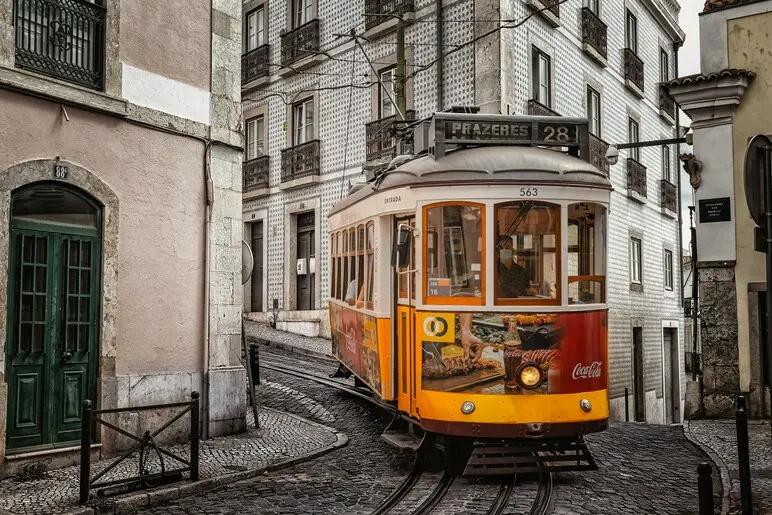
Plans to reintroduce a tram system in Kota Tua Jakarta have resurfaced, as the Jakarta Provincial Government advances its broader revitalisation of the historic district. The proposal positions the tram not merely as a nostalgic nod to the past, but as a dual-purpose solution, serving both as a cultural attraction and a low-emission mode of transport.
Vice Governor Rano Karno emphasised that sustainability sits at the heart of the plan. “One of the key goals is to reduce emissions. We are currently discussing the development of a tram system within Kota Tua,” he said.
Though no longer visible above ground, traces of Jakarta’s tram heritage remain embedded beneath the city. During the construction of MRT Jakarta Phase 2A in the Kota Tua area, sections of historic tram tracks were uncovered near the Museum Bank Mandiri.
According to MRT Jakarta’s Director of Construction, Silvia Halim, the discovery emerged during an archaeological investigation in August 2021. The excavation also revealed European and Chinese ceramic fragments, Dutch coins, and animal remains dating from the 18th to 20th centuries.
Despite renewed interest, the tram project remains under review. Governor Pramono Anung stressed that the proposal requires deeper study and is not yet a primary focus.
“For the Kota Tua tram, what has been proposed still needs further evaluation,” he commented.
Now, the administration is prioritising the completion of the MRT corridor connecting Lebak Bulus to Kota Tua, with a target completion in early 2029. The government views this as a cornerstone of a fully integrated transport ecosystem.
Once operational, the network will link MRT services with commuter rail and the city’s bus rapid transit system, TransJakarta, including expanded routes that connect Kota Tua to areas beyond Jakarta.
Pramono remains optimistic that this seamless integration spanning MRT, KRL, and TransJakarta will be instrumental in reactivating Kota Tua as a vibrant, accessible destination. “With integrated transport in place, I’m confident Kota Tua will become a new focal point for visitors,” he noted.
Trams were once horse-drawn carriages, then electric rails
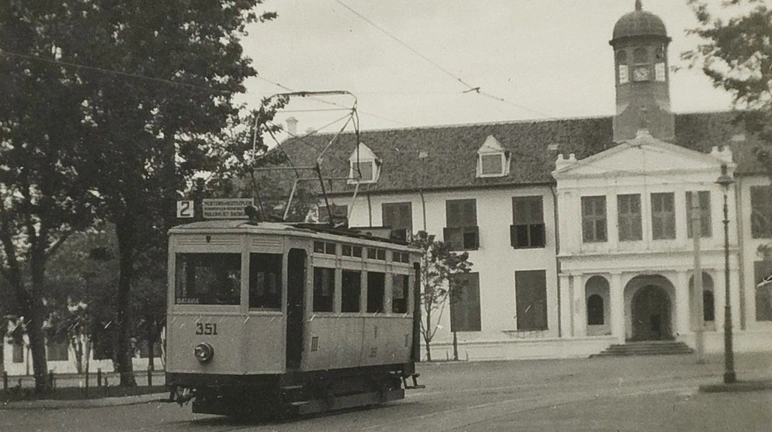
Long before Jakarta’s modern skyline, the city—then known as Batavia—relied on trams as a vital urban lifeline. The first system, introduced in 1869 by the Bataviasche Tramweg Maatschappij, consisted of horse-drawn carriages connecting key commercial corridors such as Pasar Ikan, Harmoni, and Jatinegara.
Each train typically comprised two carriages with a capacity of around 40 passengers, pulled by four horses. Additional lines linked Tanah Abang to Jatinegara, reinforcing the tram’s role in transporting both workers and goods across Batavia’s bustling trade network. Yet the system proved short-lived, lasting only about 12 years, due to the physical strain placed on the animals over long distances.
In 1882, Batavia transitioned to steam-powered trams, introducing locomotives fuelled by coal. This system operated for approximately two decades before giving way to a more advanced solution. By 10th April 1899, electric trams were officially launched, marking the most progressive phase of the city’s early transport evolution.
Electric trams went on to serve as the backbone of urban mobility for more than half a century, before being phased out in the 1960s. Rapid urbanisation and the expansion of road infrastructure—better suited to buses and rubber-tyred vehicles—ultimately led to their disappearance.