

 Mirella Pandjaitan
 Jul 27, 2026
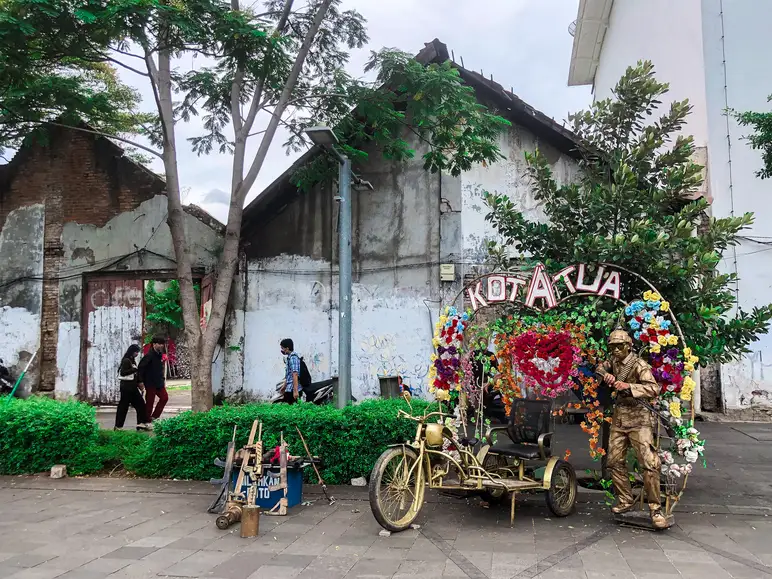
Kota Tua Jakarta is more than a preserved relic—it is a living cultural landscape. There is perhaps no better moment to rediscover it than now! Nestled in West Jakarta, Kota Tua remains one of the capital’s most enduring cultural landmarks, drawing a steady stream of visitors, be it foreign tourists, school field trips, families, groups of friends, or couples.
Jakarta’s Old Town features a layered journey through time. It once served as the administrative and trade centre of the VOC during the colonial era. Thus, the district is defined by its collection of iconic Dutch colonial buildings, many of which have been reimagined as museums.
But nowadays, Kota Tua isn’t a closer look into Jakarta’s heyday. Modern eateries, immersive installations, and engaging workshops have rekindled the spark from the dust of the past. Its accessibility, combined with its historical weight, makes Kota Tua an essential stop for those seeking both context and character within the capital.
About Kota Tua
An evocative blend of heritage and public life unfolds across this historic enclave. Kota Tua stands as a testament to Jakarta’s colonial past, where stately façades, cobblestone-like plazas, and centuries-old institutions remain remarkably intact.
Centred around Taman Fatahillah, the district reveals itself through architectural grandeur and cultural continuity. Former administrative buildings now house curated collections, while open squares pulse with contemporary street life. Though deeply rooted in history, Kota Tua continues to evolve—its relevance renewed through creative communities, public programming, and even its recent emergence in global pop culture.
One essential note: most attractions across Kota Tua are closed on Mondays, making timing key when planning a visit.
Getting to Kota Tua
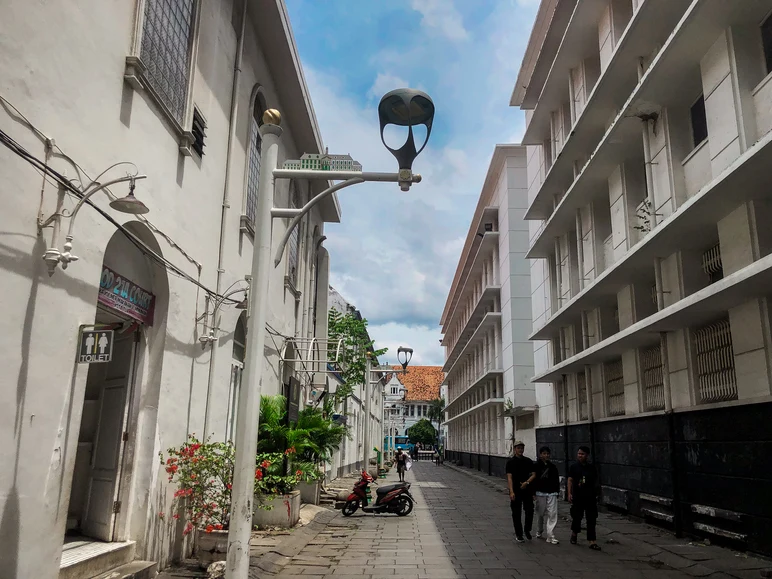
Kota Tua is well-connected to Jakarta’s public transportation network, making it easily accessible from various parts of the city.
1. By KRL Commuter Line
The most direct route is via Jakarta Kota Station, located within walking distance of the main square.
- Take a direct train terminating at Jakarta Kota from Bogor or Depok
- Transfer at Manggarai Station for connecting lines toward Jakarta Kota
- From Tangerang, transfer via Duri and continue onward
2. By TransJakarta
Several corridors provide access toward Kota Tua, with onward connections required:
- Corridor 1 (Blok M-Kota)
- Corridor 4K (Pulogadung-Kejaksaan Agung)
- Corridor 6M (Manggarai-Blok M)
- Corridor 6V (Ragunan-Senayan Bank DKI)
- Corridor P11 (Bogor-Blok M)
3. By MRT Jakarta
Alight at Bundaran HI Station, then continue via TransJakarta on Corridor 1 (Blok M-Kota) or a short ride-hailing trip toward Kota Tua.
Best activities to do at Kota Tua Jakarta
The district is best explored on foot, where museums, landmarks, and cultural spaces are clustered within close proximity. Dedicate a full day to wander, observe, and absorb.
Admire architectural icons and historic structures
Kota Tua exposes itself through standalone landmarks that carry both aesthetic and historical significance beyond museums.
1. Toko Merah: Its striking red façade, built since 1730, remains one of the most recognisable buildings in the district—its past layered with colonial narratives, now softened by its present-day function as a café.
2. Kota Tua Post Office: It stands as one of the earliest communication hubs in Indonesia, established in 1746.
Catch the sunset by the Kali Besar
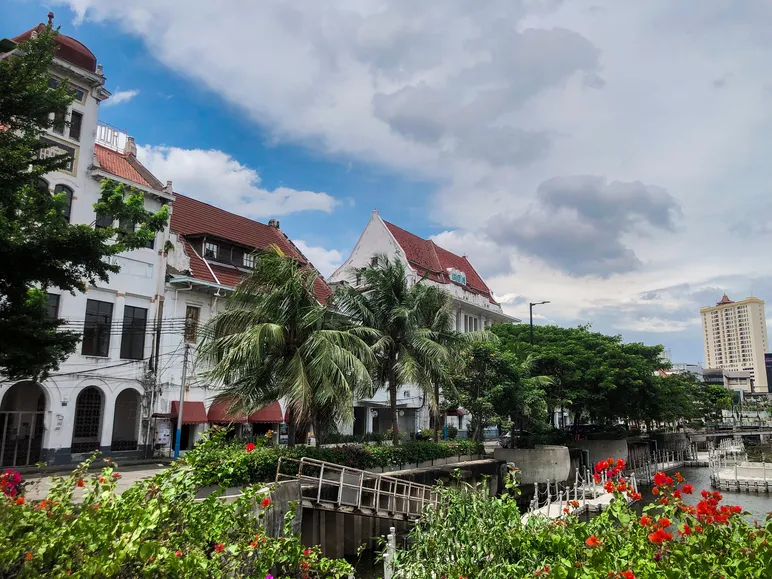
Just across from Toko Merah is a canal-way constructed by the Dutch as a trading route. Today, it stands as a picturesque cultural corridor and one of the area’s most photogenic spots. A quieter kind of beauty reveals itself here, now framed by a series of floating pontoons that lend the scene a gentle, almost European character. These platforms provide an appealing visual backdrop, especially when paired with the surrounding row of historic buildings, defined by their distinctly Dutch architectural style.
On both sides of Kali Besar, wide pedestrian pathways with ample space have been thoughtfully developed for unhurried waterfront strolls. Scattered throughout are sculptural installations that add an artistic layer to the landscape. Several park benches line the promenade too, inviting visitors to pause and take in the riverside atmosphere. At the centre of Kali Besar, a wooden bridge spans the water, often animated by street performers showcasing their craft, adding a lively rhythm to the otherwise tranquil setting.
Go beyond Kota Tua’s confines
Some of the must-visit destinations surrounding the square are within walking distance, some are not–unless walking is your forte. Those falling on the latter are equally compelling to explore.
1. Bahari Museum: Extending beyond the main square is a glimpse into the maritime dimension of Kota Tua’s narrative. Situated within former Dutch spice warehouses near Sunda Kelapa Harbour, the museum explores Indonesia’s seafaring heritage through traditional vessels, navigation tools, and trade history.
2. Gedung Cipta Niaga: Once the headquarters of a Dutch trading institution, the Art Deco structure spans an entire city block; those who venture inside—and up its staircase—are rewarded with glimpses of its former grandeur, from stained glass windows to soaring ceilings and intricately tiled floors.
3. Kota Intan Bridge: A rare 17th-century wooden drawbridge is one of Kota Tua’s most atmospheric vantage points, where history and riverside life converge.
4. Sunda Kelapa Harbour: Its origins date back to the Pajajaran Kingdom and later flourished under the Tarumanegara Kingdom. Its strategic location made it an essential trade hub, one that still echoes through its traditional wooden ships today.
5. Syahbandar Tower: Outside the confines of Kota Tua, yet remaining nearby, this was part of a maritime defence system providing insight into the area’s strategic importance during the colonial period.
Indulge in heritage dining and local flavours
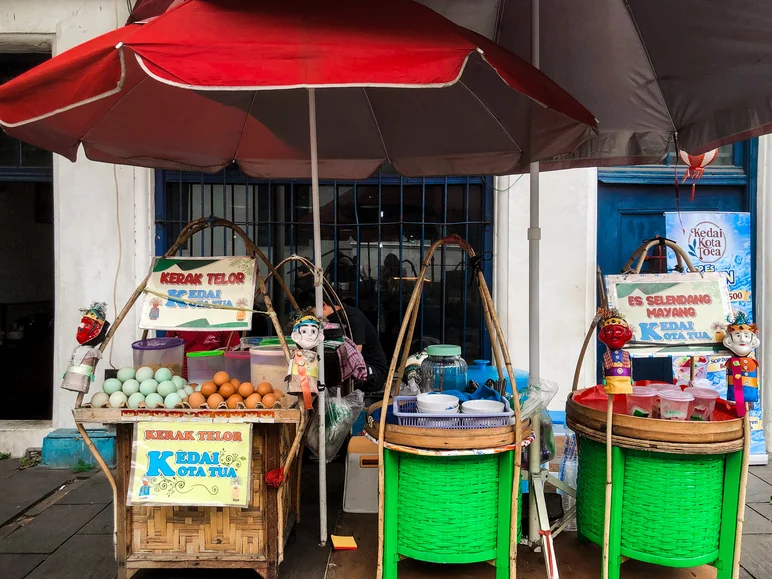
Both street-side indulgences and heritage dining comprise Kota Tua’s culinary landscape. Around Taman Fatahillah are vendors serving traditional dishes such as kerak telor, alongside refreshing local desserts like es podeng and selendang mayang.
Urban eateries such as Same Same Bakery and Acaraki are fresh faces in the district. Acaraki, for instance, holds contemporary jamu workshops on weekends, well-suited for both curious travellers and Jakarta residents seeking a deeper connection to local heritage. Designed to be both educational and approachable, the sessions guide participants through the fundamentals of jamu-making, from measuring and grinding ingredients to brewing and tasting their own blends.
More on Where to Eat in Kota Tua Jakarta
Ride through history on a vintage bicycle
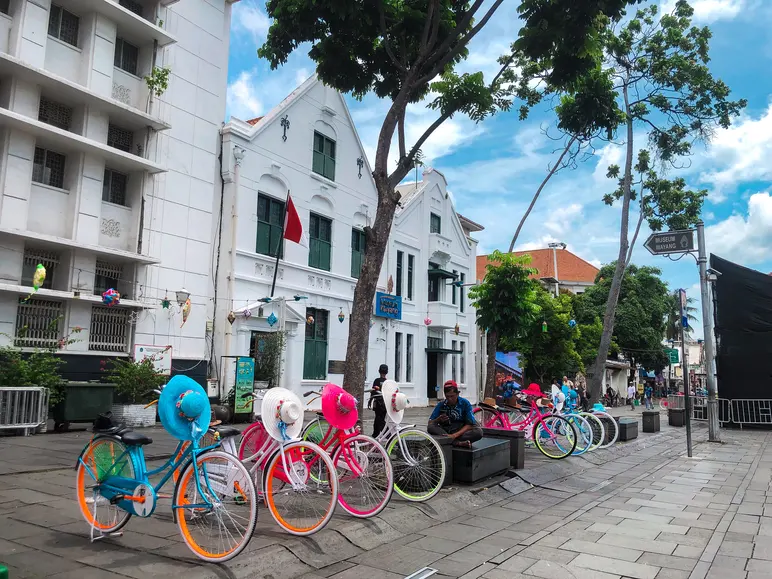
Rent a sepeda ontel (a vintage bicycle painted in vivid hues). These bicycles, frequently paired with period-inspired costumes or a hat, are a playful yet nostalgic way to navigate the square and its surroundings.
Soak up the atmosphere of Taman Fatahillah
At the heart of Kota Tua lies Taman Fatahillah, an expansive public square where history meets contemporary urban life. Linger here! The open space invites a slower rhythm, whether watching street performers, observing local artists at work, consulting with a palm reader, taking pictures with street performers in colonial style, or simply taking in the architectural symmetry that surrounds the plaza. The square becomes particularly animated in the late afternoon, when the light softens, and the atmosphere shifts into something more cinematic.
Trace Jakarta’s past through its landmark museums
Kota Tua’s identity is anchored in its museums. While some of these museums draw larger crowds than others, each contributes to a layered understanding of Jakarta’s past.
1. Bank Indonesia Museum: A highly immersive museum detailing Indonesia’s financial history, complete with interactive displays and archival materials.
2. Bank Mandiri Museum: Preserves the legacy of colonial-era banking, featuring original interiors, safes, and antique financial equipment.
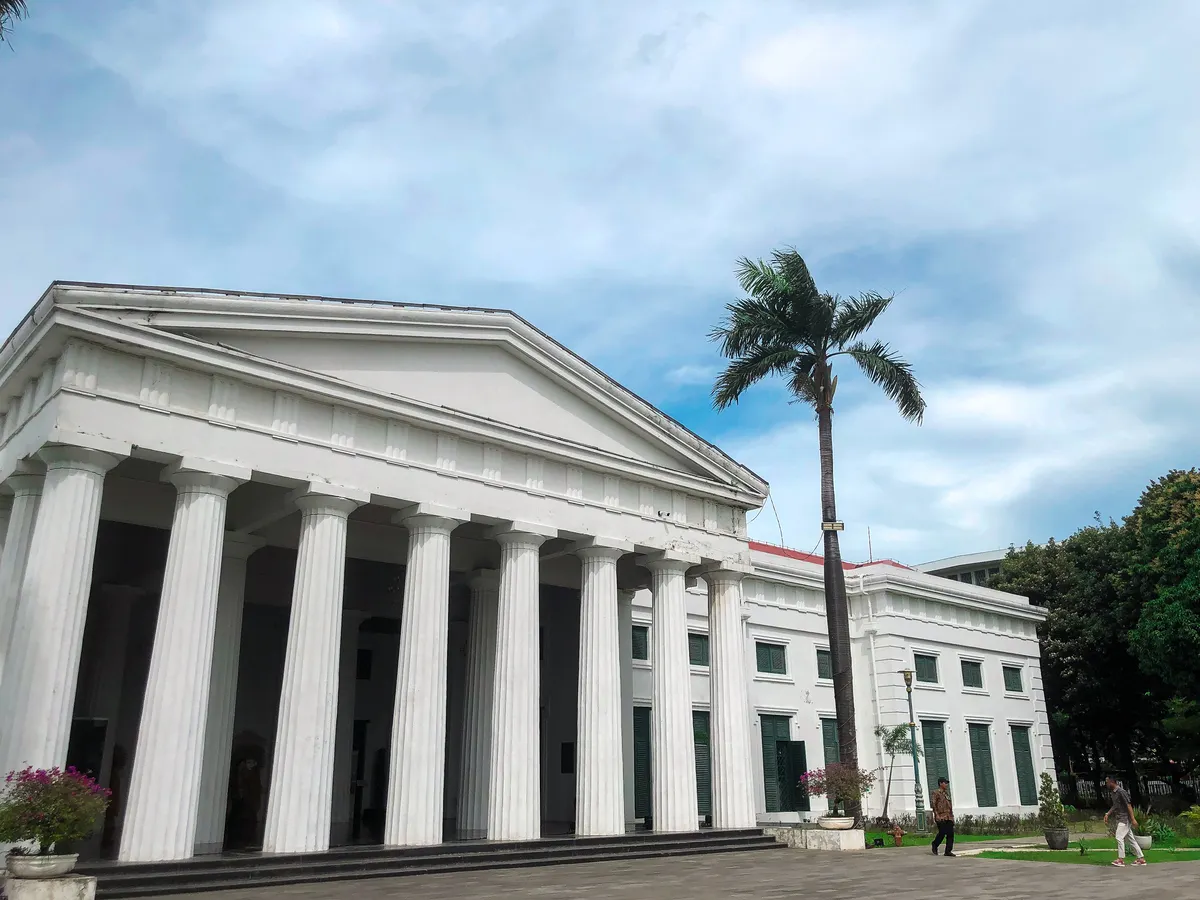
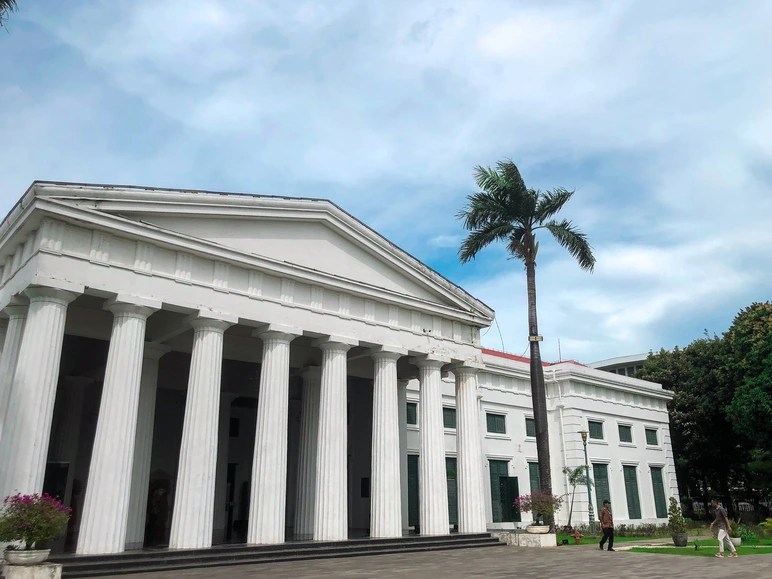
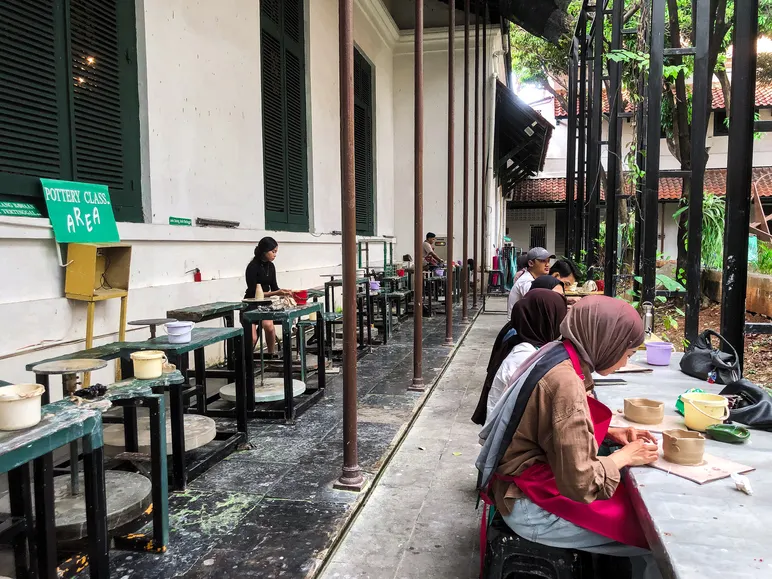
3. Fine Arts and Ceramics Museum: Overlooking Taman Fatahillah, it houses an extensive collection of Indonesian fine art alongside a notable selection of ceramics from across Asia and Europe, reflecting centuries of cultural exchange. Take part in the hands-on pottery sessions worth Rp50,000 to have a tactile dimension to the experience!
4. Jakarta History Museum (Museum Fatahillah): Housed in a former city hall of Batavia, this museum presents colonial artefacts, historical illustrations, and even underground prison chambers that reveal the realities of the era.
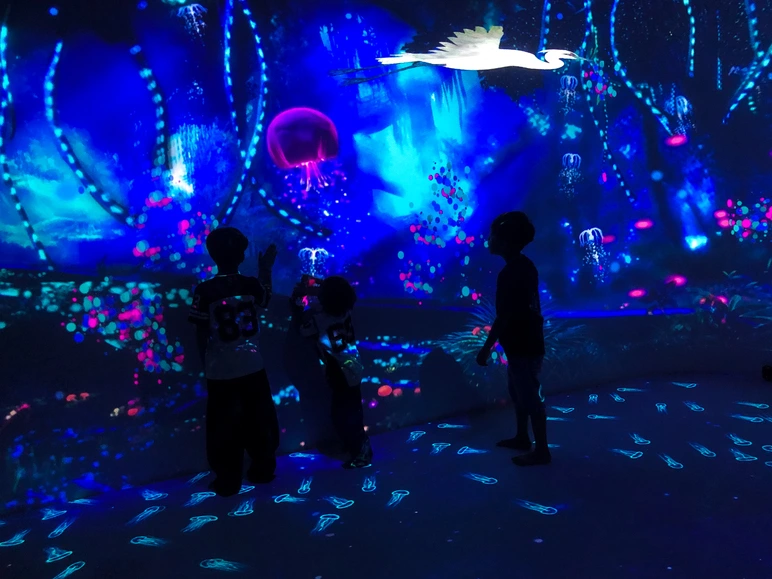
5. Puppet Museum (Museum Wayang): Set within what was once Batavia’s first church, the museum displays an extensive collection of traditional puppets alongside international pieces. Inside, visitors can join one of the immersive slots to revel in a movie and installations inside the 360-room and interactive games.
Nearby accommodations
Premium city hotels: Mövenpick Hotel Jakarta City Centre; Vertu Hotel Harmoni Jakarta.
Mid-range hotels: Novotel Jakarta Mangga Dua Square; Mercure Jakarta Batavia.
Heritage hotel: House of Tugu, Old Town Jakarta.
Kota Tua travel essentials
Navigating Kota Tua is best approached with a balance of curiosity and planning. A few considerations can significantly enhance the visit.
1. Combine indoor and outdoor stops. Alternate between museums and open-air exploration to maintain a balanced pace throughout the day.
2. Plan around closures because most museums are closed on Mondays. Schedule your visit accordingly to avoid missing key landmarks.
3. Start early or arrive late! Midday heat can be intense. Early mornings or late afternoons are far more comfortable and visually rewarding experiences.
4. Wear comfortable footwear, although the district is relatively compact. Expect extended periods of walking across open spaces.
5. Take your time! Kota Tua is not a place to rush. Its value lies in observation—in the details of its architecture, the rhythm of its streets, and the stories embedded within its walls.
Read also: Things to Do in Glodok