


 Annissa Wulan
 Oct 01, 2026
Jakarta’s ambition to become a world-class global metropolis has gained significant international momentum.
According to the latest Global Cities Index 2026, released by research firm Oxford Economics, Jakarta has jumped to 140th place out of 1,000 global cities. The impressive climb marks a substantial ascent from rank 287 in 2024 and 159 in 2025, solidifying the Indonesian capital’s standing as the highest-ranked city in the nation.
Public Transit Overhaul Fuels Historic Leap
The announcement was made by Governor of DKI Jakarta Pramono Anung during the peak commemoration of National Transportation Day (Harhubnas) 2026 at Balai Samudera, North Jakarta, on Tuesday, September 29, 2026.
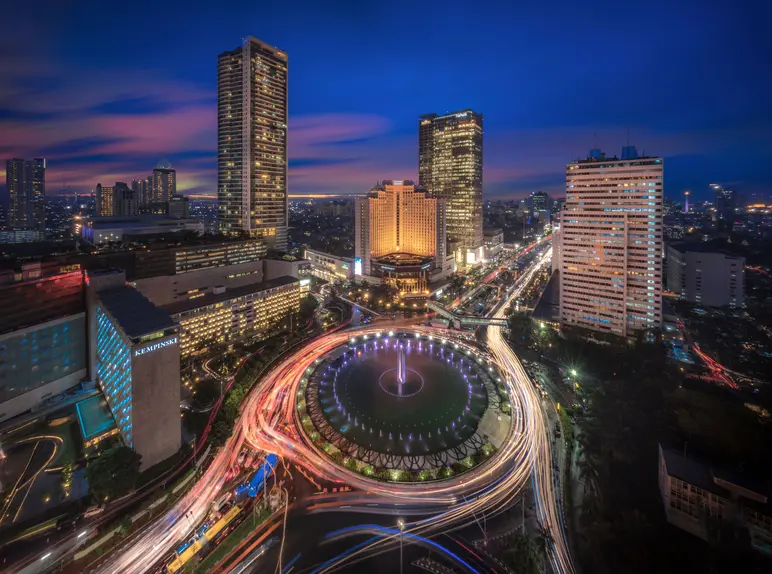
During his address, Governor Pramono highlighted that the city’s rapid transformation is heavily anchored in aggressive public transport reforms. Today, Jakarta’s public transit network—spanning TransJakarta BRT, MRT Jakarta, LRT Jabodebek, and Commuter Line networks—covers over 93% of the metropolitan area.
"In 2024, Jakarta was ranked 287th out of one thousand cities. In 2025, it rose to 159th. This clearly demonstrates that Jakarta's public transportation system has undergone a significant transformation. Within Indonesia, Jakarta stands at number one. Following us are Surabaya at 308th, Medan at 371st, and Bandung at 409th. One of the core evaluation metrics behind this ranking is public transportation."
— Pramono Anung, Governor of DKI Jakarta
High Marks in Human Capital and Economics
Beyond transit infrastructure, Jakarta recorded standout performances across several key sub-indices evaluated by Oxford Economics:
Human Capital (Rank 23): Jakarta's strongest pillar, driven by a vast workforce, top-tier educational institutions, and corporate headquarters presence.
Economics (Rank 59): Reflecting strong economic output, financial activity, and market scale within Southeast Asia.
Indonesian Dominance: Jakarta maintains a clear lead ahead of other major Indonesian urban centers, including Surabaya (308th), Medan (371st), and Bandung (409th).
With daily public transport ridership steadily climbing, the capital's mobility framework continues to prove that seamless urban connectivity is the ultimate backbone of modern global cities.