

 Stallone Tjia
 Sep 23, 2026
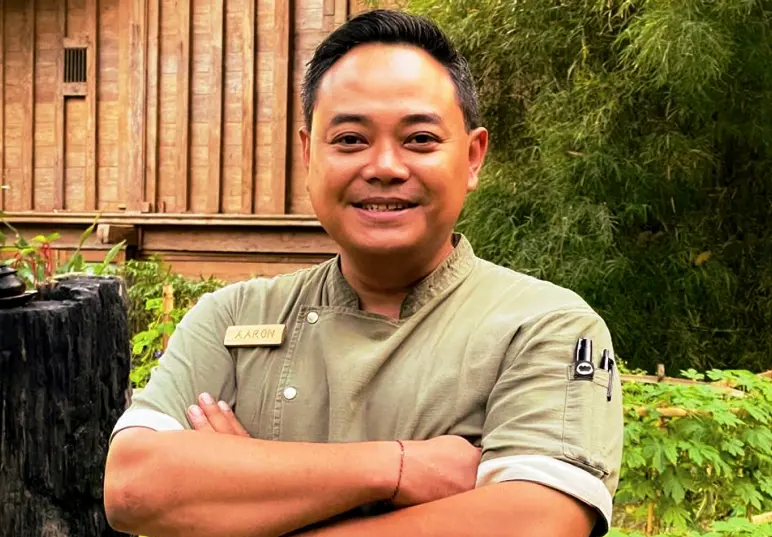
With nearly two decades of experience across Indonesia, Australia, Singapore, and Thailand, Aaron Suksmo Permono Lumakeki has built a career that brings together culinary creativity, hospitality leadership, and innovative thinking. From starting as a cook apprentice in Surabaya to leading luxury hospitality operations in Bali and Melbourne, Chef Aaron has developed expertise in culinary development, restaurant consulting, team leadership, and operational strategy. Today, through Perma Culture Design, he continues to shape thoughtful hospitality concepts with a focus on sustainable gastronomy, efficient kitchen systems, and meaningful guest experiences. What’s New Bali recently sat down with Chef Aaron for an exclusive conversation, where he shares more about his culinary journey, philosophy, and vision for the future of hospitality. Discover what he had to say below.
1. How would you describe your cooking philosophy today, and how has it evolved throughout your career?
When I was younger, I thought being a chef was about controlling everything—the temperature, the knife cut, the sauce, the presentation, the final detail on the plate.
Today, after many years in professional kitchens, I think differently.
I don't want to control the ingredient. I want to understand it.
A great ingredient already carries so much: its soil, its climate, its season, the hands that cultivated it, and the culture that has cooked with it for generations. My job is not to cover all of that with technique. My job is to reveal it. That has changed the way I cook. Although, I still love precision and technique, but I use them in service of something much more important: flavour, identity and meaning.
At Bambu Indah, this philosophy has become even stronger. The landscape is constantly reminding me that food is alive and seasonal. A dish might begin with something growing in the garden that morning, a traditional Balinese flavour I remember from childhood, or an ingredient that most people walk past without noticing.
For me, modern cooking is not about making food more complicated. It is about making us see familiar things differently.
2. What drew you to Bambu Indah and made you want to become part of its culinary journey?
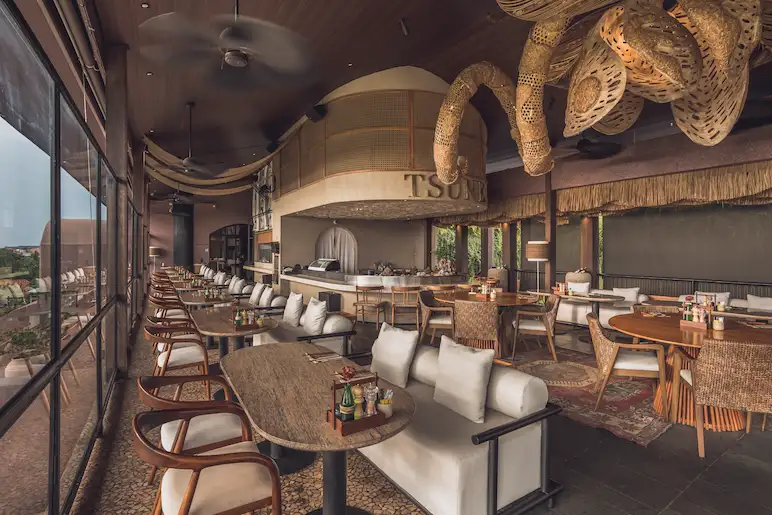
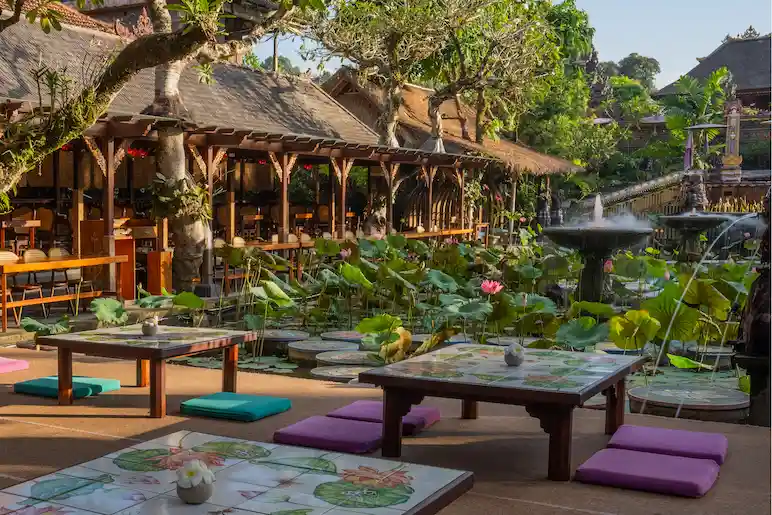
What attracted me was the feeling that Bambu Indah was not trying to create another luxury resort disconnected from its surroundings. The surroundings are the luxury. The forest, the river, the bamboo architecture, the gardens, the old houses, the farms, the Balinese culture, everything already has a story.
And I thought: What happens if the food tells the same story? That was exciting to me.
After cooking internationally, I realised that one of the greatest things a chef can do is not simply demonstrate what he knows, but become deeply connected to where he is. Bambu Indah gives me that opportunity.
Here, I can take the techniques and experiences I have collected throughout my career and use them to explore something deeply rooted in Bali. I don't see myself as coming here to put another international cuisine onto the island. I see myself as coming here to listen to the island and interpret what I hear through food.
That is what made me want to become part of the journey.
3. Bambu Indah has a very distinctive philosophy around sustainability, nature and regenerative living. How does that influence the way you approach food here?
It changes the question we ask. Instead of asking, “What do we want to cook?” we can ask, “What is the land giving us?” That small change has enormous consequences.
If the garden has beautiful young fern shoots today, perhaps that becomes part of dinner. If the rosella is abundant, we preserve it. If the banana blossom is at its best, we find a way to make it the centre of the dish rather than treating it as a side ingredient.
Regeneration is also about more than reducing waste. It is about restoring relationships with the soil, with biodiversity, with farmers, with traditional knowledge and with the community around us. I want the kitchen to be part of that ecosystem rather than something operating separately from it. And I think this is where Bambu Indah has a very interesting opportunity. We can show guests that luxury does not have to mean abundance without limits. Luxury can mean having a deeper relationship with what you consume.
4. What do you hope guests take away from a meal at Bambu Indah?
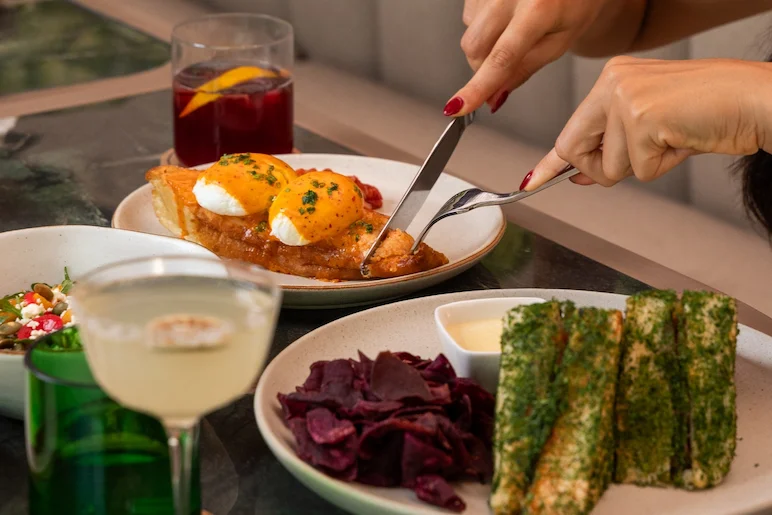
I hope they take away a memory that doesn't belong only to their taste buds. Imagine sitting in the middle of the Balinese landscape, surrounded by trees, hearing the river, with the smell of herbs and wood smoke in the air—and then a dish arrives that somehow tastes like the place you are sitting in. That is what I want to create. I want guests to discover something unexpected. Maybe they taste a local leaf they have never encountered. Maybe they experience a Balinese ingredient prepared in a completely different way. Maybe a very simple vegetable suddenly becomes the most memorable part of their dinner.
But most importantly, I want them to become curious. Where did this come from? Who grew it? Why does it taste like this? Why have I never experienced it before? Because curiosity creates connection, connection creates understanding, understanding creates respect, and respect creates care/ responsibility.
And if someone returns home and looks at food differently because of something they experienced here, then the meal has travelled much further than the dining table.
5. Are there any local ingredients that you particularly enjoy working with or that you think deserve more attention?
Absolutely. Bali has an incredible pantry, and many of its most interesting ingredients are not the ones that usually receive international attention. I love working with kluwak, torch ginger, Balinese long beans, young jackfruit, banana blossom, fern shoots, sweet potato, rosella, turmeric, ginger, lemongrass, kaffir lime, moringa, cassava and young coconut. I am particularly interested in kluwak. It is such a powerful ingredient because it is unmistakably Southeast Asian, deeply connected to traditional cooking, and yet still unfamiliar to many international guests. Its flavour is dark, earthy, almost mysterious. It can bring depth to a dish in the way other cuisines might use truffle, fermented bean pastes or aged ingredients.
Then there is torch ginger - beautifully aromatic, floral and sharp and the incredible variety of local leaves and shoots that grow around us. These ingredients don't need to be disguised to become luxurious. Their luxury comes from their identity. I think one of the most exciting things we can do as chefs in Bali is to take these ingredients seriously to give them the same level of respect, technique and creativity that we traditionally reserve for imported premium products.
6. Sustainability is a major part of Bambu Indah’s identity. What does sustainable gastronomy mean to you in practical terms?
For me, sustainability is not a word that belongs on a menu. It belongs in the kitchen. It is in the purchasing decisions we make at six in the morning. It is in choosing what we grow and what we don't need to import. It is in how we work with farmers. It is in using the whole ingredient. It is in understanding seasonality. And it is in asking whether something needs to travel across the world simply because we are accustomed to having it. But there is another side that is extremely important to me: sustainable food has to be seductive.
I don't want a guest to eat something because they feel they should be environmentally responsible. I want them to eat it because they genuinely want another bite. That is the point where sustainability becomes powerful. When something is good enough that people desire it, they don't feel they are giving something up. They feel they have discovered something.
7. How does working with ingredients directly from the farm influence the way you cook?
It teaches you to surrender a little control. A restaurant menu can be planned weeks in advance. A farm cannot.
The farm doesn't know that we have a photoshoot next Tuesday. It doesn't care that the menu says we need exactly twelve kilograms of something. It grows when the conditions are right. And that is beautiful. When you cook directly from the garden, the ingredient becomes the starting point rather than the recipe. You touch it. Smell it. Taste it. Look at its maturity. Then you decide what it wants.
Maybe it needs fire. Maybe it needs fermentation. Maybe it should remain raw. Maybe it only needs a little acidity and salt. That creates a much more intuitive style of cooking. It also creates respect. When you see how much work goes into growing one beautiful vegetable, you become much less willing to waste even a small part of it. The farm doesn't just supply my kitchen. It teaches my kitchen.
8. How do you minimise food waste in the kitchen?
I teach my team to stop thinking of ingredients as having only one purpose. A kitchen becomes wasteful when it believes an ingredient has only one “correct” form. Take a banana, for example. We can use the fruit, but there are also flowers, leaves and peels that can have culinary applications. The same thinking applies throughout the kitchen. Vegetable trim can become stock or seasoning. Fruit can become vinegar, ferments, preserves or sauces. Stems can become purées or broths. Seeds can be roasted. Excess herbs can be dried. Preservation is especially important for us because Bali can produce incredible seasonal abundance. Fermentation, drying, pickling, smoking and curing allow us to capture a moment in the landscape and carry it forward. But the best waste is the waste we never create. That means better purchasing, better forecasting, careful preparation and understanding our guests.
My philosophy is simple:
Before something goes into the waste bin, the chef should have to ask whether we have truly finished with it.
9. What are some of the biggest challenges of running a sustainable kitchen in Bali?
The biggest challenge is that nature does not promise consistency. Professional kitchens love consistency. Nature loves diversity. One day the garden gives you an incredible harvest. Another day heavy rain changes everything. One ingredient becomes abundant while another disappears. And then there is the challenge of changing expectations. Guests have become accustomed to seeing the same ingredients everywhere, in every season, regardless of geography.
But Bali has its own rhythm. I think our responsibility is not to fight that rhythm, but to **make the rhythm part of the experience. It requires chefs to become more creative and teams to become more flexible. It also requires us to educate without preaching. We should never make a guest feel that they are eating sustainably because they have been given a lecture. They should simply have such a beautiful experience that they become curious about the story behind it. That is much more powerful.
10. What would you like to achieve with Bambu Indah’s culinary programme over the next few years?
I want to build something that feels impossible to separate from Bambu Indah itself. Not simply a restaurant with a sustainable menu. A culinary ecosystem. I imagine a future where our gardens, farms, kitchen, dining spaces, local producers and Balinese traditions are all connected. Where biodiversity influences the menu. Where the seasons influence what guests experience. Where traditional ingredients are given new life through contemporary technique. Where fermentation and preservation allow us to celebrate abundance rather than waste it. Where longevity is not treated as a trend, but becomes part of the way we think about nourishment, pleasure and living well. And I want the experience to begin before the guest sits down.
Perhaps they walk through the garden in the morning and see something growing. Later, they hear the story of that ingredient. And that evening, they find it on their plate - transformed by fire, fermentation, technique and imagination. Suddenly, the dish is no longer just food. It is the landscape telling its story. That is what I want Bambu Indah's cuisine to become. A cuisine that looks forward without forgetting where it came from. A cuisine that respects the past, learns from nature, embraces modern technique and celebrates the extraordinary biodiversity of Bali. And ultimately, I want guests to leave with one thought: “I came here to experience Bambu Indah. But somehow, Bambu Indah taught me how to experience food differently.” That, for me, would be the greatest achievement.
Bambu Indah
Jl. Baung, Gianyar, Bali
Phone: +62 361 977922
Website
Instagram