


 Vincentius Alvin Yoga
 Mar 13, 2026
The Melasti ceremony is an important ritual in Balinese Hinduism and marks the beginning of the preparations for Nyepi, the Day of Silence. The ceremony centers on purification, both spiritually and symbolically, by bringing sacred temple objects to be cleansed with natural water. The water is believed to wash away negative elements and restore spiritual balance before Nyepi begins.
The Melasti ceremony is an important ritual in Balinese Hinduism and marks the beginning of the preparations for Nyepi, the Day of Silence.
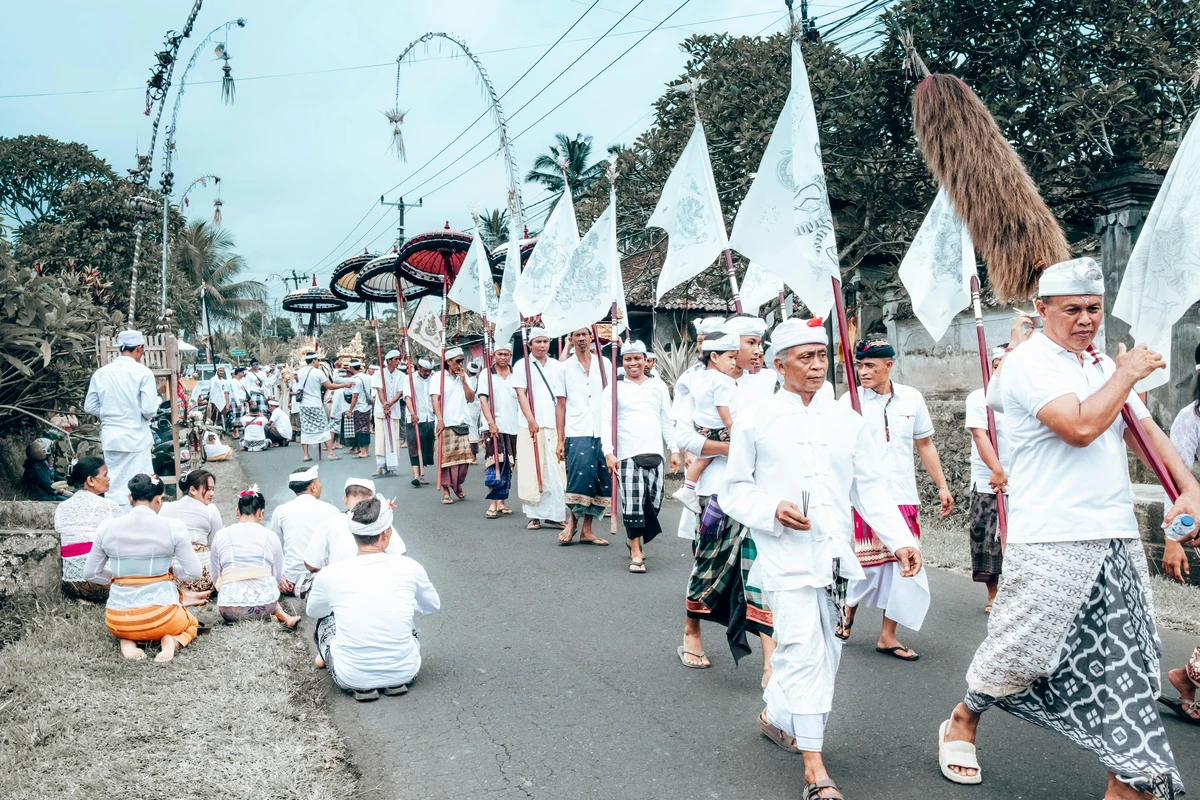
Across Bali, Melasti is not only a meaningful religious ritual but also a moment that many visitors find fascinating to witness. The sight of hundreds of people walking together in white clothing, carrying offerings and sacred objects toward the ocean, creates a powerful scene. While it remains a deeply spiritual tradition for Balinese Hindus, it also offers a glimpse into the island’s living culture and community spirit.
So what does Melasti actually mean, and why is it such an important part of the Nyepi celebration?
What is the Melasti Ceremony in Bali?
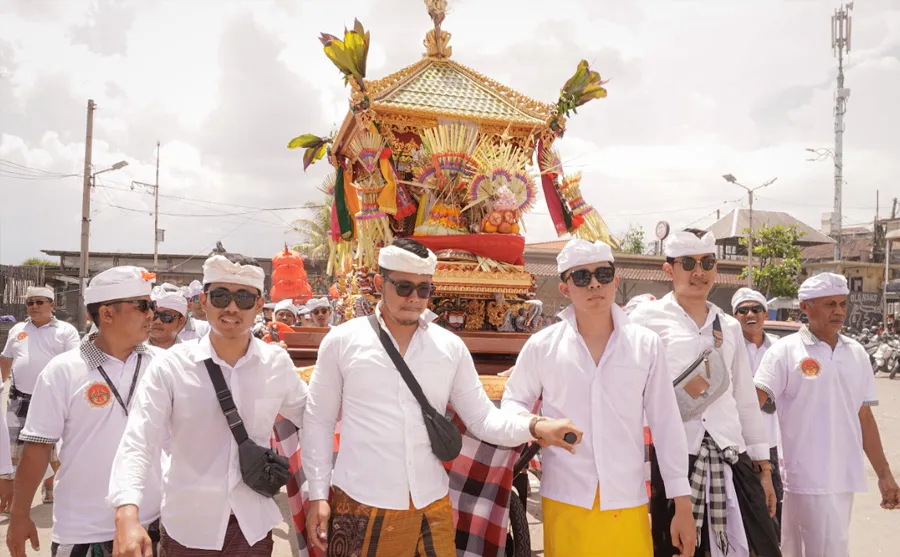
Image source: adatcanggu.com
Before the Balinese Saka New Year, better known as Nyepi, communities across Bali take part in a ritual cleansing ceremony called Melasti. During this time, sacred objects from village temples, including items such as keris daggers and temple heirlooms, are brought to natural water sources like the sea, rivers, lakes, or springs. The purpose is purification, both for the sacred objects and for the people who take part in the ritual.
The word Melasti is often understood as “to cleanse” or “to purify.” It comes from Sanskrit roots, where mala refers to dirt or impurity, and asti suggests removing or casting something away. In this context, the ceremony represents the effort to release negative energy and restore balance before the Day of Silence begins.
The ceremony usually takes place along the coast or near rivers, as water is believed to hold the power to cleanse spiritually. Villagers walk together in long processions from their temples, dressed in traditional Balinese clothing and carrying offerings as well as sacred temple objects. These offerings often include fruit, flowers, rice, and other symbolic items prepared by the community.
Once the procession reaches the water, the offerings are arranged and priests lead prayers and chants. Devotees then enter the water to wash or bathe as part of the ritual. This act symbolizes letting go of negativity and preparing the mind and spirit for the new year.
Also read: Nyepi in Bali: A Complete Guide
When is the Melasti Ceremony?
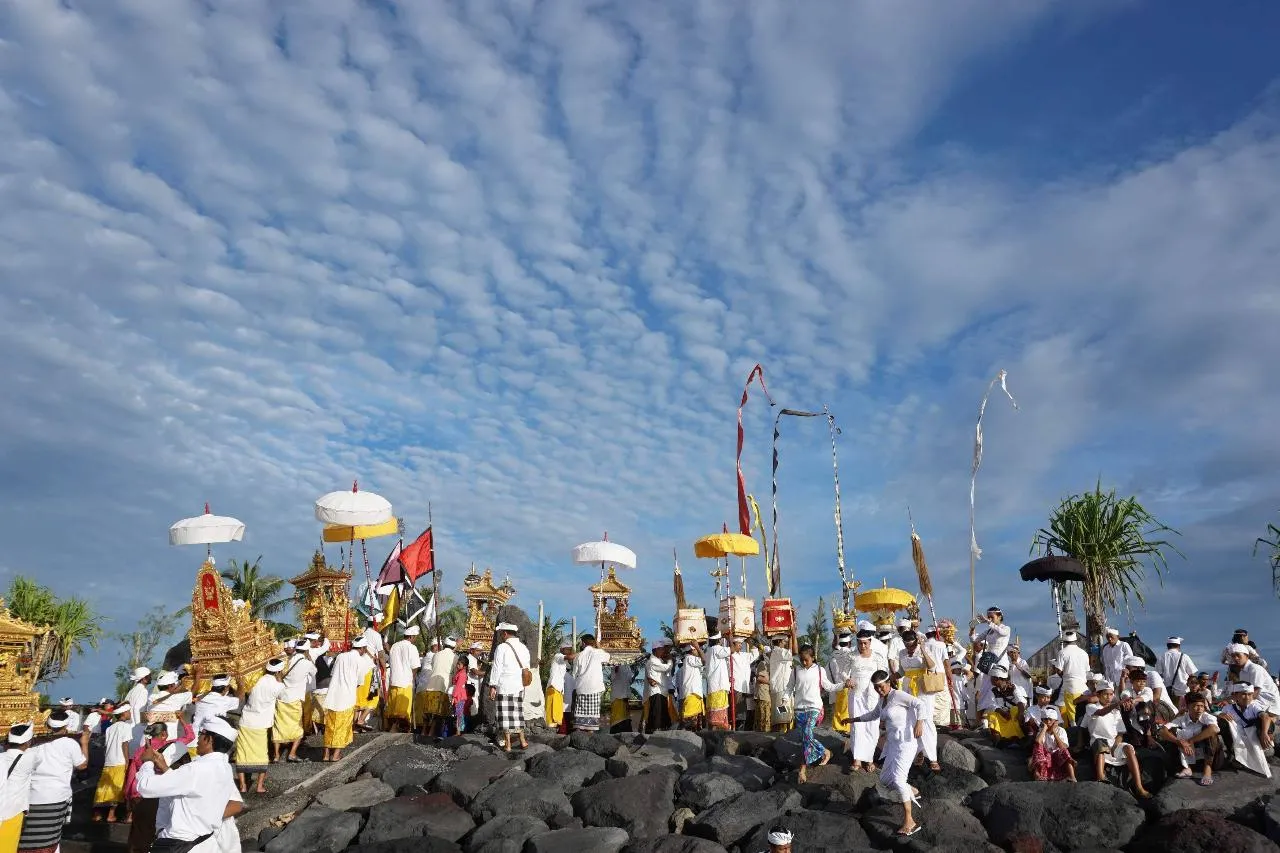
Image source: bali.com
The Melasti ceremony usually takes place three days before Nyepi. In 2026, Melasti will be observed on March 16. The ritual marks the beginning of the spiritual preparations leading up to Nyepi, a day dedicated to silence, reflection, and meditation across the island.
Where Does the Melasti Ceremony Take Place in Bali?
Melasti is most often held by the sea, which is why many people associate the ceremony with Bali’s beaches. However, it does not always take place at the coast. Rivers, lakes, springs, or other nearby natural water sources can also be used for the ritual.
Water plays an important role in Balinese Hindu belief. It is seen as the source of life, often referred to as Tirta Amerta, or holy water. Beyond physical cleansing, it is believed to purify both the human spirit and the surrounding world.
During the Melasti procession, communities bring sacred temple objects to the water to be purified. Once the prayers and cleansing are complete, the holy water is also used to purify sacred objects from the temple, symbolizing renewed balance and blessings for the year ahead.
Also read: Best Spots to Watch the Ogoh-Ogoh Parade in Bali
Why Is Melasti So Important?
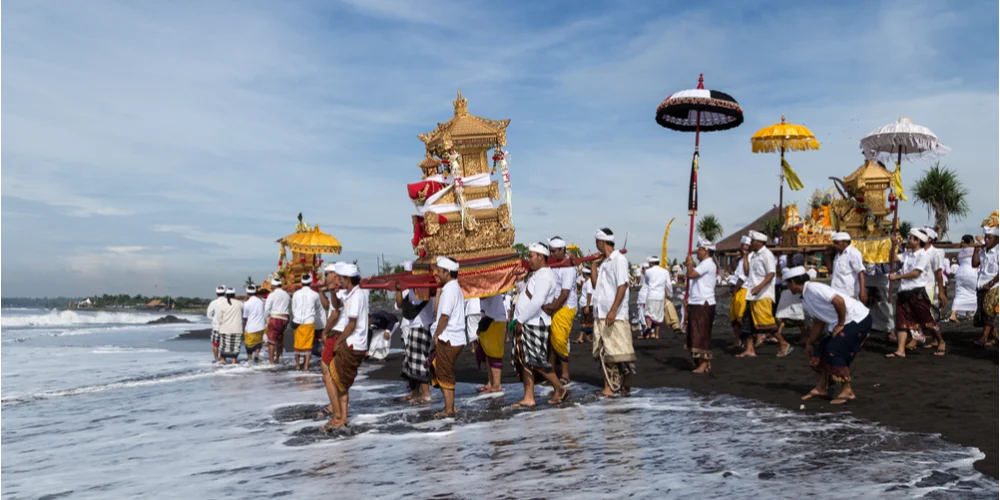
Image source: indonesia.travel
The Melasti ceremony plays an important role in the spiritual life of the Balinese community. Through this ritual, sacred objects, people, and the surrounding environment are symbolically cleansed. The goal is to restore balance between the physical world and the spiritual world before Nyepi begins
For many Balinese Hindus, Melasti is also a moment to reaffirm their faith and express gratitude for the blessings they have received. It is also a moment when communities come together and take part in a shared tradition that has been passed down for generations.
Beyond its spiritual meaning, Melasti also carries strong cultural value. The processions, traditional clothing, and carefully prepared offerings bring entire communities together. Families, temple groups, and villages take part side by side, creating a shared moment that strengthens community ties.
At its core, the Melasti ceremony is meant to purify both humans and the universe from negative influences. In Balinese Hindu belief, this idea is often explained through two concepts: Bhuwana Alit and Bhuwana Agung. Bhuwana Alit refers to the “small world,” which represents the human body, while Bhuwana Agung refers to the “great world,” or the universe.
Through Melasti, both of these realms are symbolically cleansed. By removing negative energy from people and their surroundings, the ceremony is believed to help restore balance and harmony, allowing the new year to begin with a renewed sense of spiritual clarity.
Also read: 10 Fun Facts About Nyepi
Melasti Preparations in Bali
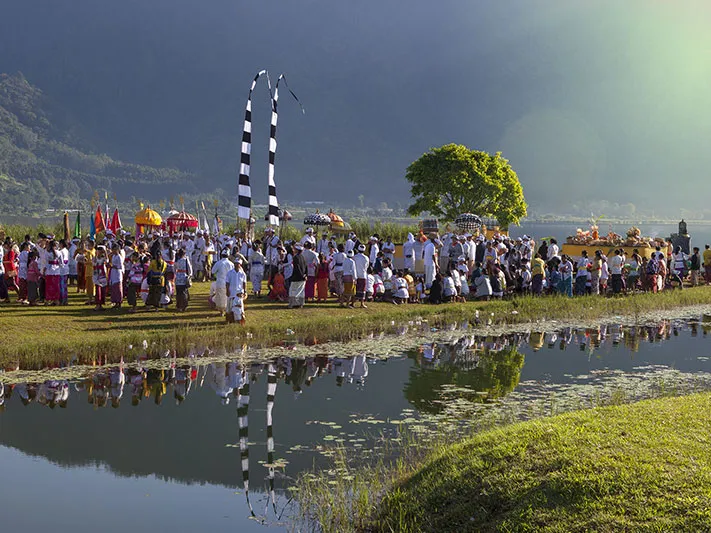
Image source: indonesia.travel
Preparing for the Melasti ceremony involves the whole community. In many villages, members of the banjar—the local neighborhood organization—work together to get everything ready. Homes and temples are cleaned thoroughly as part of the preparation, reflecting the idea of both physical and spiritual purification before the ceremony.
Women in the community usually take the lead in preparing the offerings. These include traditional offerings such as Canang Sari, Daksina, and Banten Suci, along with many other types. The offerings are carefully arranged using flowers, incense, fruits, sweets, spices, and rice. Each element carries symbolic meaning and is presented as a gesture of gratitude to God, known in Balinese Hindu belief as Sang Hyang Widhi.
Overall, the preparations for Melasti show how deeply connected the Balinese community is to its traditions.
What If You Are a Traveler?
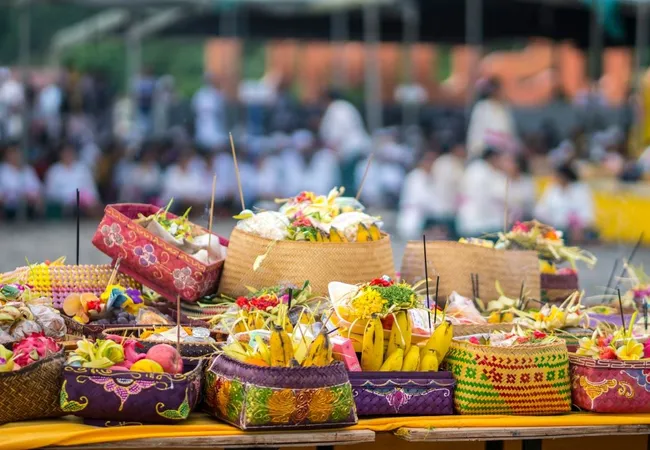
Image source: visitbali.id
If you happen to be in Bali during the Melasti ceremony, you may see processions heading toward the beach or other water sources. Visitors are welcome to observe, but it is important to respect the ceremony and the spaces used for the rituals. Some important things to remember if you are a visitor are:
Do not enter the sacred areas
Some parts of the beach or ceremony site will be reserved for the ritual. These areas are meant only for participants, so visitors should watch from a respectful distance.
Take photos respectfully
Photography is usually allowed, but it should be done carefully and without interrupting the ceremony. Avoid getting too close to the participants or blocking the procession.
Keep noise to a minimum
Melasti is a solemn and meaningful ritual. Visitors should avoid loud conversations, music, or any behavior that might disturb the ceremony.
Help keep the area clean
If you are watching the ceremony at the beach or another public space, make sure not to leave trash behind. Keeping the area clean helps maintain the respect and sanctity of the site.
The Meaning of Melasti Today
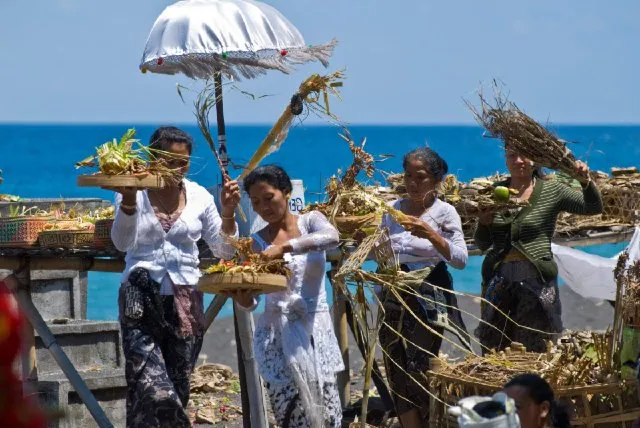
Image source: bali.com
The Melasti ceremony remains an important tradition in Bali. At its core, it represents purification, spiritual renewal, and preparation for the new year. By cleansing sacred objects and symbolically releasing negative energy, the community prepares itself for Nyepi, the Day of Silence.
For Balinese Hindus, Melasti is more than just a ritual before Nyepi. It is a reminder of the importance of maintaining balance between people, nature, and the spiritual world. The ceremony also brings communities together, as families and villages take part in the preparations and the procession to the water.
As part of Bali’s long-standing traditions, Melasti continues to hold a strong place in everyday cultural and religious life. It reflects the island’s values of spirituality, respect for nature, and a shared sense of community that has been passed down through generations.