



 Mirella Pandjaitan
 Dec 22, 2025

Food is undeniably one of the most crucial components of exploration. It’s an enduring expression of tradition, nostalgia and shared comfort. What better way to indulge in Christmas-themed gastronomy? This is the time of the year when kitchens across the globe come alive!
For those seeking inspiration for the holiday table, or simply a broader view of seasonal customs, this collection serves as a culinary journey. Spanning classic European confections and contemporary traditions shaped by modern culture, these Christmas foods reflect the diverse ways the season is cherished worldwide. Each dish tells a story of celebration and cultural identity—some familiar, others unexpected, all deeply rooted in the spirit of the Christmas season.
Are your taste buds ready to explore?
Bûche de Noël (France)
The bûche de Noël is the theatrical finale to a French Christmas meal. Crafted to resemble a Yule log, the rolled sponge cake is filled with buttercream, chocolate or chestnut, and finished with meticulous decoration. Both symbolic and indulgent, it reflects France’s reverence for pâtisserie and the belief that dessert is not merely an ending, but an event in itself.
Christmas Ham (Philippines )
Christmas ham anchors the Filipino Noche Buena, the midnight feast that marks Christmas Eve. Cured pork leg, glazed with sugar, honey or pineapple, reflects centuries of colonial influence layered with local tastes. Frequently prepared days ahead, the ham is unveiled at midnight and served thinly sliced, its sweetness symbolising abundance, generosity and the long-awaited culmination of the festive season.
Hot Chocolate (Peru)
Christmas Eve is marked by cups of thick, fragrant hot chocolate, usually served alongside slices of panettone for Peruvians. Made with melted chocolate and gently spiced, the drink is shared late into the night, bridging European influence with local custom. More than a beverage, it is a gesture of warmth—both literal and communal—at the heart of the celebration.
KFC (Japan)
In Japan, Christmas has acquired a distinctly modern flavour: fried chicken from KFC. What began as a marketing campaign in the 1970s has evolved into a nationwide ritual, with families placing orders weeks ahead. Less about religion than occasion, the meal has become a symbol of celebration. This signals proof that tradition, even when contemporary, can feel just as meaningful.
Kourabiedes and Melomakarona (Greece)
Christmas is scented with butter, honey and spice in Greece. Kourabiedes—crumbly almond biscuits cloaked in powdered sugar—share space with melomakarona, honey-soaked cookies finished with walnuts. Baked in generous quantities, they are offered freely to guests throughout the season, a quiet expression of hospitality and festive goodwill.
Mince Pie and Christmas Pudding (England)
Christmas is steeped in culinary ritual, none more enduring than mince pies and Christmas pudding in England. Mince pies, filled with spiced fruits and citrus, are a small yet essential indulgence, while the pudding—dense, dark and steeped in tradition—anchors the Christmas Day table. Usually prepared weeks in advance, both dishes speak to continuity, ceremony and the pleasure of time-honoured customs.
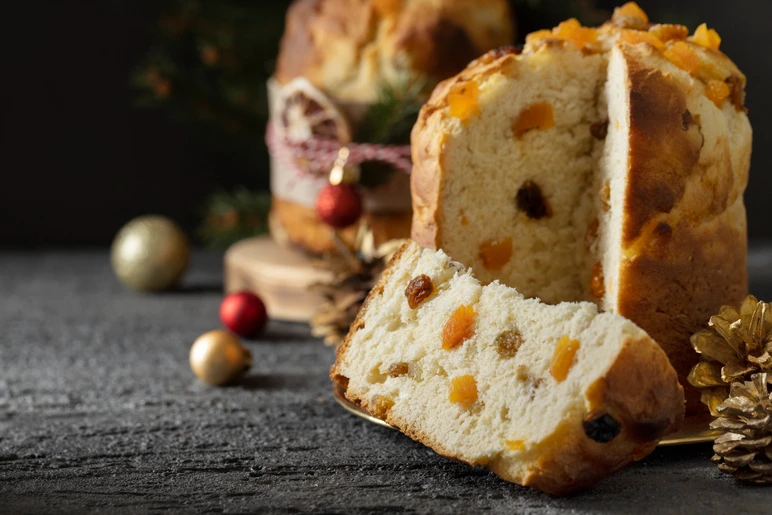
Panettone (Italy)
In Italy, Christmas is inseparable from panettone, the lofty Milanese bread that signals the season’s arrival. Enriched with butter, eggs and sugar, and delicately studded with candied citrus and raisins, it’s the product of patient fermentation and artisanal precision. Sliced and shared after festive meals, panettone is rarely rushed—lingering on the table alongside espresso or sparkling wine, extending the ritual of celebration well beyond Christmas Day.
Pavlova (Australia/New Zealand)
Pavlova reigns as the quintessential Christmas dessert in Australia and New Zealand, shaped as much by climate as by custom. Its crisp meringue shell and soft centre are crowned with whipped cream and seasonal fruit, exuding a light counterpoint to summer heat. Served at relaxed outdoor gatherings, pavlova reflects a distinctly Antipodean approach to Christmas that’s elegant, unpretentious, and attuned to the season.
Pecan Pie and Eggnog (The U.S.)
The Americans’ Christmas season is flavoured with pecan pie and eggnog. The pie’s caramelised filling and toasted nuts speak to Southern influence, while eggnog—rich, spiced and often spirited—circulates freely at holiday gatherings. Together, they reflect a festive culture defined by indulgence, familiarity and the pleasure of shared excess.
Tamales (Mexico and Central America)
Tamales are inseparable from Christmas celebrations across Mexico and Central America, valued as much for their making as for their flavour. Masa dough filled with savoury or spiced ingredients is wrapped and steamed, normally prepared communally in the days leading up to Christmas. Served on Christmas Eve, tamales speak to shared labour, heritage and the intimacy of family tradition.
Turrón (Spain)
Few flavours signal Christmas in Spain as clearly as turrón. Made from almonds, honey and sugar, this ancient confection appears in endless variations, from smooth and yielding to firm and brittle. Displayed in abundance and enjoyed in measured slices, turrón is less a dessert than a seasonal constant that’s present after meals, with coffee or liqueur, throughout the holiday period.
Weihnachtsgans (Germany)
Known as roast goose, this staple occupies a place of quiet importance on German Christmas tables. It’s slow-roasted and often stuffed with apples or herbs, served with red cabbage and dumplings, forming a meal defined by depth and restraint. Traditionally shared among family, Weihnachtsgans embodies the season’s emphasis on warmth, abundance and deliberate, unhurried dining.