


 Mirella Pandjaitan
 Dec 29, 2025
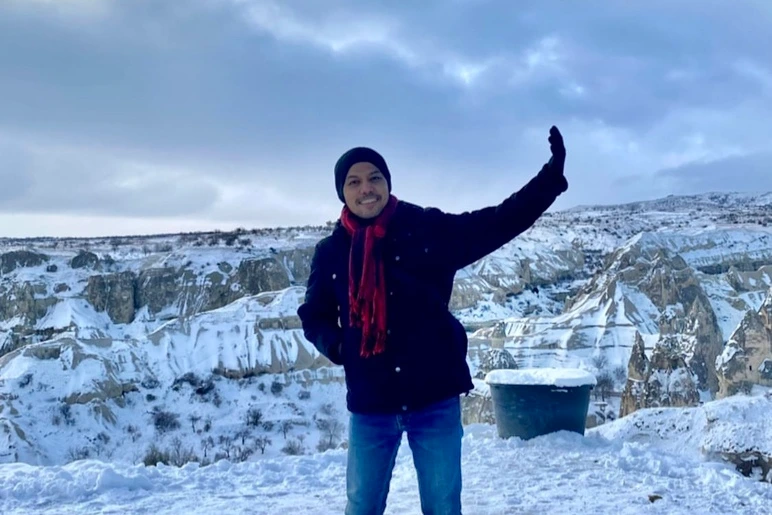
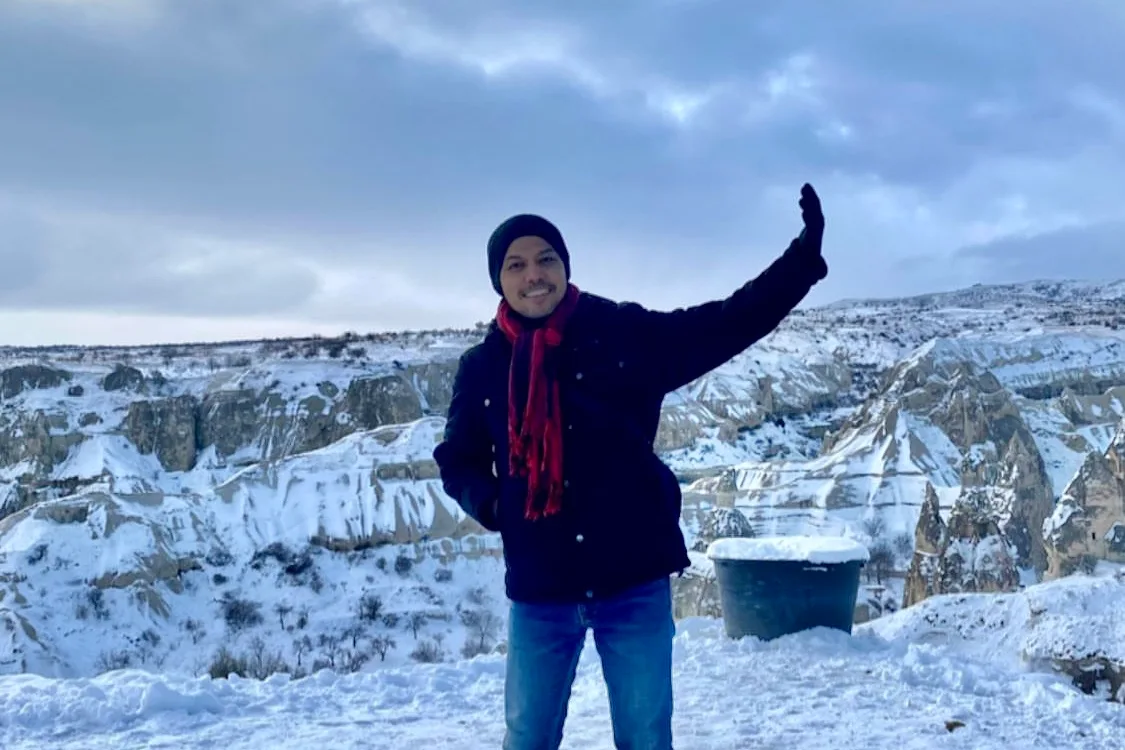
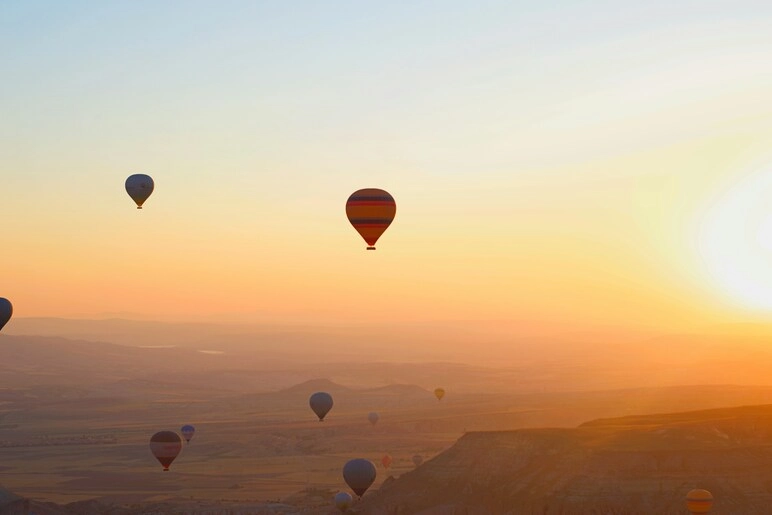
“Unfortunately, no, I didn’t get to ride the hot air balloon. Everything was cancelled due to the weather,” sorrowfully recalls Adnan. The slow, breath-held ascent over Cappadocia, bathed in the warmth of first light, would've been an irresistible memory to unlock for Adnan; alas, he explains that the strong winds and snowfall made it unsafe, and the Turkish authorities suspended all balloon flights across the region during his visit.
“It was disappointing—I had prepared mentally and emotionally—but safety comes first,” he adds in solace.
Adnan’s meticulous planning—between work, Umrah preparation, and logistics—for this long-awaited trip played out beyond his influence. But thank the heavens, everything went smoothly, which he depicts Cappadocia as “amazing” after spending three days and two nights amidst the frosty air of November throughout his week-long overseas escapes in Turkey.
“And if I had to use one sentence: Cappadocia holds a special place in my heart,” he articulates.
Those vivid, iconic hot air balloons gliding aloft expansive valleys and open plateaus have been trending widely on social media over the last few years, especially now that Turkey has gained a prime getaway ranking.
Poetically described as the “Land of Beautiful Horses”, a title rooted in antiquity, Cappadocia was believed to originate from the ancient Persian term Katpatuka, a reference to the region’s long-standing association with horse breeding. That equestrian legacy never disappeared. Even today, horses remain woven into Cappadocia’s cultural fabric, with horseback riding as a timeless way to traverse its winding trails and historic landscapes, echoing a rhythm of movement that has endured for millennia.
The seamless interplay between nature and human history sets Cappadocia apart. The region stands as a living archive of civilisations that adapted creatively to their environment. Adding to its modern-day allure are the silently floating hot air balloons soaring above the terrain below and transforming Cappadocia into one of the world’s most visually arresting destinations.
And Adnan concurs. “Not many places define their tourism through a hot air balloon ride. Plus, the unique landscape—its morphology is unlike anywhere else I’ve seen.
“It’s a complete package: nature, culture, and strong tourism promotion by Turkey itself. Everything works together beautifully.”
The South Tangerang local is a traveller at heart, culminating his enduring appetite for discovery within Indonesia’s endless tales throughout his university days. Adnan’s travel style sits somewhere between a backpacker and a budget-conscious explorer. It wasn’t until 2014 that he took his very first overseas escape—what he dubs “my first leap”. Since then, he has travelled quite consistently, both domestically and internationally. Airports have become his safe haven; a gateway to Singapore, Malaysia, Thailand, Laos, Cambodia, South Korea, Mongolia, Japan, Taiwan, Hong Kong, Macau, Oman, France, and India. Then, everything came to a complete halt during the pandemic.
Turkey, specifically, has been a personal wishlist for aeons. Yet, work commitments and the pandemic kept postponing it. Even once travel resumed, work and managing his own business consumed his entire focus.
Adnan ultimately saw a loophole in 2024. Interestingly, his major expedition wasn’t merely about Turkey—he was also performing Umrah. “So it became a dual journey: spiritual and exploratory. Initially, I wanted to travel independently to Turkey. But after receiving advice from my family, I decided to include Umrah as part of the journey. It felt like the right thing to do. So I revised my original plan and joined a package—travelling through Turkey first, then continuing with Umrah,” he points out.
“But one thing I knew for certain was that I had to experience the hot air balloons in Turkey.”
Cappadocia’s story extends far beyond its surface beauty. Above ground, its landscape feels almost surreal to Adnan. “Cappadocia’s geology is extraordinary,” he highlights. Towering fairy chimneys and dramatic rock formations—shaped by volcanic eruptions and millions of years of erosion—rise from the valleys like natural sculptures created from layers of hardened lava and softer tuff. “Because I visited in winter, much of it was covered in snow, which made it even more magical,” he adds.
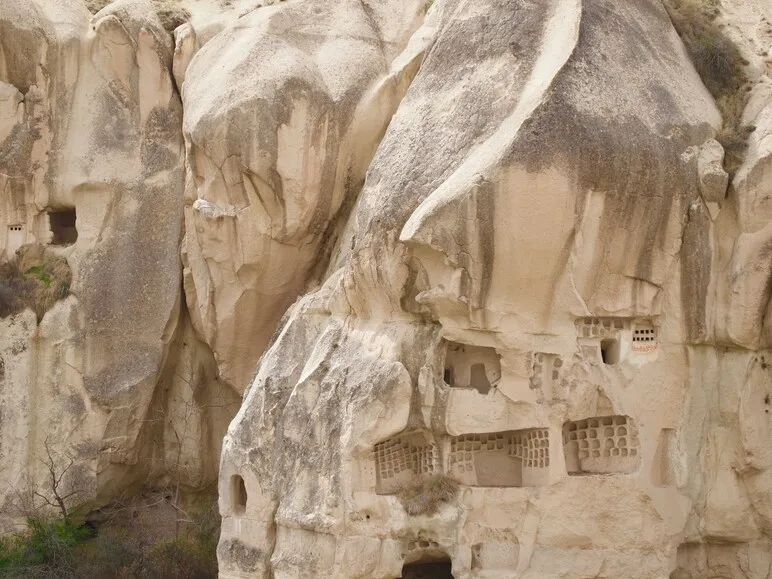
Humans didn’t simply live on this land; they carved their lives into it. Beneath the sculpted hills lies a testament to human resilience and imagination: a vast network of caves, churches, and subterranean cities carved directly into the land itself. Beginning as early as the 4th century, early Christian communities sought sanctuary here, fleeing persecution by carving refuge into the region’s soft volcanic stone. This easily shaped material allowed them to construct dwellings, as well as chapels adorned with frescoes, communal spaces, and complex underground cities. Over generations, these hidden settlements grew increasingly sophisticated, equipped with ventilation shafts, wells, and narrow passageways designed for defence.
“Walking through those tunnels felt like stepping directly into history. The cave hotels are unforgettable—structures carved into sharp, cone-like hills, resembling ant colonies. The cold was intense, but it added to the atmosphere,” he remarks.
While Cappadocia’s geological foundations stretch back some 60 million years, its cultural narrative began to take shape in the late Bronze Age. Subsequently, countless civilisations have passed through, each leaving traces etched into stone and memory.
The locals, through Adnan’s lens, are warm and relaxed—exuding a hint of culture shock. Adnan assumed that Turkey would be deeply religious due to its Muslim identity. But reality was more nuanced. Many people identify as Muslim culturally rather than practising actively.
“That surprised me—but it also taught me something important: respect local realities without imposing expectations. Wherever we stand, we should honour the ground beneath our feet,” he acknowledges.
Read also: Turkey Guide: Hidden Treasures to Explore
Adnan appreciates that no two travel experiences are the same; some might meet beyond expectations, whereas others could’ve been abundantly zestful. Cappadocia wasn't crowded during his adventure despite being deeply engaged in curated tourism experiences such as off-road trails through hills and ancient settlements.
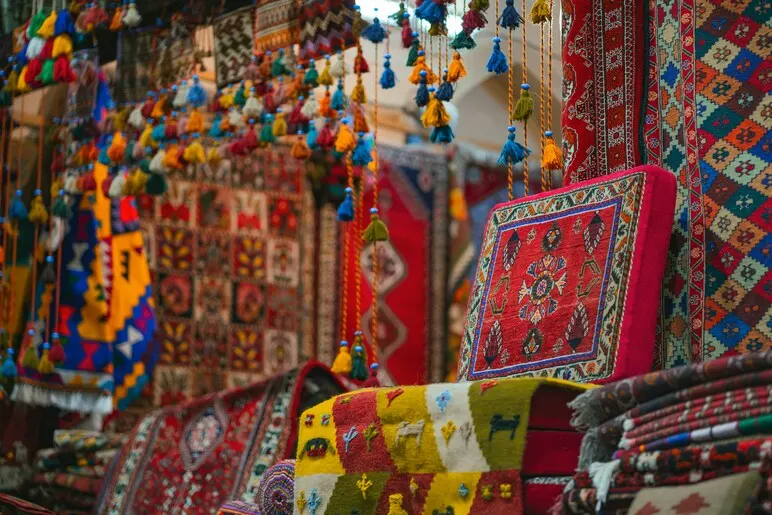
So, how did Adnan compensate for missing out on the hot air balloon? He rode the cable car, joined jeep safaris, as well as visited local carpet workshops, where he observed artisans hand-weaving traditional Turkish carpets. “Seeing how long it takes to create just one piece was humbling,” he said.
This Cappadocia-Turkey voyage is a world apart from where it all began in Thailand, which he notes was based on pure bravery. “Maybe I should say borderline recklessness instead,” he chuckles. As a vivacious student, Adnan spent about two weeks there, starting from Jakarta, transiting through Malaysia, and then entering Thailand.
He began his Mr Worldwide status in Bangkok—exploring Wat Arun and nearby areas like Ayutthaya—before making his way north to Chiang Mai and Chiang Rai. Eventually, he reached the Golden Triangle, where Thailand meets Laos and Myanmar. “Every part of the journey was done backpacking! “ he exclaims.
And here’s the wild part: he spent only around IDR 1.4 million (approximately USD 93) for the entire two weeks. “It really was a gamble. I slept mostly in hostels, but sometimes even in airports. I’d take a bus from places like Khao San Road to Don Mueang Airport just to have somewhere to sleep. Wake up early, clean up in the bathroom, shower, and then head out again. That was my routine,” he says.
That was Adnan in the past. Although remaining budget-conscious, he assures that he has evolved as he intentionally sets aside money for travel. Private rooms over dormitories—or sometimes hotels; public transportation, one-day tours, or organised trips over bicycle and motorbike rentals (that is, depending on the destination).
Adnan's ideal travel, nevertheless, consistently involves a journey that refreshes him, both mentally and physically. “Travel pulls me out of routine and monotony. I love nature, culture, and interacting with locals. Every place teaches me something new,” he says. Thus, no trip is ever wasted. Even negative experiences—like scams—become lessons. “Travel gives perspective, and that perspective stays with you.”
Russia is on Adnan’s radar. Or perhaps the Trans-Siberian route from China into Russia by train. Experiencing changing landscapes from a moving train feels incredibly meaningful to him. Whether or not it happens soon—given global conditions—it remains his dream.
“As long as you’re able—young or old—see the world! Step outside your bubble. Every journey expands your perspective and makes you wiser,” he concludes.
Cappadocia today remains a rare convergence of ancient earth, enduring history, and human creativity—a landscape not only shaped by time, but shaped with time. If Cappadocia in winter sounds intriguing, consider the possible misses that might occur. That said, don’t all escapes come with hits and misses?