


 Mirella Pandjaitan
 Jan 06, 2026
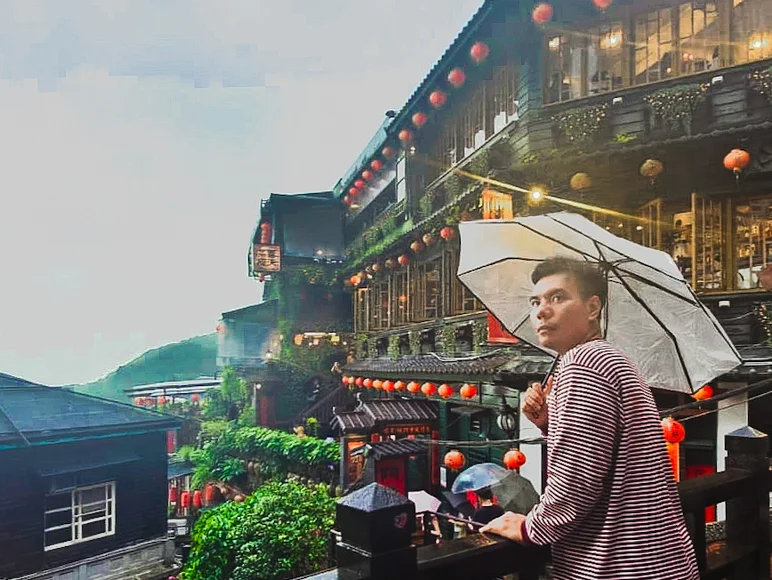
“Before Hong Kong, go to Taiwan. Before Bangkok, go to Taiwan. The real Asia lives there,” reminisces Candra Ros on his Overseas Escapes to Taiwan.
Candra ultimately learns that the world is vast, and Asia is not one monolith, simply from this five-day escapade of holistic exploration. “Taiwan stands on its own—with its own character, warmth, and soul,” he continues. That’s what makes it unforgettable: a familiar sensation, one that many people associate with the act of travelling.
Taiwan is roughly the size of Belgium, and even so, one of the most densely populated places on Earth, home to nearly as many people as Australia! As twilight kisses the sky, Taiwan’s streets awaken. Night markets spill into alleys and temple courtyards, pulsing with music, movement, and the irresistible aroma of street food.
Convenience has been perfected as well. More convenience stores per capita exist than in any country in the world, serving as cultural hubs where locals and wanderers alike relish in hot meals, pay bills, ship parcels, call taxis, and even buy concert tickets. In between all of that gushing essence, garbage trucks announce their arrival with classical music (popularly Beethoven’s Für Elis).
Read also: Taiwan Guide: Insights for First-timers
Candra came with few expectations, only to be proven wrong thanks to his “Amazing Race” mindset. Because sometimes, waiting for certainty is a fool's errand. Go, and the journey meets you there. Regardless of a jumbled, mortifying, insecure, and unready thrill. Go solo! “I adopted the Amazing Race mindset when I got my Australian visa. Until then, I’d never travelled alone—I was always with friends to Malaysia and Singapore, always following their pace.
“Australia was different. A new continent, a visa-required destination—it was terrifying. But I leapt. I survived my birthday trip there in 2024,” he proudly says.
Candra reckons Taiwan isn’t subjectively seen as a “main” destination, despite the surging adventurous interest picking up. Most consider Hong Kong or Macau to occupy the highest honour. Taiwan does require a visa; still, this destination is nonetheless rarely top of mind, unless that wanderer is deeply immersed in certain subcultures.
“I never imagined I’d visit Taiwan in my life! Ever! Beginner travellers usually opt for Malaysia, Singapore, Vietnam, and Thailand. Australia already feels like a big leap to many,” he points out.
So why Taiwan? Because comfort mattered more than convention. Candra needed to feel free.
“At that time, I was still very much finding myself. A good friend of mine suggested a Formosa event, otherwise known as a party in Taiwan. He rather sold ‘self-expression’, alongside the gleams of spectacular annual festivals and music events,” he says.
Sceptical about his friend’s insight at first, Candra nevertheless trusts his credibility. “I thought, ‘Why not? YOLO [You Only Live Once].’ If I could survive Australia, I could survive anywhere!” he exclaims.
They rigidly adhere to a plan which revolves around cordial instalment payments, month by month, so that by the date of departure, everything is already under control. What’s left of their plan is their presence.
“Taiwan in one word? Let’s say balance.
“Day by day, I saw elders simply living their lives, all unbothered, yet coexisting peacefully with flamboyant younger cohorts,” he smiles. Whereas once the morning surrenders to darkness, Taipei feels electric during his visit, where parties last until daybreak chants. The freeing sensation is pure, in comparison to his Songkran experience. “The city was full of enchanting faces and radiant souls,” he says.
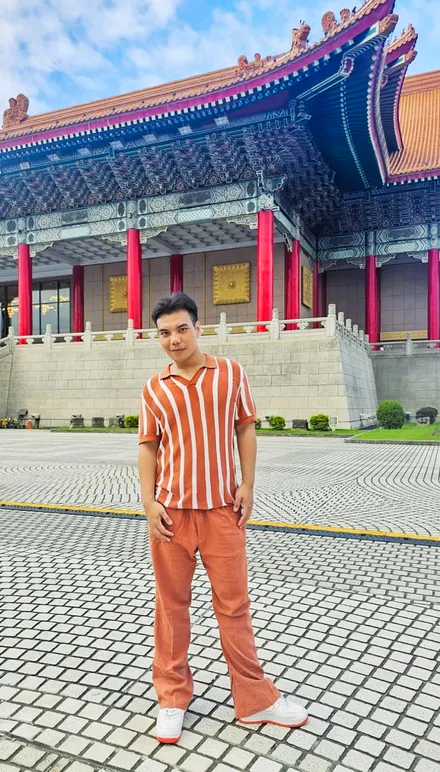
Taiwan is stunning as well as seamless the moment his plane lands. Public transport is efficient, with elevated railways piercing through mountains, conjuring culture shock. However, Taiwan’s nature took the reins for this occasional party person.
An admirer of landmarks and photo spots like Candra fails to resist Taiwan’s lush landscapes tethered with mountains and hills—yet somehow, a modern ambience lingers right in the middle of it all. “It feels surreal. Like landing in Jurassic World and suddenly discovering a city,” he compares. “I remember feeling both awed and deeply calm traversing Taiwan’s nature. The air is clean, the environment is pristine, and everything feels intentional. It’s incredibly healing.” His odyssey through Down Under a week prior becomes incomparable. Personally—well, subjectively—Candra prefers Taiwan.
This is a tapestry in dramatic contrasts, an island where nature rises boldly, and beauty asserts itself at every turn. When Portuguese sailors arrived centuries ago, they named the island Formosa, or “beautiful island.” The name endures. Nearly two-thirds of Taiwan is shaped by mountains, giving it the highest concentration of high peaks of any island on Earth. Though the climate is subtropical, winter dusts these lofty summits with snow, adding a perplexing alpine elegance to the landscape.
Taiwan is, geologically speaking, alive due to its position along the Pacific Ring of Fire. The island is home to four active volcanic regions, including the Datun volcanic group, which encompasses Yangmingshan National Park just beyond central Taipei. Long believed dormant, scientists confirmed in 2017 the presence of a magma chamber beneath the area, placing an active volcano merely 15 kilometres from the capital’s heart. The remaining volcanic zones lie offshore: one on Guishan (Turtle) Island, and two beneath the waters off the northeastern coast.
This restless geology gives rise to one of Taiwan’s most indulgent natural luxuries: hot springs. Thus, boasting one of the world’s highest concentrations, from mineral-rich mud baths to one of only three saltwater hot springs on the planet, located on Green Island. All of these natural wonders serve as a breathtaking backdrop to cities that rank among the most technologically advanced in the world.
Candra mostly lurked in Taipei, especially for first-timers. “But if you’re not into nature or the subcultures there, it might feel boring. Even as a foodie, I found Hong Kong and Macau more gastronomically satisfying,” he says.
He ventures out once Taipei’s electrifying pulse wears out. He scouts Jiufen Old Street—the town that inspired Spirited Away. Shop owners at this hillside village, filled with teahouses, lanterns, and narrow alleys, freely offer samples as he ascended uphill. By the time he reached the top, his appetite didn’t cry. Yehliu Geopark, renowned for its mushroom-shaped rock formations by the sea, is also part of his itinerary. This destination in the glow of his luminous October sojourn feels less rewarding since the frosty whispers hiss the air.
“There’s another place called Ruifang that’s said to resemble New Zealand, with hills and grazing animals. I didn’t make it this time, but it’s on my list for next!” he notes.
Despite the elders struggling with English while the youths are more fluent, the urge of the locals to communicate and champion never fades. Help doesn’t come with expectation in return. Even when language fails, they try with gestures, patience, and effort. That effort alone makes the experience memorable for Candra.
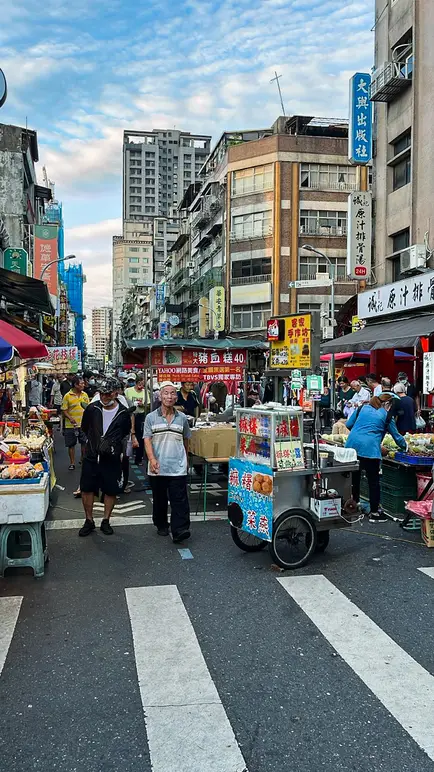
“Taiwan absolutely deserves a spot on more people’s bucket lists!” he gushes. “Especially for its balance—party one night, wake up to smiling grandparents jogging the next morning,” Candra finds himself bewitched by the people’s open-mindedness and welcoming and generous traits. “It reminds me of what people say about Japan—the desire to return not just for the scenery, but for the culture.”
Candra is a simple man. Whenever he’s not playing catch with his adorable huskies, he’s café hopping with those dearest to him or hitting the gym. That was his life until the point of only truly discovering his deep passion for travelling after the pandemic. “There was this sudden sense of claustrophobia—almost like I needed to escape my own country,” he recalls. At the time, Candra was supposed to go to Malaysia with a friend, but it fell through, which sorrowfully left him with a bit of unresolved longing. “So I finally decided to push myself. And once I started travelling, I realised—I was addicted,” he glistens.
By the grace of his friends who entirely shifted his mindset, revolving how detrimentally costly exploring the world could be, he now swears by the concept of going all in—experience the country fully, not just one city or the main cities.
“Using a suitcase just doesn’t work for this system; backpacking is essential. It allows you to move freely, even if the costs add up,” he shares. “At first, it was overwhelming—physically exhausting, honestly. But I’m grateful I learned this way while I’m still young. Travelling like that teaches me efficiency, resilience, and adaptability.”
Alongside the Amazing Race style of travel etched to his core are accessibility, transportation, information, and local support (even in difficult areas), blossoming as his quintessential adventure. Taiwan delivers all of the above. It’s modern without sacrificing nature, culture, or kindness. For Candra, Taiwan is perfect.
“Visa first—always. Understand validity dates properly,” reveals his insider tips. Visa-wise, he learned something new: an electronic Indonesian passport and prior visas from countries like Australia, Japan, the US, or Schengen states enable holders to apply for an ETA instead of a traditional visa to Taiwan. Thus, his immigration process became much easier after Australia.
Also, budget wisely; Taiwan is quite high when converted to Indonesian rupiah. Food is filling, but Muslim travellers will find pork everywhere. Lastly, plan transportation carefully since routes are abundant, and choosing the wrong one can cost hours.
“The big three: Japan, Korea, and China are next on my travel bucket list. Fingers crossed!” he concludes.
Finding oneself can occur anywhere in the world. However, inhaling and exhaling overseas air, no matter how far away from home, does come with a revitalising boost to that freedom we all crave.