


 Mirella Pandjaitan
 Aug 07, 2026
One more day.
That was all left of Bangkok.
Where did the time go? In one second, my travel sidekick and I traversed the old lanes and tales of Talad Noi. Another second was spent immersing in a traditional Thai massage at COMO Shambhala. Hardly enough time to understand a city that's energetic, chaotic, and endlessly fascinating.
“What’s the route for tomorrow?” as we sipped cocktails at Bar Sathorn, maintaining optimism over the hours left for our bucket list. Five more corners of Bangkok called our names, linked by the city’s seamless dance of trains, boats, taxis, and walkable streets. Ambitious? Perhaps. Impossible? We preferred not to think so. A little planning made all the difference.
But the city could wait a bit longer. Curled up beneath crisp linens in the quiet embrace of COMO Metropolitan Bangkok, I let stillness do its work, restoring both body and mind for another day of discovery with fresh eyes.
Lumphini Park: A green escape
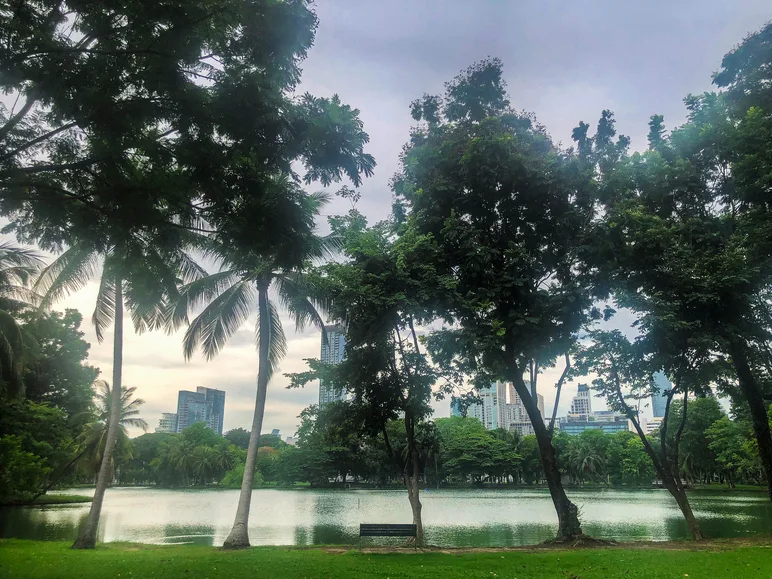
Bangkok’s symphony softened in a matter of footsteps from the hotel. Lumphini Park is where the city’s hum surrendered to birdsong, rustling leaves, steady strides of joggers, elegant tai chi movements, and thumbing through books.
“Wow, I could stay all day here!” I gasped to my sidekick, while we sat on a bench overlooking the paddle boats gliding across the expansive artificial lake of Bangkok’s first-ever public park. Over 100 tree species and a 2.5 km track span this 142-acre Royal land donated by King Rama VI in the 1920s, named after Lord Buddha's birthplace in Nepal. Lumphini Park was more of a shared living room than a tourist attraction.
Over a century has passed, yet this free-access park never shied away from embracing sustainability to meet the needs of modern Bangkok through ongoing revitalisation efforts, with greener landscapes, improved water management, and spaces designed for recreation, learning, and community gatherings. We continued sauntering around the lake and chose a path towards an amphitheatre where a local busted some sort of parkour moves.
Lumphini Park’s allure spoke for itself—to both man and wildlife. Hundreds of wild Asian water monitor lizards call this park their home. I wasn’t quietly hoping to spot them. But these creatures would lazily emerge from the water before disappearing into the grass or confidently wander across the path as joggers instinctively step around them. Locals barely catch a second glance. Some tourists purposely circle the park in hopes of a sighting. But I am neither one because I’d instantly lose composure.
“We should get going before the weather gets stifling,” my sidekick suggested as the sun's beam pierced our legs. I wondered about this park’s character at different hours of the day, from 4:30 AM to 10 PM. Guess it’ll unfold in my next visit.
Chatuchak Weekend Market: A maze of endless discoveries
One crossing was all it took to return to Bangkok's familiar cadence, as Lumphini MRT Station welcomed us onward. Precisely 13 stops later, we resurfaced into Bangkok's familiar tempo via Kamphaeng Phet MRT Station. Every city has that one place where a few hours somehow dissolve into an entire afternoon. That’s undoubtedly Chatuchak Weekend Market.
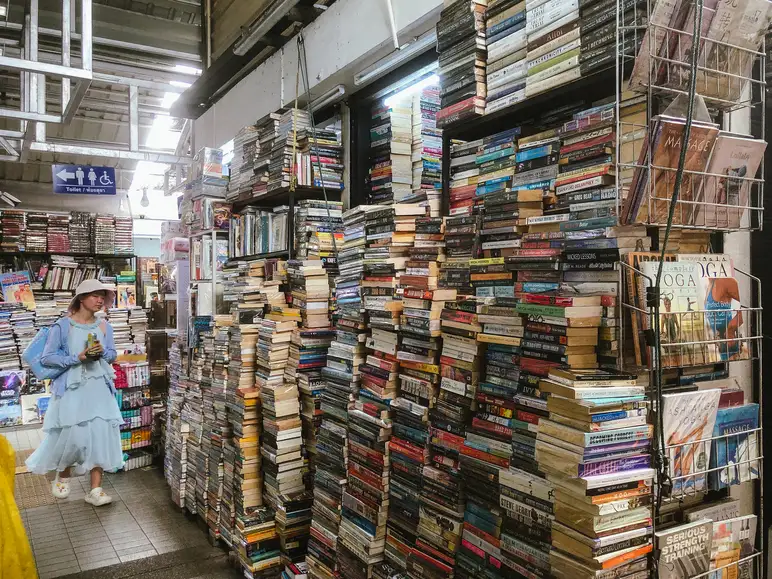
Chatuchak was a city in miniature where any sense of direction began to disappear in the best possible way! It’s widely regarded as the largest weekend market in the world, defined by roughly 15,000 stalls spread across 27 sections. Fashion, home décor, handcrafted accessories, vintage collectables, second-hand books, antiques, ceramics, artwork, tropical plants, beauty products, and an endless array of local delicacies all comfortably coexist beneath one enormous roof.
I quickly realised that Chatuchak rewarded curiosity. “Follow me to the Fashion section,” nudged my sidekick. The butterflies in my stomach rejoiced; attention pulled from one display to another, browsing racks of clothing by emerging Thai designers. Eventually, I couldn’t resist a white, boho-chic top.
Getting a little lost was, in fact, part of the experience all along—Chatuchak was indeed a wonderful distraction from the unbearable heat.
“I reckon this should be the way to the food section,” asserted my sidekick. Wisps of smoke from the seafood grills veiled rows of brilliantly coloured fruit in a soft, fragrant haze. Local snacks, coconut ice cream, and countless street food favourites appeared at almost every inch. The question was: what should we get? Nothing, since we saved our appetite.
The heat eventually caught up with us, dissolving any lingering energy. One piece of advice I'd happily pass along, it's this: come early.
Bangkok's morning heat is far kinder than the sweltering afternoon sun, although even the earlier hours can feel surprisingly warm. Comfortable clothing, supportive shoes, and plenty of water quickly became the best shopping companions. More importantly, allow enough time. While two to three hours are enough to explore the highlights, devoted shoppers could easily spend half a day—or six hours without even realising it.
A chilled bottle of water barely lasted the walk minutes before we slipped into a Grab, bound for our next expedition.
Hidden Bangkok Bistro: Coffee with a giant Buddha
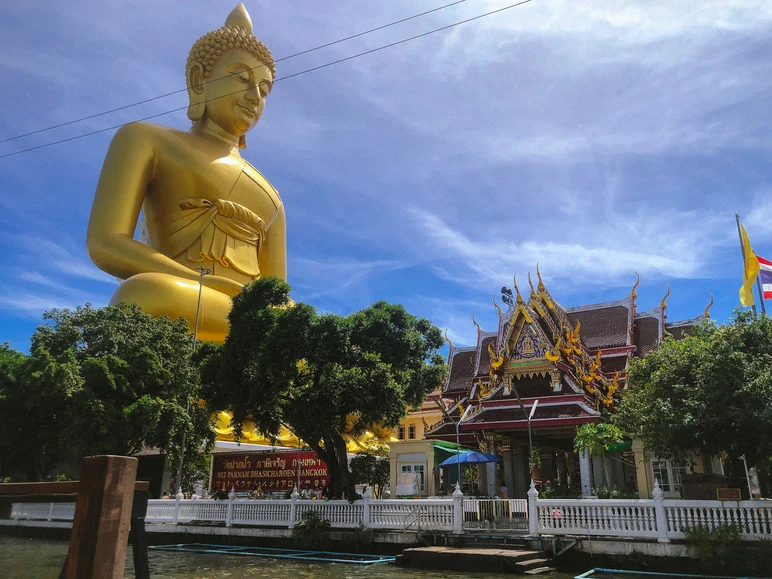
TikTok lured us into venturing 30 minutes beyond the usual tourist trail to see Hidden Bangkok Bistro with our own eyes. A café that captured the internet's attention for reasons extending beyond its coffee.
“What’s the hype about it?” asked my sidekick. “The backdrop,” I gushed.
Reaching it required a tad extra effort. We could’ve opted for the MRT, especially from Chatuchak Market; it would’ve entailed roughly a 20-minute walk for the final stretch. That wasn’t an option when time was limited. A Grab would get us close; nevertheless, the narrower residential alleys surrounding the café are inaccessible by car. It demanded one final push on foot–yet the reward justified the extra steps.
The café was already buzzing once we arrived. It’s perched beside a quiet canal tucked away in Bangkok Noi’s Ton Buri neighbourhood, framed by traditional temple architecture, with long-tail boats drifting past the colossal golden Buddha statue, Phra Buddha Dhammakaya Thep Mongkol. Inside was divided into two lines as café-goers waited on one side and restaurant diners on the other.
Different perspectives were spread across three levels. The ground level sat closest to the canal, perfect for sinking into a cuppa from its outdoor terrace. Waves of captivated minds patiently queued for their turn to capture the now-iconic photograph, each hoping for that fleeting moment when the terrace briefly cleared. Upstairs, the second floor opened up fresh vantage points framed by traditional temple architecture, whereas the rooftop revealed the widest panorama, particularly enchanting as the afternoon light softened into golden hour.
A terrace table became ours just in time, with generous sunshades shielding us from the steadily intensified heat. We toyed with the idea of dining at the restaurant upstairs, but a waiting list of more than 20 names made the decision easy.
“Maybe I should stand here to claim our photo-op,” I said. A few minutes into our impromptu photoshoot, I looked up to find a line of eager visitors waiting behind my sidekick, all hoping to capture the same iconic frame.
Regardless, Hidden Bangkok Bistro is worth visiting even after the cameras are stored away. The pastry counter featured buttery croissants and flaky pain au chocolat emerging fresh from the kitchen throughout the day. Pair one with an orange coffee—a surprisingly refreshing blend of espresso and citrus—or opt for one of the café's fruit smoothies, such as the tropical mango passionfruit. One delightful surprise greeted us at our shaded spot: a humble mango sticky rice stall conveniently beside the café.
Time a visit between 3:30 and 4 PM, when the afternoon light begins its slow transformation as the sun sinks lower and the giant Buddha catches the last golden rays, casting the entire canal in a softer, more atmospheric light.
The next chapter of our day pulled us north of the city to another pier to chase the last light of the day.
Hop-On Hop-Off Boat: Bangkok from the water
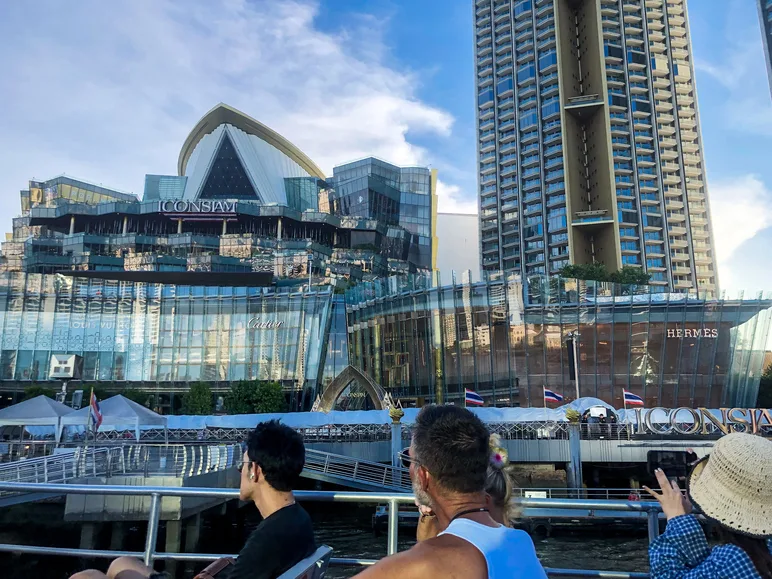
Where else can a boat be the best way to explore a capital?
We’ve traced Singapore with its six-wheeled Hop-On Hop-Off version. Bangkok reinterprets urban exploration in its own way—a passage across the historic waterways, the Chao Phraya River.
The nearest pier was ICONSIAM, which rose along the river’s bank. A Grab car sufficed as the best mode to this luxury shopping destination. Home to one of Bangkok's busiest waterfront transport hubs, free shuttle boats and river ferries connected ICONSIAM to other parts of the city throughout the day, yet we had our sights set on the Chao Phraya Tourist Boat.
“Where is the pier?” we took turns asking security guards for directions in this massive mall. ICONSIAM Pier’s signages became more evident along the immersive SOOKSIAM indoor floating market.
As soon as the automatic glass doors of ICONSIAM slid open, the Chao Phraya River came into view. Merely to the right of the exit, the riverside promenade teemed with ferry passengers, tourists, and boat operators moving between the ticket counters and piers. We found the Hop-On Hop-Off Tourist Boat booth almost immediately. “A single journey costs 40 baht, while an all-day pass is available for 150 baht,” explained the clerk.
Ten main piers lined the route, connecting many of Bangkok's most celebrated attractions, such as ICONSIAM Pier, Sathorn Pier (BTS Saphan Taksin), Ratchawongse Pier, Pakklong Taladd (Yodpiman) Pier, Wat Arun Pier, Tha Tien Pier, Tha Chang Pier, Tha Maharaj Pier, Prannok Pier, and Phra Arthit Pier. Additionally, afternoon and evening services continued to Asiatique, a renowned riverside night market.
The freedom lay in choosing our own expedition. Stay aboard and admire the city's ever-changing skyline, or hop off whenever something attention-seeking appears before boarding the next boat. Naturally, we opted for the all-day pass.
"Where's your stop?" an attendant asked. "Wat Arun Pier," I replied. He nodded, then pointed us towards the right line. No time was wasted forming a beeline on the upper deck.
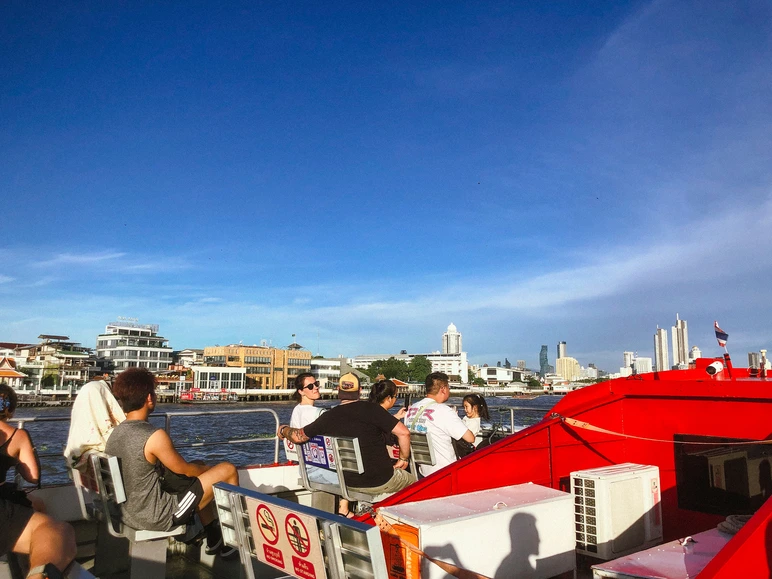
Standing here felt strangely liberating. Bangkok revealed an entirely different personality from the river. Instead of bumper-to-bumper traffic, long-tail boats zipped across the water while temple spires, luxury hotels, old wooden houses, and modern skyscrapers unfolded side by side.
The half-hour wait sounded longer on paper than it felt in reality. Surrounded by panoramic river views, I barely noticed the minutes passed until an attendant motioned our descent to the floating dock as our boat pulled in. The river breeze whipped through my hair, but even after 4 PM, Bangkok's relentless sun refused to loosen its grip. This leg of our journey felt reminiscent of our time in Singapore.
Wat Arun: The temple of dawn
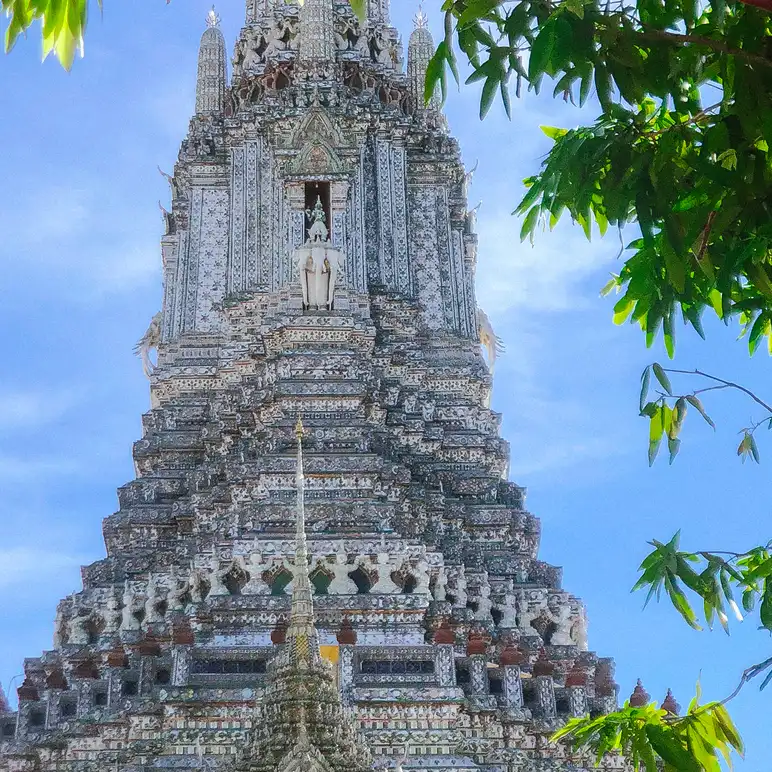
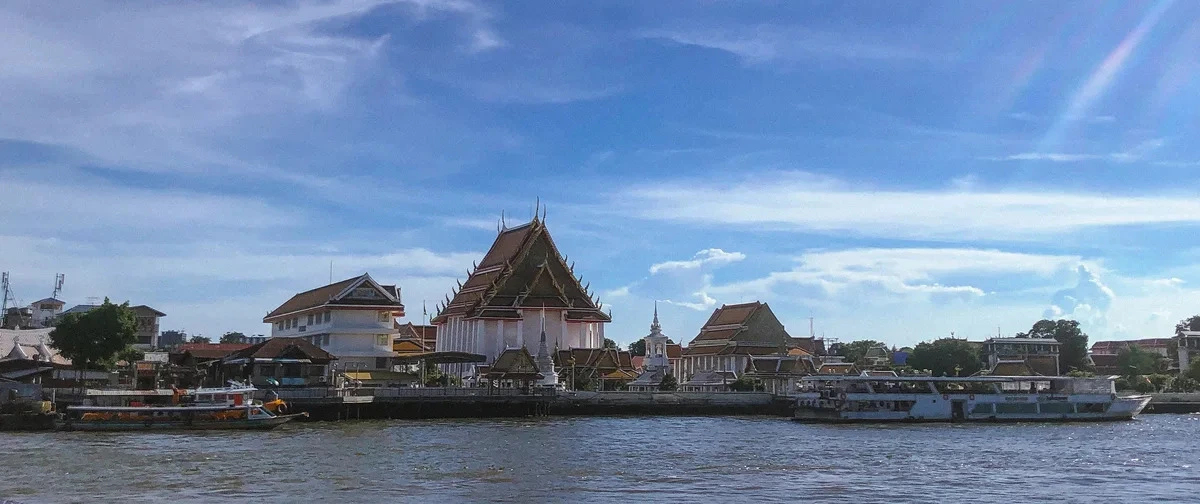
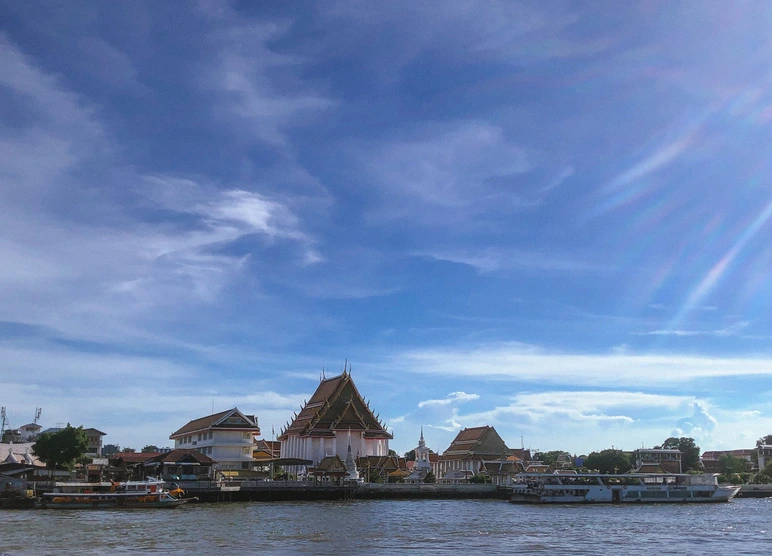
Two stops away, our heads turned, grasping Wat Arun's soaring central prang that gradually emerged above the riverside skyline, shimmering beneath the afternoon sun. Every tourist on the boat instinctively reached for their gadgets. I was no different.
Also referred to as the ‘Temple of Dawn’, Wat Arun dates back to the Ayutthaya period and was later restored during the reign of King Rama II. The temple holds deep cultural and spiritual significance for Thailand. It was here that King Taksin was believed to have arrived after reclaiming the former capital from Burmese occupation, eventually establishing Thonburi as the kingdom's new capital. Today, Wat Arun continues to serve as an active Buddhist temple while remaining one of the country's most treasured architectural icons.
A visit here requires a modest dress code, with shoulders and knees respectfully covered. Those arriving unprepared can conveniently rent a sarong at the entrance before purchasing a ticket for 200 baht.
The more extraordinary the craftsmanship became, even outside the gates. Delicate floral motifs, colourful fragments of Chinese porcelain, seashells, and intricate ceramic mosaics blanket the temple's towering Khmer-style spires. Every surface seemed to tell another story, proving that Wat Arun is just as captivating in its smallest details as it is from afar.
Climb the temple's steep central prang for sweeping views across the river and Bangkok's historic quarters. Or, let the grounds quietly unfold to one of Thailand's most photographed landmarks from every possible angle.
“Oh no, the audio is scratched!” exclaimed my sidekick. Part of our day vlog encountered technical difficulties from the boat ride. We hopped back on with no pier in mind. After several failed attempts, discouraged by the sensation of being barbecued, an unexpected conversation chimed in.
“You’re doing great!” enthused a French couple sitting a seat before me, acknowledging our efforts. "Come back at sunset," the man suggested. "Or better yet, stay longer and see Wat Arun from the water." Wat Arun embodied Bangkok's enduring history, artistry, and spirit—all rising gracefully from the river that has shaped Bangkok for generations.
“Let's head back before dinnertime,” I suggested to my sidekick. We hopped off Sathorn Pier, searched for a revitalising to-go cup of Thai Milk Tea before our 20-minute air-conditioned trip back to our oasis.
Banthat Thong Road: A lively after-dark scene
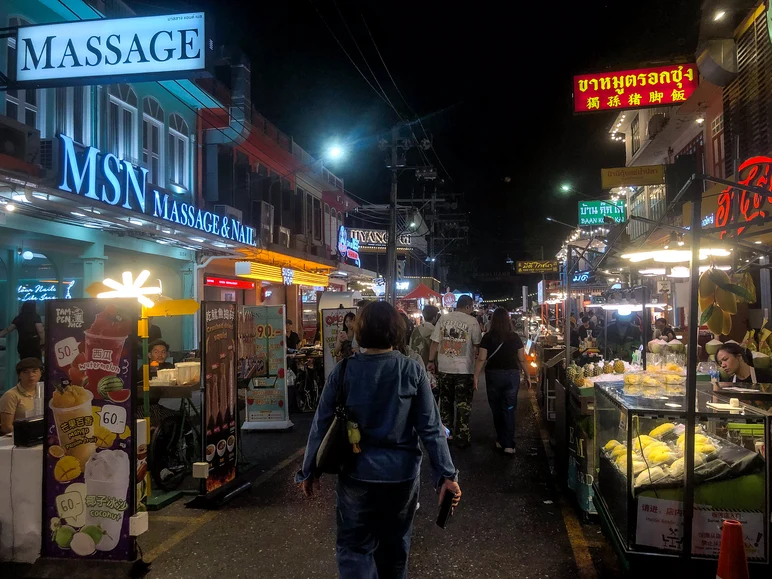
“My friend recommended Banthat Thong Road for our final night,” shared my sidekick. “How could it be neon lights' turn to take over the capital already?” I pondered.
The neighbourhood slipped into an entirely different mood as daylight faded. Queues began forming outside celebrated eateries, cafés spilt onto the pavements, dessert shops glowed beneath neon signs, and conversations blended effortlessly with the irresistible aroma of food drifting through the air.
Banthat Thong has earned widespread recognition for its remarkable concentration of restaurants, many of which have been featured in the Michelin Guide and the Michelin Bib Gourmand selection. Yet, diversity made the street intriguing. Traditional Thai favourites were served alongside modern interpretations of local cuisine; Korean barbecue restaurants, Japanese eateries, artisanal cafés, bakeries, and creative dessert bars all thrived within a few steps of one another.
The scent of smoky grilled seafood and sizzling pad kra pao tempted us towards a busy local restaurant. Then, we peered through the windows of an owl-themed café before stopping for Thailand's most polarising delicacies—durian. I’m not a devoted fan, so I strolled along the stalls further down the lane while my sidekick relished his own world.
No, this wasn’t merely a place to have dinner. Banthat Thong had independent boutiques, lifestyle shops, beauty salons, and neighbourhood grooming studios. We also came across pop-up vendors and small night market-style stalls, perfect for a post-meal stroll.
Suddenly, it was midnight. Our final chapter of the day ended in true Bangkok flair—my first tuk-tuk ride.
Follow your senses! Wherever the aromas, the crowds, or your curiosity decide to lead you in Bangkok.