



 Mirella Pandjaitan
 Dec 09, 2025
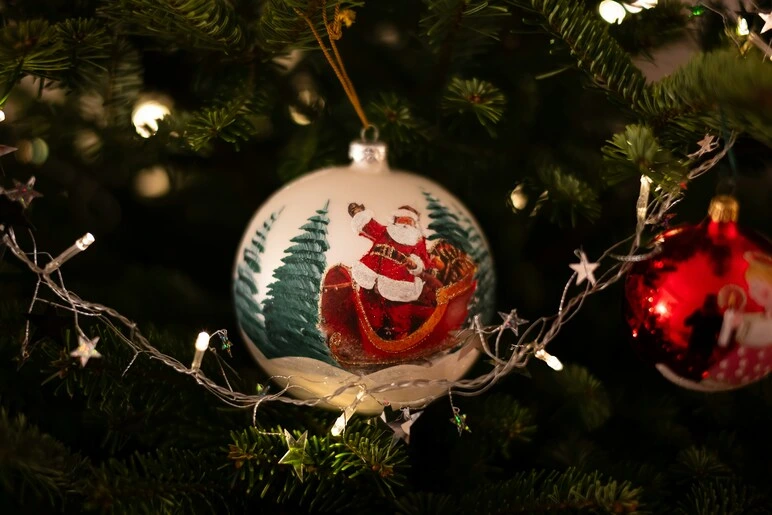
Whoever told your childhood self that Santa Claus wasn't real doesn't believe in magic… and generosity. Because, guess what? Santa Claus is real!
Santa Claus is a fantasy stitched from childhood, folklore, and a longing for magic. He crosses continents, cultures, and time zones, leaving twinkling traces of wonder in millions of homes. As each December, when the world collectively imagines a figure racing through the heavens with effortless grace, a crimson silhouette moves at an impossible 822 homes per second, or roughly 3.7 million kilometres per hour for 31 glittering hours.
Nevertheless, the origins of this celestial courier are far more earthly — and far more intriguing. Behind the snow-soft beard and sleigh bells stands St Nicholas, a fourth-century bishop from ancient Greece, by way of what is now southern Türkiye. A man whose quiet acts of humanity became so radiant, they transcended centuries and blossomed into one of the world’s most enduring legends.
The human face of holiday myth
Santa Claus truly walked this earth. Long before the myth was wrapped in velvet and fur trim, Nicholas of Myra lived under the fierce Mediterranean sun of the Roman Empire. Modern reconstructions, built from the contours of his preserved bones, reveal a man with dark eyes, an olive complexion, and a broken nose — perhaps during religious persecution. He was no rotund, jolly caricature, but a figure shaped by austerity, compassion, and resolve.
What made him extraordinary were his secrets: his hidden gifts, left under the shelter of night; and his quiet rescues of families teetering on the brink of despair.
He slipped bags of gold to the impoverished, saved three young sisters from destitution by providing their dowries, as well as provided bread and grain where hunger hollowed entire communities. One tale recounts how he tossed gold through an open window, the coins landing in stockings left to dry by the fire. From this single act of whispered generosity, a tradition — and eventually an empire of myth — unfurled.
A legacy carried by sea winds and storytellers
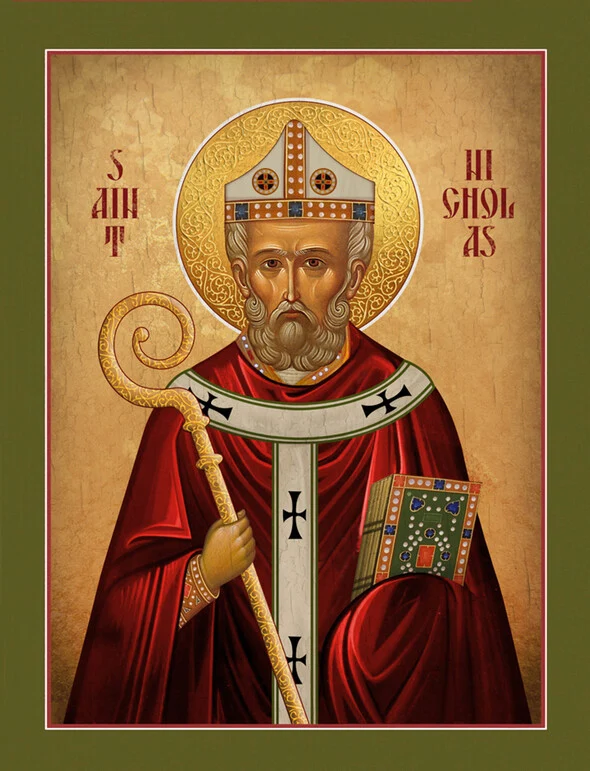
Myra’s location along important Roman trade routes made Nicholas a kind of spiritual compass for sailors and travellers who bore his stories far beyond the Mediterranean. His legends — part miracle, part moral compass — shimmered across continents, carried in the pockets of merchants and along the timbered decks of merchant ships.
He became the patron saint of children because he protected them. The patron saint of travellers because he guided them. And eventually, the patron saint of winter wonder because the world needed someone to deliver joy when nights grew longest.
From Sinterklaas to Santa
The name “Santa Claus” is the anglicised evolution of the Dutch Sinterklaas, carried across the Atlantic by immigrants whose winter folklore became woven into the fabric of early American culture. Over centuries, the saint’s silhouette was sketched and reshaped, his stories embroidered by Germanic legend, Dutch tradition, and ultimately the imagination of a growing nation.
Scholars have spent years translating some of the earliest texts written about Nicholas — written scarcely a century after his death. They note that bishops of his era are figures of surprising civic power: spiritual guides who also repaired fountains and roads, officiated marriages, organised citywide festivals, and defended coastal towns from pirates.
Nicholas lived well into his seventies, travelling extensively across the Mediterranean before his death. Merchant sailors later stole his remains from Myra in 1087, carrying them to Bari, Italy, where they rested in a marble sarcophagus.
Modern reconstructions suggest he did, in time, grow the white beard that has become his signature. Early bishops wore no single uniform, but it’s believed Nicholas favoured a red tunic once his prominence grew — a detail that would shimmer, centuries later, into the iconic scarlet suit of the American Santa.
The storyline
Sinterklaas in The Netherlands
Sinterklaas emerged as a benevolent, almost ethereal figure — a saint of generosity who, through means nothing short of magical, could slip through locked doors and soot-lined chimneys. With each winter’s arrival, he left delicate traces of wonder for children: small gifts, sweet surprises, and the lingering perfume of possibility.
By the Middle Ages, the markets held in his honour had become highlights of the Dutch winter season. These bustling Christmas fairs bloomed with toy stalls, confection sellers, and the intoxicating warmth of celebration. And presiding over it all was Sinterklaas himself, draped in a long red robe, appearing before crowds eager for a glimpse of the winter saint.
Over time, the narrative of Sinterklaas expanded with a cast of darker, cautionary shadows — characters who punished misbehaving children — known as Krampus, Père Fouettard, Ru-Klaus, Pelsnickel, and Knecht Rupert.
Father Christmas in England
The origins stretch back to at least the 15th century. One early Christmas carol celebrates a figure called Sir Christemas, who strides forth spreading news of Christ’s birth — a messenger of merriment wrapped in medieval melody.
During the Tudor and Stuart eras, English nobility employed a figure known as the Lord of Misrule to entertain them through the festive season. He was, in various retellings, Captain Christmas or Prince Christmas: a master of revelry. But it was the English playwright Ben Jonson who, in 1616, crystallised the image that would linger.
In his festive drama Christmas, His Masque, Jonson introduced Old Christmas — a gentle, elderly man with a long, slender white beard, robed in flowing fabric and accompanied by a retinue of sons and daughters. The figure was both theatrical and timeless, a winter elder ushering England into celebration.
Sinterklaas eventually crossed the channel into England and intertwined with Father Christmas. To the Victorian imagination — ever eager for reinvention — Sinterklaas felt like a fresher, more spirited iteration of the ancient winter gentleman. With his arrival bloomed a bouquet of now-classic traditions: the Christmas tree, festive biscuits, holiday cards, and the custom of exchanging gifts on Christmas Day.
Both names — Father Christmas and Sinterklaas — endured. But it’s the cheerful, effervescent Dutch Sinterklaas who has left the deepest imprint on the modern world.
Santa Claus, a tradition that never truly faded
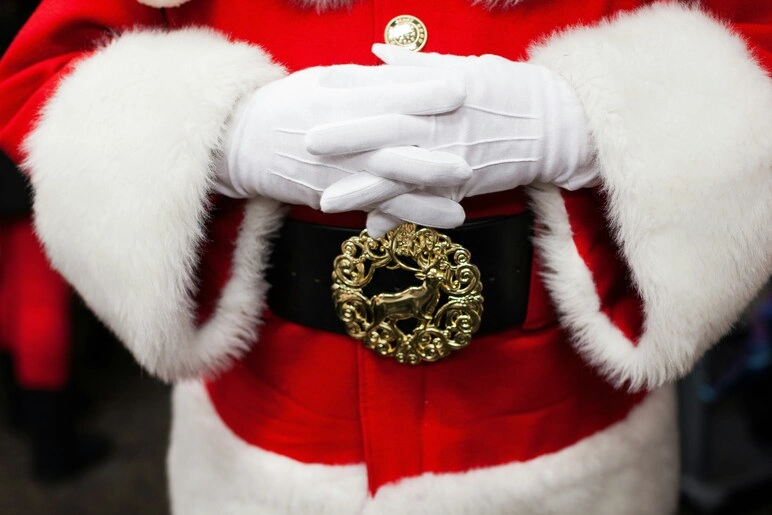
Still, the Dutch devotion to Sinterklaas refused to disappear. When Dutch settlers crossed the Atlantic to New Amsterdam, they carried with them their winter folklore — tales of a joyous man who soared across the sky in a sleigh, dropping gifts down chimneys with a wink and a whisper.
In the American colonies, this “Sancte Claus” began to intertwine ever more closely with childhood. In 1821, an anonymous poem depicted a man in a reindeer-led sleigh delivering gifts on Christmas Eve — imagery that captivated readers. Two years later, Clement Clarke Moore adapted and expanded these ideas in A Visit from St Nicholas (later known as The Night Before Christmas), giving the legend its most beloved rhythm.
From there, the myth flourished. Illustrator Thomas Nast, with his lavish and imaginative depictions, sculpted the look of the modern Santa Claus — the roundness, the jollity, the unmistakable silhouette.