

 Billy Bagus
 Jan 28, 2026
Nestled in the heart of Paksebali Village, Klungkung, Bali, the Banjar Timbrah community preserves a centuries-old tradition known as Dewa Mesraman. Held every six months, this festive ritual is a living testament to ancestral devotion, local wisdom, and cultural vibrancy that has endured since the 1500s. From the playful collisions of sacred palanquins to the intricate dances and ceremonial offerings, Dewa Mesraman offers a rare glimpse into Bali’s spiritual and social fabric. Keep reading to uncover the fascinating history, rituals, and cultural significance behind this unique celebration.
Held every six months, this festive ritual is a living testament to ancestral devotion, local wisdom, and cultural vibrancy that has endured since the 1500s.
A History Shaped by Borders and Belief
Dewa Mesraman is not only a ritual of devotion but also a historical marker connecting Klungkung with Karangasem. The tradition originated when residents of Panti Timrah Village in Karangasem traveled to guard the border between Karangasem and Klungkung. In their new home, the villagers continued their ancestral practices, preserving the Dewa Mesraman tradition exactly as it had been handed down. Over time, this ritual became a staple of Banjar Timbrah’s spiritual calendar, coinciding with the Kuningan holiday or Saniscara Kliwon Wuku Kuningan, bridging both historical legacy and religious devotion.
When Gods Gather, Not to Fight but to Rejoice
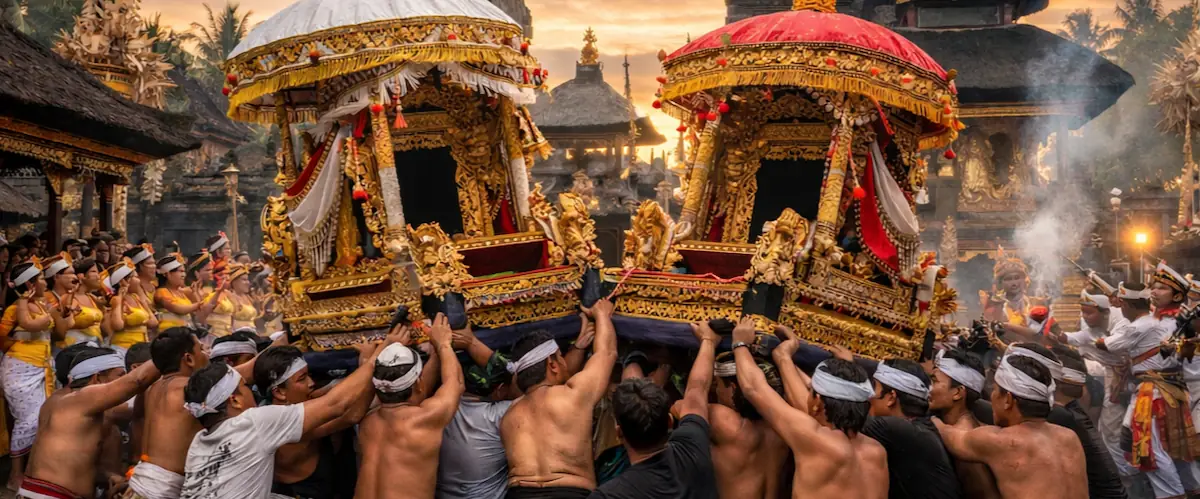
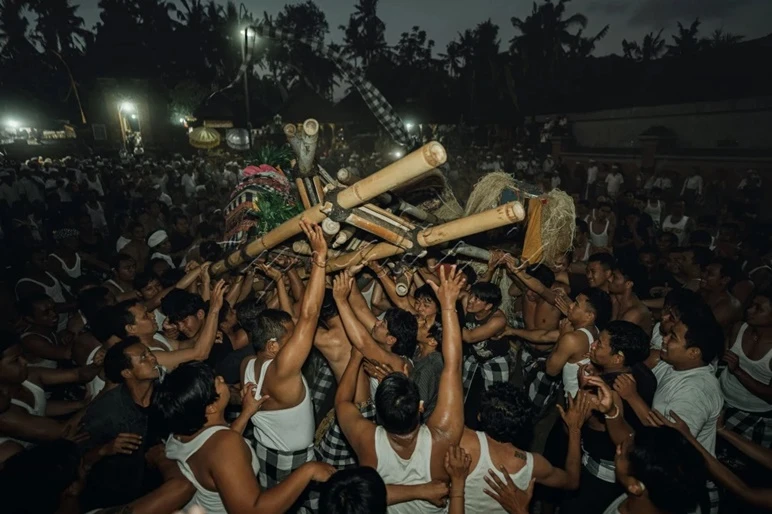
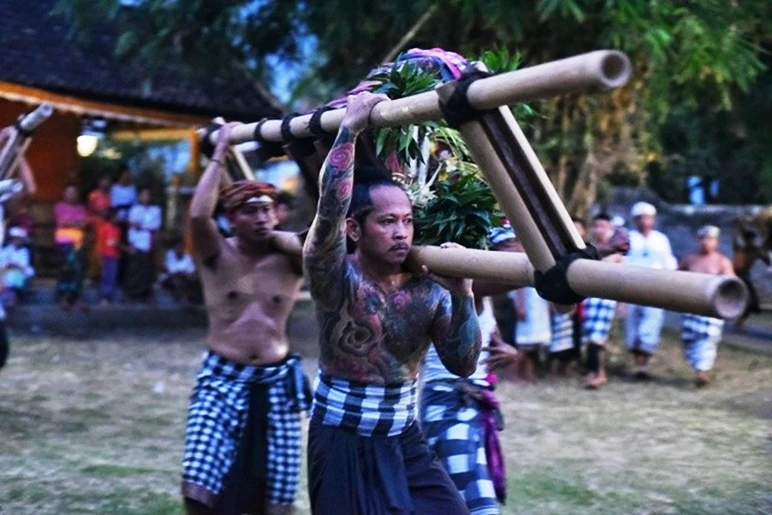
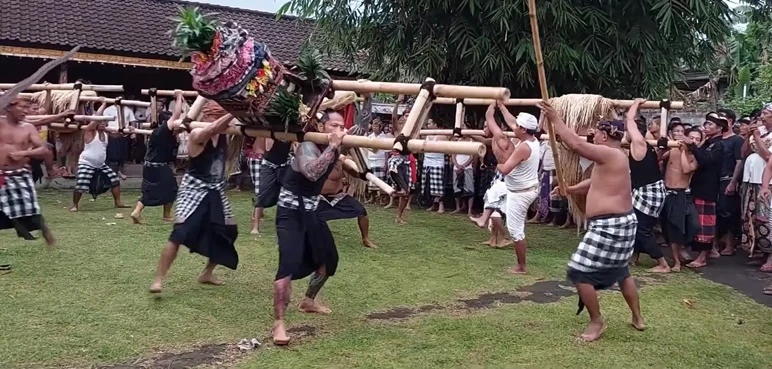
Contrary to popular belief, Dewa Mesraman is not about conflict but joy. While some observers refer to it as Dewa Mepalu or the “battle of deities,” locals insist the ritual represents the reunion of deities for merriment and playful interaction. The term “Masraman” is believed to derive from Sanskerta, meaning “residing in a house” or “asrama,” reflecting the gathering of sacred statues (pretima) in ceremonial palanquins for the duration of the festival. The playful collisions of the palanquins, called Ngambeng, symbolize joyful interaction rather than combat, illustrating a profound yet celebratory connection between humans and the divine.
Rituals That Bind Community and Spirit
The festival unfolds as a meticulously orchestrated sequence of ceremonies. The morning begins with preparation, where villagers assemble offerings and prepare lawar, a traditional Balinese dish, in five variations including starfruit, jackfruit, beans, and papaya. This culinary practice symbolizes unity in diversity, bringing together various ingredients to create harmony.
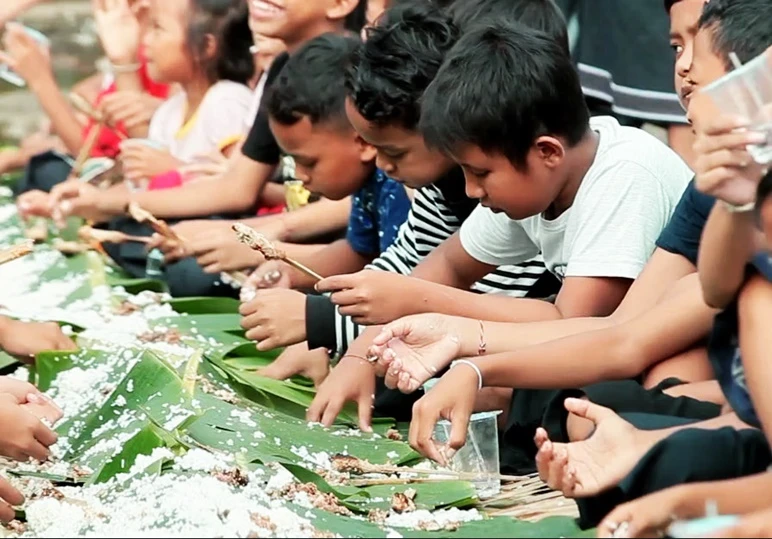
The Nunas Paica blessing follows, involving children in receiving provisions that guide them in moral and spiritual growth. Adults then participate in Megibung, a communal feast emphasizing togetherness and shared identity. Later, a purification ritual is conducted at the sacred Tirta Segening river, washing the jempana and participants with holy water to cleanse body and spirit. This is followed by traditional dances such as Rejang Dewa and Baris, culminating in the iconic jempana parade. The seven jempanas, representing various deities including Ida Bhatara Ratu Gumang and Sapta Rsi, are paraded as if in mock combat, accompanied by lively music and cheers, creating a spectacle that is both sacred and jubilant.
Where Sacred Space Meets Symbolic Movement
The central hub of Dewa Mesraman is Pura Panti Timbrah, where the palanquins converge. The layout of the temple and the careful placement of deities during the festival reflect Balinese cosmology and the principles of Tri Hita Karana. This concept emphasizes harmony between humans and the divine (Parahyangan), among community members (Pawongan), and with the environment (Palemahan). The festival not only strengthens spiritual devotion but also reinforces social cohesion and environmental respect, as seen in the care taken to maintain rivers and communal spaces for rituals.
Culture at Crossroads
Beyond its spiritual and social dimensions, Dewa Mesraman holds economic potential by attracting cultural tourism while preserving the sacred integrity of Balinese tradition. The festival offers visitors a firsthand experience of authentic Balinese rituals, intricate dances, and communal life, all while fostering a sense of responsibility among locals to protect their cultural heritage.
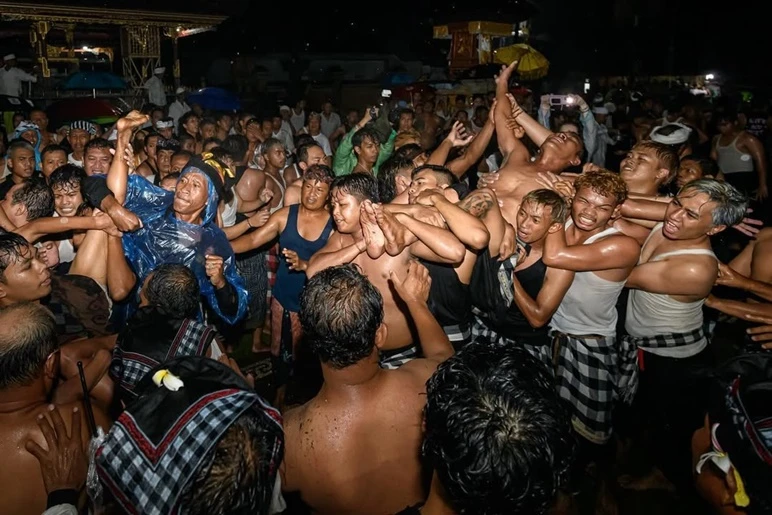
Dewa Mesraman is a celebration of life, history, and happiness that merges devotion with spectacle, tradition with community, and the sacred with the playful. Witnessing this ritual offers not just a visual feast but a profound insight into Bali’s enduring cultural wisdom.