

 Billy Bagus
 Jan 27, 2026
Before Bali became shorthand for beaches and boutique resorts, the island spoke to the divine through movement. Among its most enduring expressions is Tari Pendet, a dance that began not as performance, but as prayer. Rooted in ritual, shaped by history, and refined for the modern world, Pendet remains one of Bali’s most eloquent cultural statements. Read on to discover how a simple offering dance evolved into a global symbol of Balinese identity.
Rooted in ritual, shaped by history, and refined for the modern world, Pendet remains one of Bali’s most eloquent cultural statements.
Origins: A Dance to Embrace Gods
Tari Pendet is widely regarded as one of Bali’s oldest dances still in active practice. Art historians and cultural scholars trace its documented development to the early 1950s, though its spiritual foundations reach much further back into temple life. Originally, Pendet was performed during piodalan, the anniversary ceremonies of temples and family shrines. Its purpose was singular and sacred: to welcome the descent of the gods to the earthly realm.
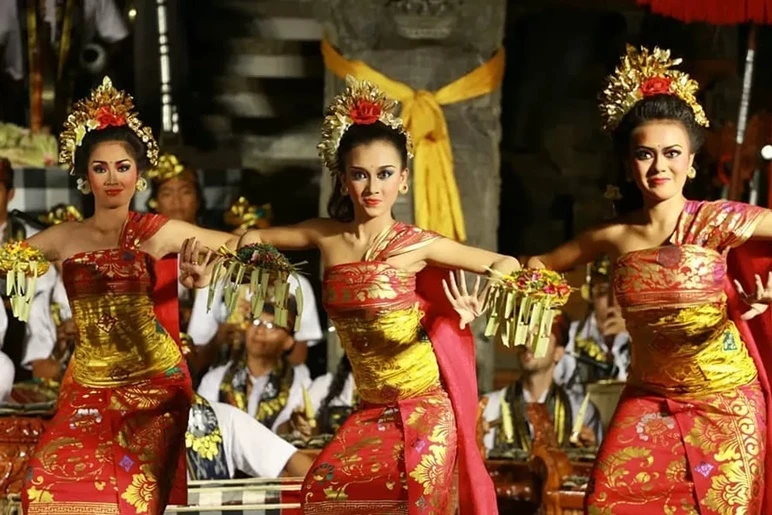
In this early form, the dance was not created for spectators. Women of the community, not professional dancers, performed Pendet as part of their devotional duties. The movements were simple, sincere, and deeply symbolic, mirroring the philosophy of Balinese Hinduism where beauty and spirituality are inseparable.
From Sacred Ritual to Welcoming Dance
A pivotal shift occurred when Balinese artist I Wayan Rindi, inspired by the ritual grace of the dance, reimagined Pendet as a welcoming performance. Together with Ni Ketut Reneng, he adapted the choreography for four dancers, allowing it to be presented beyond temple courtyards. Later refinements by I Wayan Beratha expanded the formation to five dancers, a configuration now commonly seen.
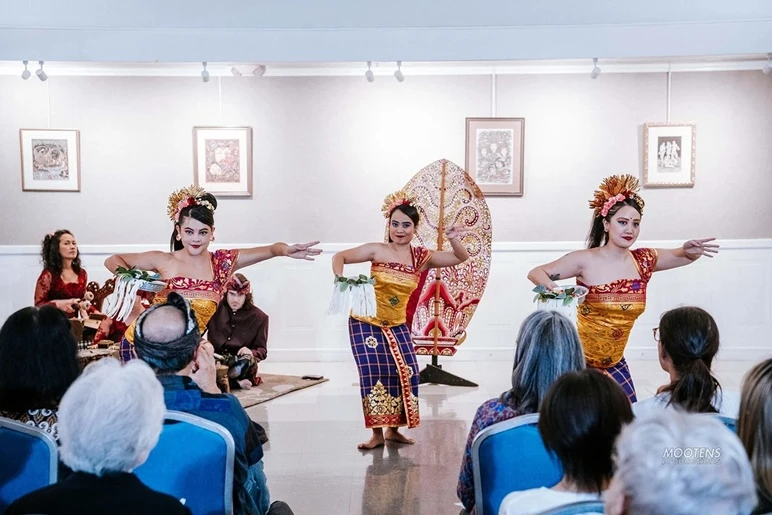
This evolution did not strip the dance of its spiritual meaning. Instead, it allowed Pendet to serve a dual role, honoring tradition while engaging wider audiences. Today, Pendet is both ritual and reception, sacred offering and cultural greeting.
Two Forms, One Philosophy
Based on its function, Tari Pendet exists in two closely related forms that serve different purposes. Pendet Sakral remains firmly rooted in religious ceremonies, where its restrained choreography and minimal ornamentation emphasize spiritual intent over visual display, with devotion, purity, and ritual precision taking precedence. Pendet Penyembutan, or the welcoming form of Pendet, is performed to greet honored guests at cultural events, festivals, and official functions. This version places greater emphasis on aesthetic refinement, expressed through more elaborate costumes, graceful movements, and heightened facial expression, while still preserving the dance’s essential cultural and symbolic meaning.
Movement and Offering
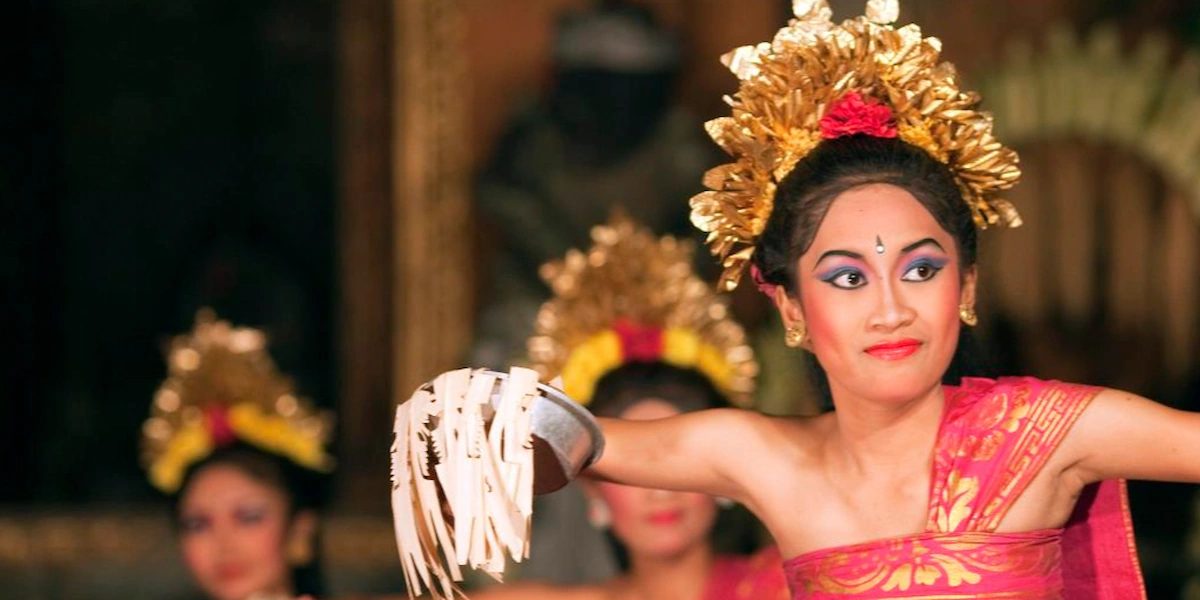
Every gesture in Tari Pendet carries meaning. The controlled eye movements suggest awareness of divine presence. The gentle swaying of the body echoes Bali’s natural rhythms, from ocean waves to mountain winds. Each dancer carries a silver bowl filled with flower petals, an offering known as banten translated into motion.
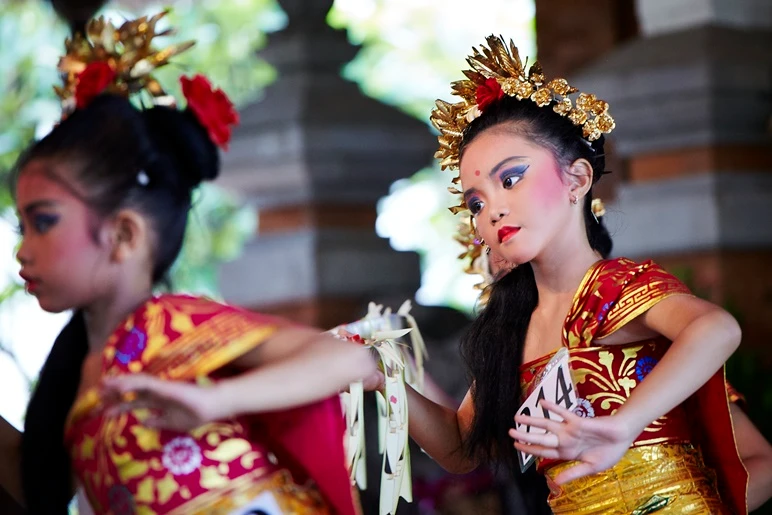
At the close of the dance, petals are scattered toward the ground and audience. This act symbolizes purification and welcome, transforming the surrounding space into one of harmony and grace. It is a quiet moment, yet profoundly resonant.
Costume, Architecture, and Visual Language
Pendet dancers wear traditional kebaya blouses paired with intricately wrapped kain cloths, often in gold, red, or yellow hues associated with prosperity and divinity. The towering gelungan headpiece, inspired by temple ornamentation and sacred flora, reflects the architectural language of Balinese shrines. Makeup is deliberately bold, designed to accentuate expression under open skies or temple lighting. Together, costume and movement create a living extension of Bali’s architectural and spiritual landscape.
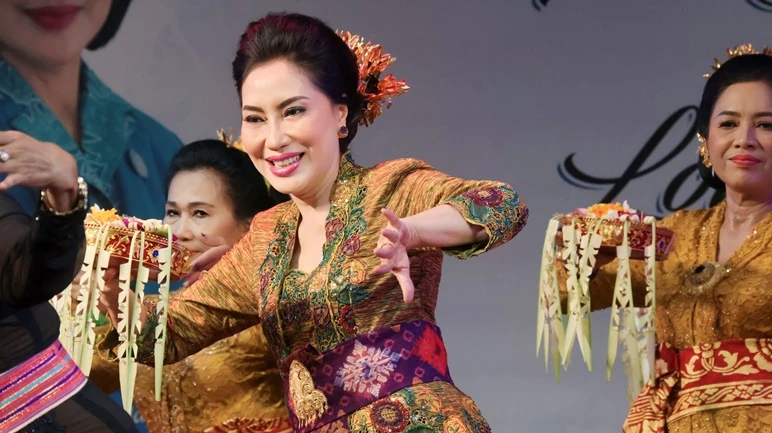
Despite global tourism and cultural change, Tari Pendet remains a living tradition. It is taught in schools, preserved by dance studios, and performed at temple ceremonies and international festivals alike. Its continued relevance lies in its adaptability without loss of meaning.