

 Vincentius Alvin Yoga
 Jun 02, 2026
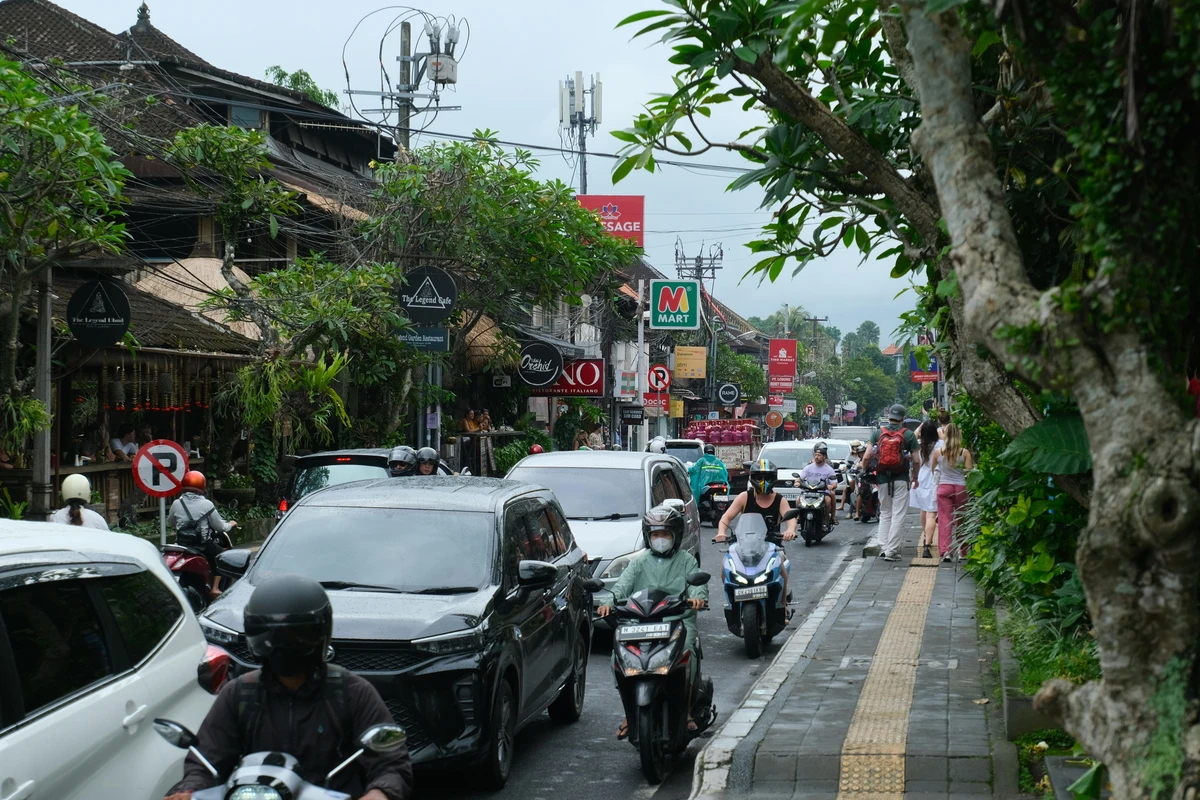
For years, traffic congestion has been one of the biggest challenges facing Uluwatu and the wider Pecatu area in South Bali. What was once an occasional inconvenience has evolved into a daily reality for residents, workers, and tourists, with journeys that should take minutes often stretching into hours during peak periods.
In response, the Badung Regency Government and the Badung Transportation Agency (Dishub) have officially launched a new traffic flow system trial aimed to improve the flow and reducing bottlenecks across some of the area's most congested intersections. The initiative marks an important step to create a more accessible and comfortable tourism destination in one of Bali's fastest-growing regions.
A Growing Traffic Problem in South Bali
Anyone who has visited Uluwatu in recent years will be familiar with the area's severe traffic congestion. The roads connecting Pecatu, Uluwatu, Ungasan, and parts of Jimbaran have become increasingly crowded as tourism development continues to accelerate.
According to Head of the Badung Transportation Agency, Anak Agung Gede Rahmadi, congestion in the Uluwatu-Pecatu corridor has reached a critical level. During peak hours, both tourists and local residents can spend a few hours stuck in traffic. "Daily traffic conditions on the route to Pecatu and in the opposite direction are consistently congested. Travel times can reach three hours or even longer," Rahmadi said.
The issue has become even more pressing following the closure of the Sterling Shortcut last February, a key route connecting Bingin Beach with Dreamland Beach, Balangan Beach, and Jimbaran. The shortcut serves as an important access road for local workers commuting to the resort areas. With the route no longer accessible, even more vehicles are being pushed onto already congested alternative roads.
Recognizing the urgency of the situation, the Badung Regency Government has prioritized traffic management as a short-term solution while longer-term infrastructure projects, including a planned ring road, continue to be developed.
Government Introduces Traffic Engineering Measures
Following discussions involving the transportation agency, police, district authorities, and traditional village representatives, a new traffic engineering scheme has been designed to reduce vehicle conflict points at several busy intersections in Pecatu.
The system focuses on six major congestion-prone locations, which are Nirmala Intersection, Masuka Three-Way Intersection, Masuka-Toya Ning II Four-Way Intersection, Toya Ning II Three-Way Intersection, Blimbing Sari Three-Way Intersection, and Blimbing Sari-Baler Setra Three-Way Intersection.
Rahmadi explained that the primary objective is to reduce traffic interruptions caused by crossing movements at intersections. "In principle, we're reducing traffic interruptions. Previously, congestion was caused by crossings at intersections, which created delays. Now, we're creating a loop system to keep traffic flowing," he explained.
The initiative forms part of a broader effort to improve mobility across the Bukit Peninsula while supporting Bali's goal of delivering high-quality tourism experiences. "If traffic jams continue on the road to Pecatu or Uluwatu, it wastes time and creates discomfort. Tourism must be high-quality and comfortable. Therefore, we must ease congestion to bring comfort and prosperity to the community," Rahmadi added.
Trial Officially Begins on 2 June 2026

The traffic engineering trial officially commenced on Tuesday, 2 June 2026, and will initially run for 14 days, with the possibility of being extended to one month depending on the results.
The restrictions are in effect daily from 2 PM until 10 PM, which corresponds with the area's busiest traffic period. Outside these hours, traffic will return to normal operations to avoid disrupting local economic and social activities.
Several new restrictions are explained below:
Jalan Uluwatu to Jalan Toya Ning II
Vehicles traveling along Jalan Uluwatu are no longer permitted to turn directly into Jalan Toya Ning II during the trial period.
Jalan Toya Ning III to Jalan Raya Uluwatu
Drivers coming from Jalan Toya Ning III are prohibited from making a right turn onto Jalan Raya Uluwatu and must follow designated alternative routes.
Baler Setra–Blimbing Sari Intersection
Vehicles with four wheels or more, excluding motorcycles, are prohibited from heading west toward Jalan Uluwatu during the restricted hours.
To support the implementation, Dishub Badung has installed prohibition signs, alternative route information boards, traffic cones, and delineators at key locations. Additional personnel have also been deployed, particularly around the Nirmala Intersection, while authorities continue to coordinate closely with the police to manage traffic circulation and provide guidance to road users.
Evaluation to Determine Long-Term Solutions

The Transportation Agency plans to conduct its first evaluation as early as 14 days after implementation. The review will examine both field data and traffic flow patterns to determine whether adjustments are needed and whether the measures should become permanent.
"We will conduct an evaluation after implementation if adjustments to the traffic engineering pattern are required," Rahmadi said. The agency is also actively communicating the changes to local communities through district leaders, neighborhood representatives, social media channels, and official correspondence.
Rahmadi noted that if the initiative proves successful in Pecatu and Uluwatu, similar traffic management strategies could be introduced in Canggu, another area facing significant congestion challenges.
A Step Toward a More Accessible Uluwatu

For now, visitors traveling around Uluwatu are encouraged to allow extra travel time and pay close attention to new traffic signs and directions from officers on the ground. While congestion remains a daily challenge, the launch of this traffic engineering trial represents one of the most comprehensive efforts yet to improve mobility in South Bali's tourism heartland.
As tourism continues to grow and infrastructure catches up with demand, local authorities hope that these immediate measures will help ease pressure on the road network while paving the way for larger transportation improvements in the future. For residents, workers, and visitors alike, the initiative offers a promising first step toward a smoother, more efficient, and more comfortable journey through Uluwatu.