Gold in Indonesia: Marriage Gifts and Family Savings
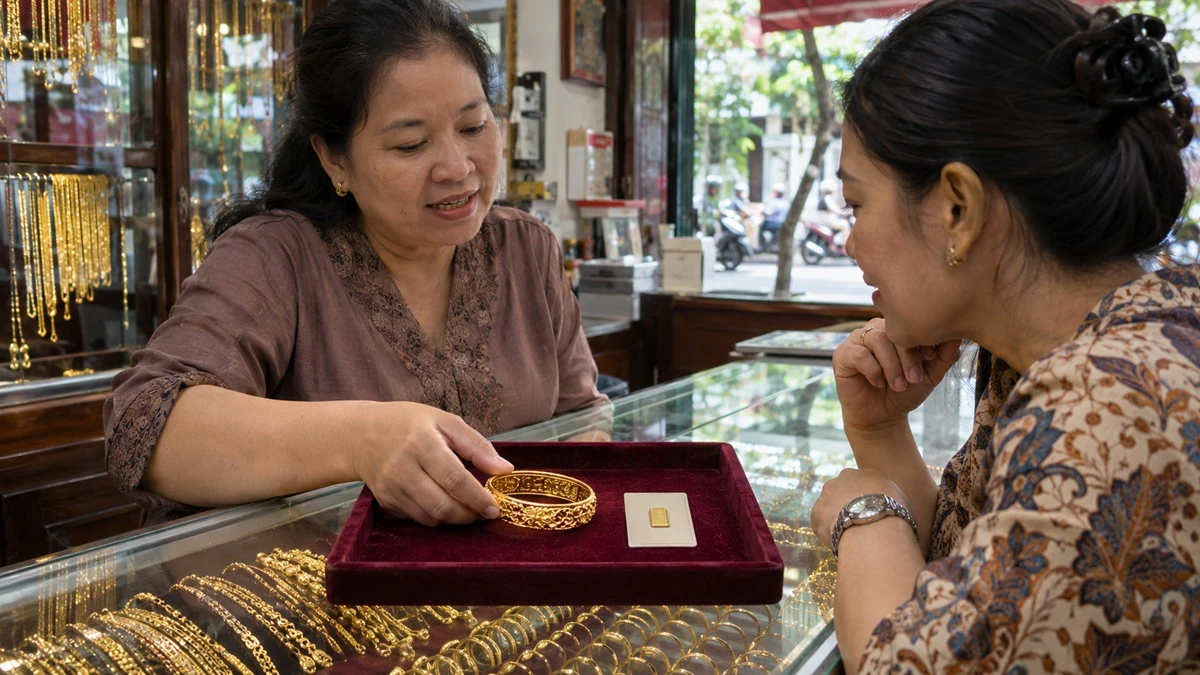
Over by Cikini Station in Jakarta, long displays of bangles and rings line the shops. Nearby at the local Antam boutique, it's a whole different story. Customers there head out carrying pure gold bars encased in sleek, wallet-friendly sleeves. In Indonesia, both purchases make sense because the same metal can be given at a marriage and passed from one generation to the next while also carrying a household through an expensive month.
Stand at any counter, and the distinct culture around gold in Indonesia comes through right in the terms traded between buyers and sellers.
-
Emas perhiasan translates to “gold jewelry” - the kind people buy to wear daily, give away, or pass down through the family. The total bill depends as much on the piece’s purity as it does on the intricate workmanship involved.
-
Emas batangan means gold bars. At a bullion counter, aesthetic details matter far less than two fundamental factors: exact weight and metal purity.
-
Tabungan emas is gold savings. A provider records a balance in grams, with its own rules on fees and access, plus the terms for conversion into physical gold.
Why Indonesians Buy Gold
The wedding gift that belongs to the bride
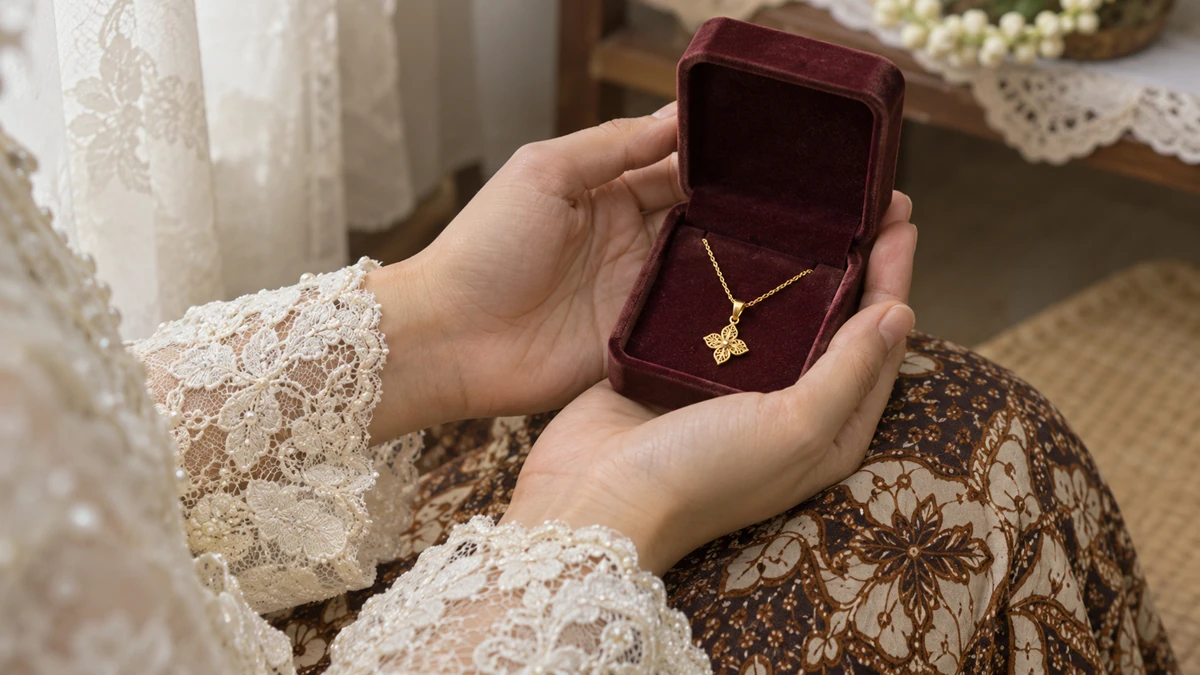
At a Muslim wedding, the groom may give the bride gold as mahar. The mahar is part of the marriage itself, separate from whatever friends bring to the reception. One real example comes from a June 2026 wedding in Buol, Central Sulawesi, logged by the local Ministry of Religious Affairs office. For his mahar, the groom pledged 3 grams of gold. Overall, the final gold weight and its shape tend to differ quite a bit from one home to the next.
Before grabbing a gift, check what the couple actually wants. A modest pendant makes a great choice if the family prefers traditional jewelry. If you aren't completely sure, a plain cash envelope or an item from their registry is always a safe move. The same care applies around Lebaran. From a fresh store purchase to a piece passed down for generations, a gold bracelet always finds a place at Eid. The main narrative in the magazine's guide to Lebaran traditions is about reuniting with relatives and asking forgiveness, with gold simply adding a quiet personal touch to the day.
A bracelet that doubles as savings
An Indonesian family often knows exactly who owned a bangle before it reached them, even when its original price faded from memory. The World Gold Council's consumer research describes both heirloom pieces and modern bars and coins as forms of household gold investment. A piece can stay in the family for years and still come in handy when a school bill or a repair lands at the wrong moment.
Pegadaian, a pawnshop owned almost entirely by the Bank Rakyat Indonesia accepts eligible rings, necklaces, and bracelets as collateral. Pawning raises cash through a loan, with charges and a deadline to repay and recover the piece.
When the rupiah weakens
Physical gold has a specific history in Indonesia. According to the World Gold Council, the metal played a vital role in protecting domestic purchasing power during the severe rupiah crash of 1997–98.
It is precisely because of that experience that gold remains widely used as a hedge against economic uncertainty. The risk became clear again in April 2026, as the rupiah fell to a new record low at the time, forcing the central bank into action to stem excessive swings. The year's buying tells a more uneven story. Bar and coin demand was down 25% year on year in the third quarter, yet the first nine months reached about 51 tonnes, up 17%.
Two details help make sense of how a family keepsake becomes an investment instrument.
-
A household can invest in a small bar without paying for an intricate design. They still cover a dealer premium and take the risk of a lower future price.
-
Bar and coin figures track investment in gold in those forms. A wedding necklace belongs to a different part of the market, even when the family thinks of it as savings.
How to Buy Gold in Indonesia
Gold shops, Antam boutiques, and savings accounts
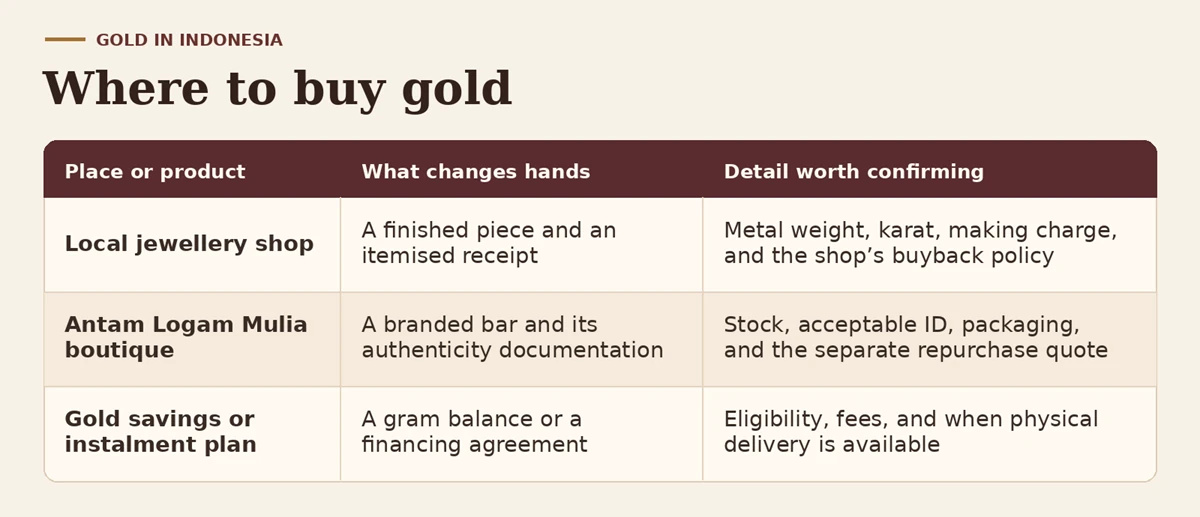
Heading to a nearby toko emas, or local gold shop, is your best bet when shopping for jewelry. As noted in the guide to Cikini and its Gold Center, that line of stores right opposite the train station makes comparing pieces super straightforward. Buying down in Bali? Just keep a close eye on raw weight, metal purity, and making fees before putting money down for stone-set items or souvenirs.
For buyers looking at gold for investment, Antam's Logam Mulia boutiques are a different kind of stop. The entry-level size for Antam gold is 0.5 grams, with all bars originating from a refinery recognized on the London Bullion Market Association's Good Delivery list. On eligible bars, Antam's CertiCard packaging incorporates the certificate. The CertiEye app scans the barcode on the back to verify authenticity.
A third route runs through financial institutions. The Republic of Indonesia expanded its financial sector in February 2025 by introducing bullion services via Pegadaian and BSI. Sanctioned by the Financial Services Authority under OJK Regulation No. 17/2024, these newly established bullion business activities allow both entities to function as key bullion banks. Side by side, they reinforce the broader bullion ecosystem by introducing official gold trading and safe custody solutions. That gives the local gold industry a solid boost beyond its standard refining and everyday retail channels.
For a household, the familiar terms are tabungan emas and cicil emas. The former builds a balance in grams. The latter spreads the cost of a purchase over installments under a financing agreement.
Can foreigners buy gold over the counter?
Foreign visitors and residents can buy gold jewellery from retail jewellers. For Antam bars, the boutique’s identification requirements matter.
However, any expat planning to purchase gold directly from Antam should note that the company officially specifies a KTP for individuals buying and selling at its boutiques, along with a tax ID (NPWP) if available. If you are an expat holding a passport, a KITAS, or a foreigner's KTP, it is best to contact the boutique beforehand to verify which specific documents your transaction will require. Antam sends buyback money by bank transfer within three working days.
Pegadaian’s September 2026 guidance says its Tabungan Emas gold savings account is open only to Indonesian citizens. A passport and a KITAS do not qualify a foreign national. BSI’s Cicil Emas is a separate financing product for buying gold in instalments. BSI lists a KTP as a required document, and foreign residents who hold one can ask whether the bank accepts their card for this product.
Investing in gold starts with the second price
The number on the screen is what it costs to buy. The second figure, the buyback price, is what the dealer will pay to take it back. Even with zero movement in market prices, a buyer effectively takes a hit on day one from that difference alone. Buying a ring adds another twist: you often pay a making charge (ongkos pembuatan), which won't be counted if a shop buys it back based purely on metal content.
-
The overall metal weight is where you start. Unlike a 24-karat gold bar that is virtually pure gold, 22-karat jewelry runs at 91.7% gold by weight, while 18-karat options drop down to 75%. If there are embedded stones set inside, the store scale simply takes the combined weight of the entire piece. Getting to the real gold content comes down to subtracting the gem weight and factoring in the metal's purity.
-
Ask for both prices in rupiah. Say a shop lists a gold bar at Rp2,500,000 but only quotes Rp2,350,000 to buy it back. That leaves you with a Rp150,000 gap right off the bat. That spread equals 6% of your initial purchase price even before extra shop charges kick in. These figures serve only as a simple example.
-
Make sure to hang onto the original receipt and packaging. Having an itemised bill makes things a lot easier whenever you decide on buying or selling a piece down the road. For a sealed bar, the original sleeve and a matching serial number give a future buyer something concrete to verify. If you're a foreigner planning to sell locally, also confirm the payout method ahead of time.
A dollar benchmark and a rupiah receipt
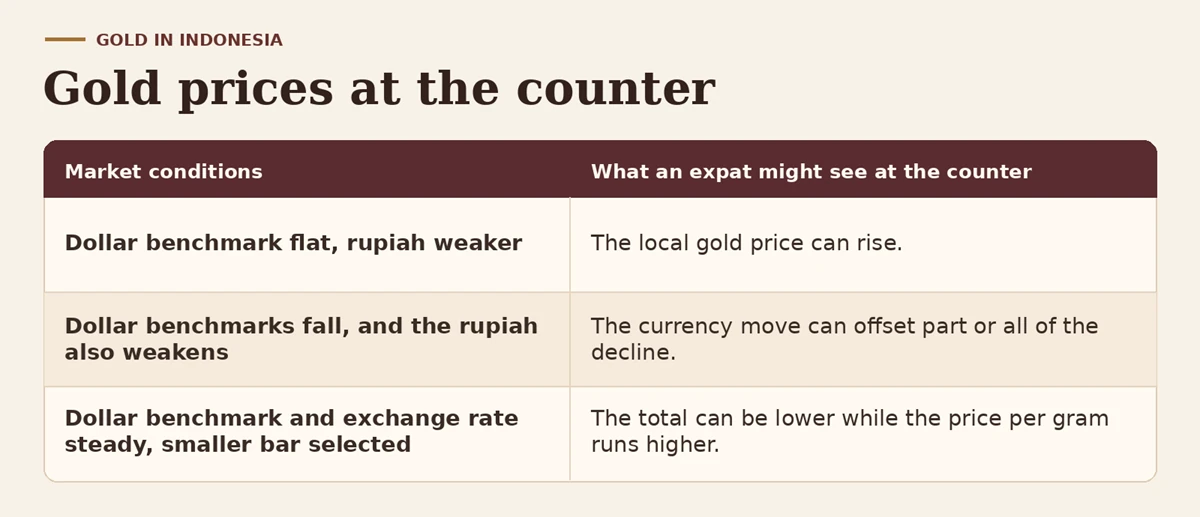
Coverage of what moves gold prices tends to track US real yields, flows into gold ETFs, and central bank buying. Central banks keep gold reserves for reasons quite unlike those of a family choosing wedding jewellery. At a local counter, the exchange rate matters as much. A weaker rupiah can push the local gold price higher in IDR even when the U.S. dollar benchmark stays flat. Dealer premiums and the buyback gap create another separation between the global gold market and what the receipt shows.
Pavel Vorobyov, writing for Versus Trade, called gold "the old store of value" in his October 2026 commentary. "It often draws buyers when real yields fall, the dollar softens, or markets turn defensive." Those price movements will look familiar to anyone following commodities trading, but the value of gold to a household buying in rupiah also depends on what the counter charges.
A bar in the suitcase is a customs question
Indonesia's Finance Ministry Regulation No. 80/2025 lists certain cast and minted bars as goods subject to export duty. If you're carrying items out as personal luggage, the tax-free allowance caps out at an export customs value of Rp2,500,000 per passenger for each trip.
Anything over that limit counts as goods subject to export duty, meaning you have to declare it to Bea Cukai and pay duty on the excess amount. It's always smart to double-check the exact bar classification and calculated customs value with Bea Cukai officers before leaving, while also checking what import rules apply in your destination country.
By Olga Khylko, Versus Trade Head of Payments




Related Articles