



 Annissa Wulan
 Aug 31, 2026
Central Jakarta is preparing for an urban landmark shift as PT Kereta Api Indonesia (Persero) unveils New Gambir, a transformation project set to reimagine the historic Gambir Station. Supported by a self-funded investment of approximately IDR 1 trillion, the master plan converts the traditional railway terminus into a world-class multimodal transport hub and lifestyle destination modeled after international aviation terminals.

Scheduled for completion by 2028, New Gambir aims for high operational throughput while redefining the transit experience in the heart of the capital. On the project's broader ambition, KAI Chief Executive Officer Bobby Rasyidin emphasized that the overhaul goes far beyond basic railway upgrades.
"The development of Gambir Station does not merely focus on transportation functions. Passengers will step into a space where they can genuinely enjoy an airport-class experience, complete with high-end hospitality and modern lifestyle integration," Rasyidin noted during the project presentation.
The project introduces aviation-grade passenger infrastructure designed to handle dense commuter volumes with ease. Navigating the terminal will feel remarkably similar to an international airport experience, featuring streamlined passenger movement flows, elevated departure and arrival lounges, private sleep pods, an integrated transit hotel, premium executive lounges, and advanced luggage-handling ecosystems.
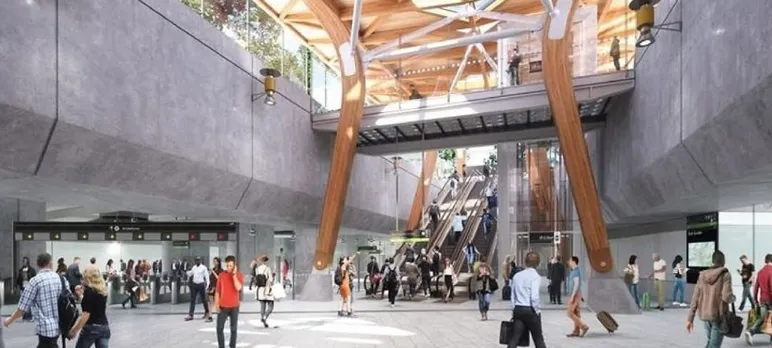
Seamless multimodal connectivity sits at the core of the new design. Breaking its long-standing isolation from suburban commuter transport, New Gambir will re-integrate KRL Commuter Line stops alongside long-distance passenger rail (KAJJ) through dedicated tracks. Direct subterranean connections will also link passengers to the MRT Jakarta Phase 2A network at Stasiun Monas, the LRT system, TransJakarta bus corridors, and premium airport rail express links.
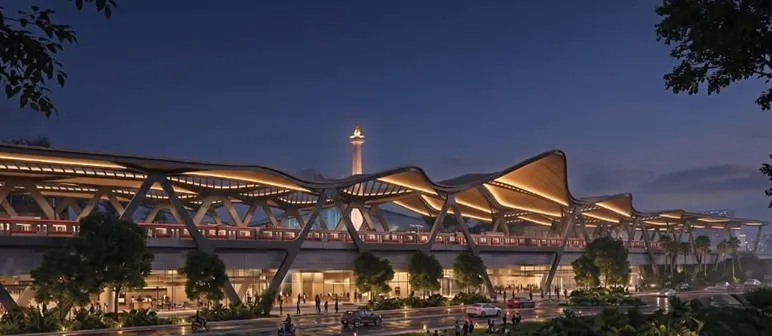
Explaining the strategic vision of this connectivity, KAI Vice President of Corporate Communication Anne Purba stated, "Gambir plays a strategic role in Jakarta's transport ecosystem. Its development is directed toward strengthening its function as the gateway for long-distance trains while seamlessly supporting public connectivity right into the nerve center of Jakarta."
Beyond pure transit functionality, New Gambir is designed as "Teras Monas"—the official viewing platform and veranda facing the National Monument. The complex will feature an expansive lifestyle footprint housing curated retail, fine dining, and local artisanal tenants alongside public plazas and open-air rooftop lounges that offer panoramic views of Monas, seamlessly integrating national heritage with urban leisure.
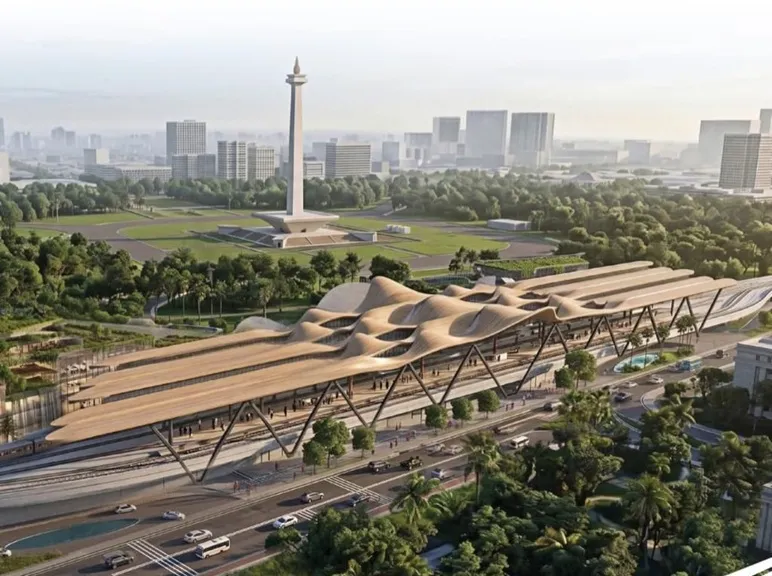
The decision to elevate Gambir’s status stems from surging transit demand across Central Jakarta. The station recorded 3.87 million long-distance passengers within the first seven months of 2026 alone across 34 daily regular train schedules. Furthermore, with 153.5 million commuter journeys logged along the adjacent Bogor-Jakarta Line corridor in 2025 (accounting for 44.55% of all Jabodetabek rail travel), unifying intercity rail and commuter transit at Monas has become an urgent operational necessity.
As Anne Purba highlighted, "The continuous growth in commuter journeys shows that the public's need for connectivity to central Jakarta keeps rising. Gambir’s readiness must be viewed as an essential piece of Jakarta's integrated transport future." By merging world-class aviation-style amenities with seamless urban transit, New Gambir secures its place as Jakarta's definitive modern transport center.