Exclusive Interview: Kinematics on Contemporary Jazz, Musical Exploration, and Reimagining “Bubuy Bulan”
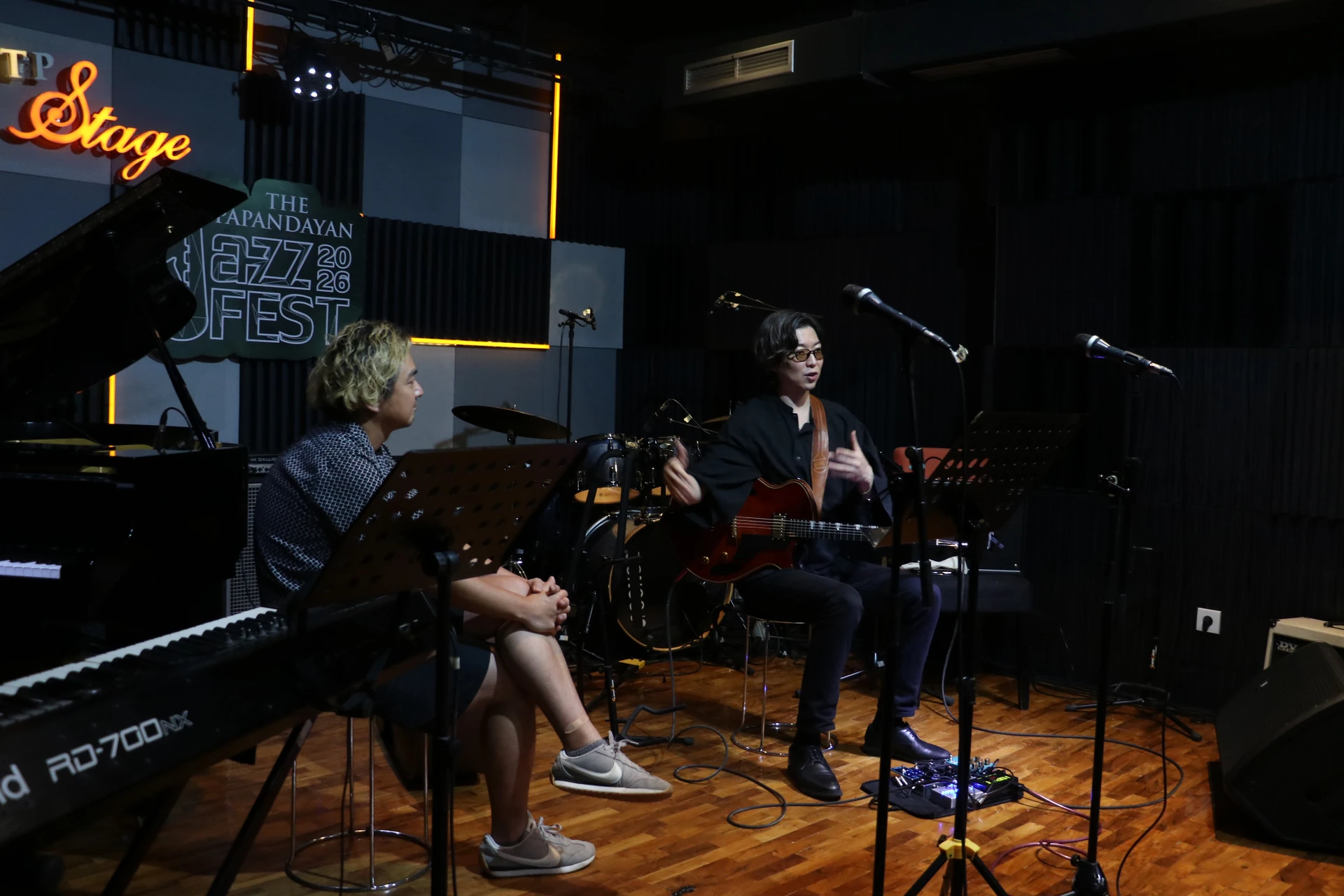
Meet Kinematics, the Japanese contemporary jazz trio that won the Jazz Warrior category at The Papandayan International Jazz Competition 2025, and discover the creative stories behind their music.
Formed in January 2025, Kinematics is a Japanese contemporary jazz trio consisting of Hirosato Ito on guitar, Hiroyuki Demiya on bass, and Hiro Omori on drums. Despite being a relatively new group, the trio has already made its mark on the international jazz competition scene, securing second place at the Thailand International Jazz Conference 2025 before winning first place in the Jazz Warrior category at The Papandayan International Jazz Competition 2025 in Bandung.
What makes Kinematics particularly interesting is the way the three musicians approach their music. Led by Hirosato Ito's original compositions, their sound combines carefully arranged melodies with the freedom of improvisation, allowing each member to contribute to an evolving musical conversation.
During our conversation, the trio shared how they unexpectedly came together, the inspiration behind their name, and the creative process of reinterpreting the Sundanese folk song “Bubuy Bulan” for the competition. We also talked about their future plans, their love of jazz, and what they would say to aspiring musicians preparing for the next edition of The Papandayan International Jazz Competition.
Getting to Know Kinematics
Kinematics was formed in January 2025. How did the three of you come together and decide to form the group?
"We actually started the group specifically for a jazz competition in Thailand in January 2025. It was originally Hiro Omori, our drummer, who came up with the idea of joining the competition. He invited the two of us to form a group and participate together.
Once we decided to join, I (Hirosato) started composing original songs for the competition. I personally love kinematic music, which is often characterized by fast movements and energy, so that became one of the inspirations behind our band's name.
There is also another meaning we like. Kinematics can refer to the movement of a robotic arm, which has three parts. We thought that was an interesting representation of our trio, with three members working together as one unit. That's how Kinematics came to be!"
You first competed in Thailand before making your way to Indonesia. How did the opportunity to participate in The Papandayan International Jazz Competition come about?
"At our first competition in Thailand, Nita Aartsen was one of the judges. She was very curious about our music and seemed interested in what we were doing as a group.
After the competition, she encouraged us to participate in another competition in Indonesia, particularly The Papandayan International Jazz Competition in Bandung. That invitation eventually opened the door for us to discover another jazz community and musical environment in Southeast Asia."
The Papandayan International Jazz Competition and “Bubuy Bulan”
Looking back at your experience at The Papandayan International Jazz Competition 2025, what was the most memorable part of the journey?
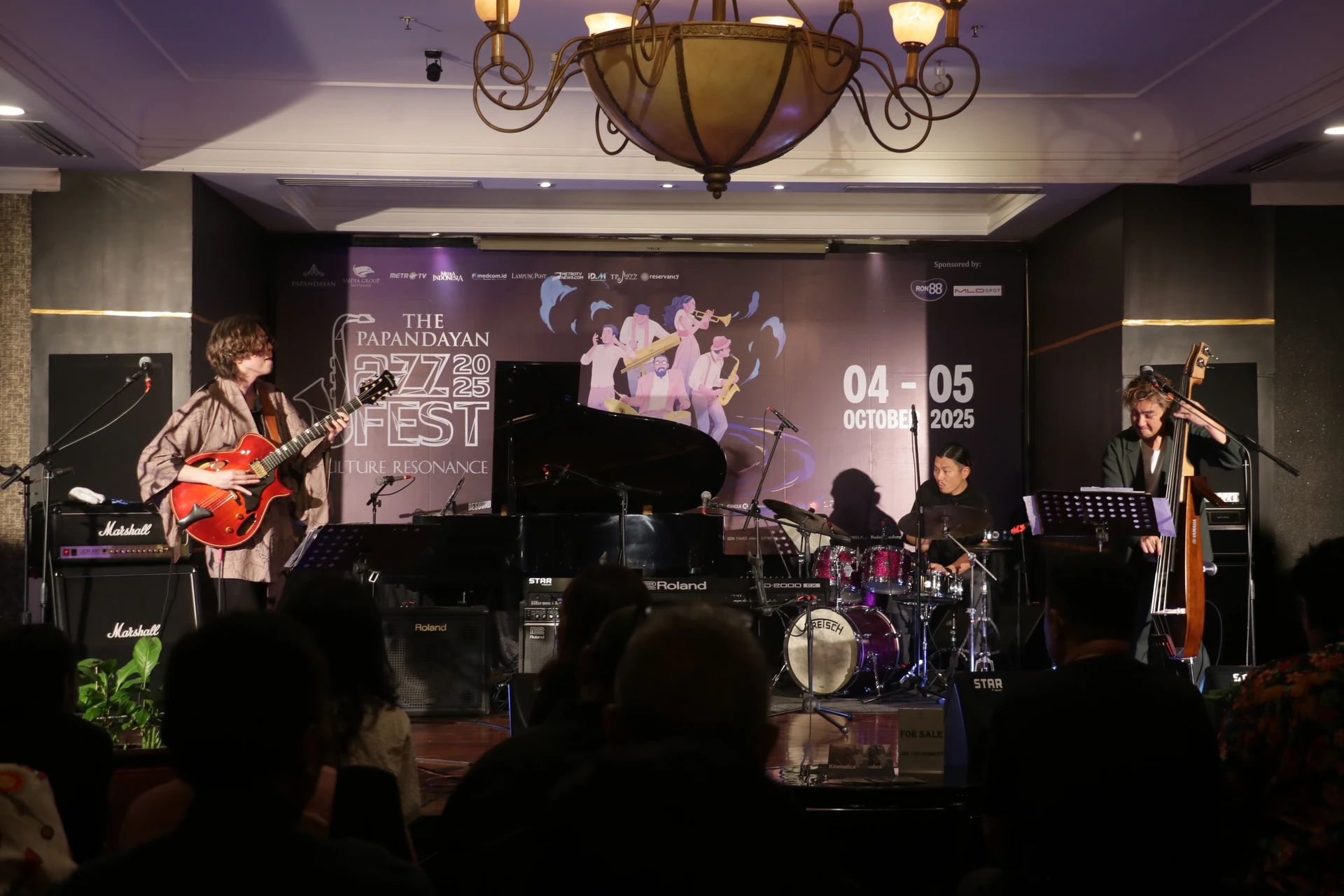
"One thing that surprised us was how many stages the competition actually had! At first, I thought it would only be one stage, so I put a tremendous amount of effort into preparing our first submission. I even created a special arrangement of “Caravan” because I wanted to give it my very best.
But then we advanced to the next stage, and then another one! What started as a single competition submission turned into a longer journey, eventually leading us to become the winners of the Jazz Warrior category.
For the final round, we performed our original composition, “Kinematics,” along with the traditional Sundanese song “Bubuy Bulan.” Both performances were important to us, but arranging “Bubuy Bulan” was definitely one of the most challenging and memorable parts of the experience.
“Bubuy Bulan” is a traditional Sundanese folk song, which is quite different from the contemporary jazz music you usually perform. How did you approach reinterpreting the song?
When I first listened to “Bubuy Bulan,” I was a little confused about how to approach it. It was clearly not a jazz composition, so I listened to it repeatedly, trying to understand what made the song special. I wanted to identify its most important element. Was it the melody? Was it the lyrics? Or perhaps the emotion behind the song?"
Since Kinematics is an instrumental group, we couldn't rely on the lyrics to communicate the story. That meant the melody became particularly important.
"At first, I actually created a very fast and energetic arrangement, almost a little crazy! But after listening to the original melody again and thinking about the story behind the song, I changed my mind. I realized that I needed to be more careful with the arrangement and give the melody enough room to breathe.
Eventually, I introduced a jazzy African-inspired beat while keeping the original melody at the heart of the composition. I put a lot of energy and emotion into that melody, carefully considering how we could preserve its character while presenting it through our own musical language."
You also mentioned that “Bubuy Bulan” reminded you of Enka, a traditional Japanese music genre. Could you tell us more about that connection and how other musical influences shaped your arrangement?
"When I first heard “Bubuy Bulan,” I felt that it had something in common with Enka, a Japanese music genre that became popular around the 1950s. Enka often features a powerful and expressive singer, with a strong emphasis on the melody and emotional delivery. I felt a similar kind of emotion when listening to “Bubuy Bulan.”
I also started thinking more deeply about the roots of music. I became interested in exploring African music, particularly its strong percussion and rhythmic elements. I was thinking about how music developed through rhythm, dance, and singing, and how those elements became part of different musical traditions.
That exploration influenced the way I approached the arrangement. We often think about how to create a strong beat and a deep groove in our music. But rather than simply adding a particular rhythm, I wanted to understand where those musical feelings came from.
So, I spent time listening to African music and exploring the connection between its rhythms and the traditional melody of “Bubuy Bulan.” It was an interesting process of bringing different musical influences together while remaining respectful of the original song."
The Creative Side of Jazz
As a contemporary jazz trio, what makes jazz the genre you love to perform?
"We love jazz because of the freedom to improvise. For us, performing jazz is not simply about playing a composition exactly as it was written. It's about creating new moments on stage every time we perform.
There is a special connection between musicians and the audience during a live performance. We bring our own energy to the stage, but we can also feel and respond to the audience's energy. Sometimes that interaction influences the direction of the music, creating moments that are spontaneous and different from one performance to another.
That's what makes improvisation so important to us. Every performance can become a new experience, even when we're playing the same composition. We think that element of surprise and musical interaction is what makes jazz so interesting."
What's Next for Kinematics?
Can we expect to hear Kinematics' original compositions on digital music platforms anytime soon? Are there plans for an album?

"Yes, hopefully! We're thinking about making a new album next year, possibly starting step by step by releasing a few songs first.
We'd also like to make our original music more accessible by uploading it to digital music platforms, so people who enjoy our performances can listen to our compositions whenever they want."
As the winners of the Jazz Warrior category at The Papandayan International Jazz Competition 2025, what advice would you give to musicians who are planning to participate in the next competition in 2027?
"Don't be afraid to create new music! We think it's important to be brave and explore your own ideas rather than simply trying to make something overly complicated.
At the same time, we believe that great musical creativity and accessibility should go together. You can create something original and interesting while still making it enjoyable and easy for people to listen to.
For us, both elements are important. So, our advice would be to keep exploring, trust your creativity, and don't be afraid to share your own musical ideas."
The Papandayan Jazz Competition 2027
Following the success of its previous editions, The Papandayan International Online Jazz Competition returns for its seventh year in 2027 under the theme “Jazz Beyond Borders,” bringing together jazz musicians across generations, cultures, and countries. Organized by TP Jazz Management, the competition features two categories: Youth, for Indonesian bands with all members under 23, and Jazz Warrior, open to Indonesian musicians above 23 and international bands of any age. With a total cash prize pool of IDR 95 million, winners will also have opportunities to perform at The Papandayan Jazz Fest 2027, become potential opening acts at TP Jazz Universe, and collaborate with established jazz musicians. Registration is free and open until 31 December 2026, with further information available at https://bit.ly/TPJC-2027. Follow @tpjazzcompetition on Instagram for updates.
Discover More




Related Articles