


 Annissa Wulan
 Jan 07, 2026
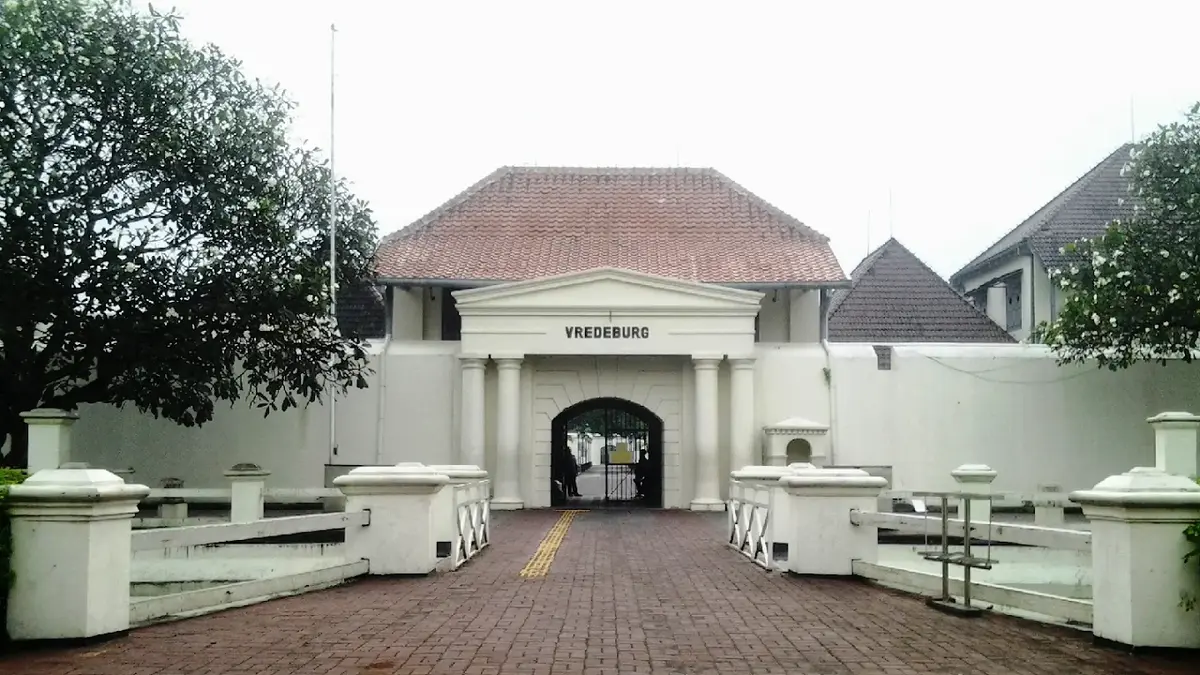
Vredeburg Fort is a defensive fort located in front of the Agung Building and the Yogyakarta Palace. Originally built as the center of government and defense for the Dutch residents, Fort Vredeburg is surrounded by a moat, some of which has been reconstructed and can still be seen today. The fort is rectangular in shape and has watchtowers at all four corners.
History of Vredeburg Fort
The founding of Vredeburg Fort is closely linked to the birth of the Yogyakarta Palace. After the Giyanti Treaty was signed, Sultan Hamengkubuwono I and his subjects gradually built the capital of the Yogyakarta Kingdom. The Dutch, concerned about the rapid progress of the palace, requested permission from the Sultan to build a fort nearby, under the pretext of maintaining the security of the palace and the surrounding area.
However, the true purpose of Vredeburg Fort was to monitor all activities within the Yogyakarta Palace. Construction began in December 1765, following an agreement between Cornelis Donkel, the first resident of Yogyakarta, and Sultan Hamengkubuwono I, that the Sultan would assist in the form of timber and labor.
At that time, the Dutch East India Company (VOC) in Yogyakarta was being directed to complete the construction of important components of the palace, such as Taman Sari and the Yogyakarta Sultanate Fortress. In 1785, the VOC fort in Yogyakarta was inaugurated and named Rustenburg, meaning "resting fortress."
During the construction process, the Sultan ensured the fort was completed properly. Upon completion, the fort's four corners were given names by the Sultan: Jayawisesa (Northwest), Jayaprayitna (Southeast), Jayapurusa (Northeast), and Jayaprakosaningprang (Southwest).
On December 31, 1799, the VOC was dissolved, and from 1808 to 1811, the fort was controlled by the Dutch Kingdom under Governor Daendels. It was then renamed Fort Vredeburg, meaning "fortress of peace." This name change occurred after the fort was restored following damage caused by an earthquake in 1867.
Within the fort were officers' quarters, soldiers' dormitories, logistics warehouses, ammunition depots, a soldiers' hospital, and a resident's house occupied by approximately 500 Dutch soldiers.
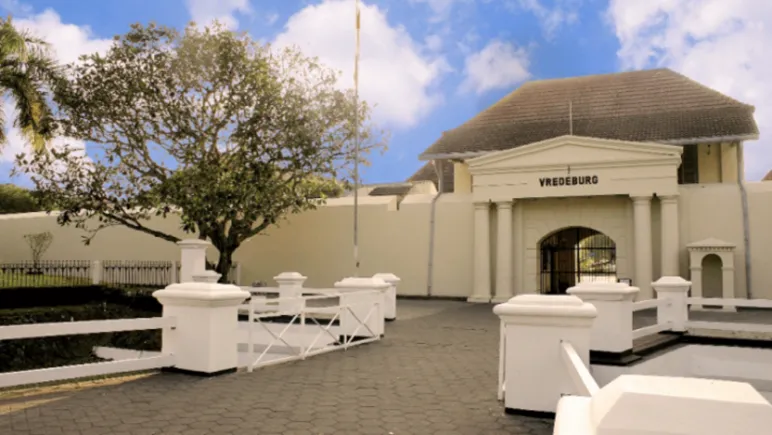
Fort Vredeburg during Indonesian Independence
Ki Hadjar Dewantara once proposed that Fort Vredeburg be used as a cultural venue and preserved. This idea only became a reality after a 1976 feasibility study conducted by the Institute for Rural and Regional Studies at Gadjah Mada University in Yogyakarta encouraged the restoration of the building.
Vredeburg Fortress Today
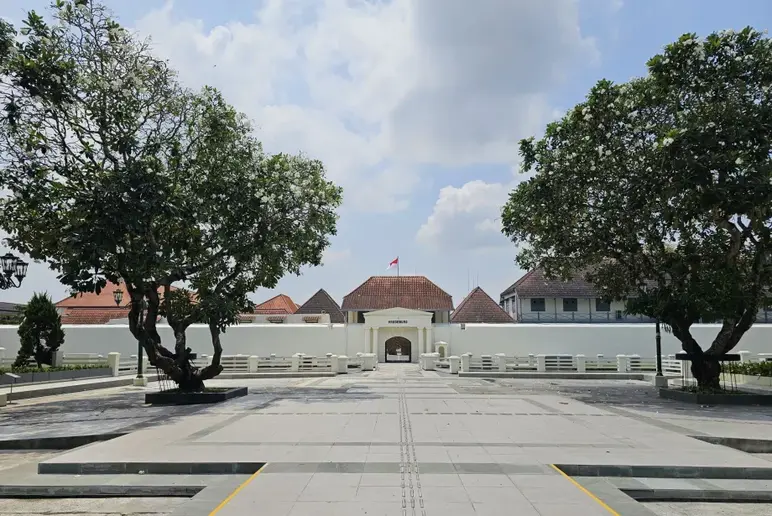
Considering the former Vredeburg Fortress as a historic building of significant significance, in 1981, it was designated a cultural heritage site based on the Decree of the Minister of Education and Culture of the Republic of Indonesia dated July 15, 1981. On November 5, 1984, the Minister of Education and Culture of the Republic of Indonesia confirmed that Vredeburg Fortress would function as a national struggle museum, with management to be handed over to the Ministry of Education and Culture of the Republic of Indonesia.
On November 23, 1992, the Minister of Education and Culture officially designated Vredeburg Fortress as a Special Museum of the National Struggle, named the Yogyakarta Fortress Museum. Some of the outstanding collections currently on display at Vredeburg Fortress include a diorama of Soedirman's inauguration as Commander-in-Chief of the Indonesian National Armed Forces, a mini-rhythm of the Boedi Oetomo Congress, Surjopranoto's typewriter, a water jug, Soetomo's documents, and a military academy bench.