


 Juliana Siahaan
 Oct 06, 2026
When to See an Orthopaedic Specialist for Joint and Sports Injuries

Joint pain, sports injuries and movement problems can affect work, exercise and everyday activities. Some minor injuries improve with rest and simple care, but ongoing pain, swelling or weakness may need proper medical assessment. People experiencing persistent symptoms may consider seeing an orthopaedic specialist in Kuala Lumpur to understand the possible cause of the problem and discuss suitable treatment options.
Orthopaedic care covers the bones, joints, muscles, ligaments and tendons. This guide explains what may warrant a consultation, what to expect during a visit, and how patients travelling from Indonesia can prepare.
Common Reasons People Seek Orthopaedic Care
People seek orthopaedic care for many different reasons. Some develop sudden pain after a fall, sports injury or accident, while others notice symptoms that slowly become worse. Common concerns include knee pain, shoulder stiffness, ankle injuries, ligament problems, fractures, arthritis-related pain and reduced movement.
Useful details include whether symptoms began suddenly or gradually, whether swelling appeared, and whether the affected joint locks or gives way. A scan alone does not replace a discussion of symptoms and a physical examination.
Sports Injuries That May Need Assessment

Sports injuries are common among both competitive athletes and people who exercise recreationally. A sudden twist, fall, collision or change in direction can injure the knee, shoulder, ankle or surrounding soft tissues.
Knee ligament injuries are a common example. Problems involving the ACL, MCL or other knee structures can cause swelling, difficulty walking or a feeling that the knee is giving way. Shoulder injuries may cause pain when lifting the arm, weakness or reduced movement, while ankle sprains can become a longer-term problem when pain or instability continues after the initial injury.
Avoid pushing through injury-related pain to finish a workout or match. If symptoms persist or worsen, seek medical advice before returning to the activity. [1]
Joint Pain Should Not Always Be Ignored
Occasional mild joint discomfort can happen after exercise or physical activity. However, pain that continues, repeatedly returns or begins to interfere with normal movement may need more attention.
Persistent joint pain can be linked to conditions such as arthritis, cartilage problems, ligament injuries or tendon disorders. Patients should consider medical advice when pain starts affecting walking, climbing stairs, sleeping, driving, exercise or work.
Note when symptoms occur, how long they last and which movements trigger them. This information can make the consultation more focused.
What Happens During an Orthopaedic Assessment?
An orthopaedic consultation usually begins with a discussion about the patient's symptoms. The doctor may ask when the pain started, how an injury happened, which movements make the symptoms worse and whether there have been previous injuries.
A physical examination may then assess swelling, tenderness, joint movement, muscle strength and stability. These findings help the doctor understand which structures may be involved and whether additional tests are necessary.
Describe which activities have become difficult: walking downstairs, reaching overhead, driving or returning to training. This gives the doctor a clearer picture of how the problem affects you.
When Imaging May Be Needed
Not every patient needs an MRI or X-ray. The type of imaging depends on the suspected condition and what the doctor finds during the examination.
X-rays can help assess bones, fractures, arthritis and joint alignment. MRI scans can provide more detail about soft tissues such as ligaments, cartilage, tendons and the meniscus.
Bring any previous scans and their reports to the appointment. Ask what a proposed test is intended to clarify and how its result could affect the treatment plan.
Treatment and Recovery Options
Orthopaedic treatment varies from patient to patient. For some conditions, activity modification and rehabilitation may be enough. Others may benefit from physiotherapy, strengthening exercises, pain management or selected supports such as braces.
Surgery may be considered for certain structural injuries or advanced joint conditions, but it is not always the first option. The decision depends on the diagnosis, severity of symptoms, lifestyle, activity level and how much the condition affects daily function.
Recovery also varies. Returning to work, exercise or sport should usually be gradual. Strength, movement, balance and joint stability are important, not just the absence of pain. A structured rehabilitation plan can help patients return to activity more safely.
When Should You Seek Medical Attention?
Certain symptoms deserve earlier medical attention. These include pain that continues or worsens, significant swelling, difficulty bearing weight, reduced joint movement, repeated instability, joint locking or catching, and weakness after an injury.
Severe pain, major swelling, inability to bear weight or an obvious deformity after an injury warrants urgent medical attention. NIAMS highlights these as signs of a potentially serious sports injury. [1]
If an injury is severe, seek care locally rather than waiting for an overseas appointment. Travel planning should never delay urgent assessment.
Planning an Orthopaedic Consultation from Indonesia
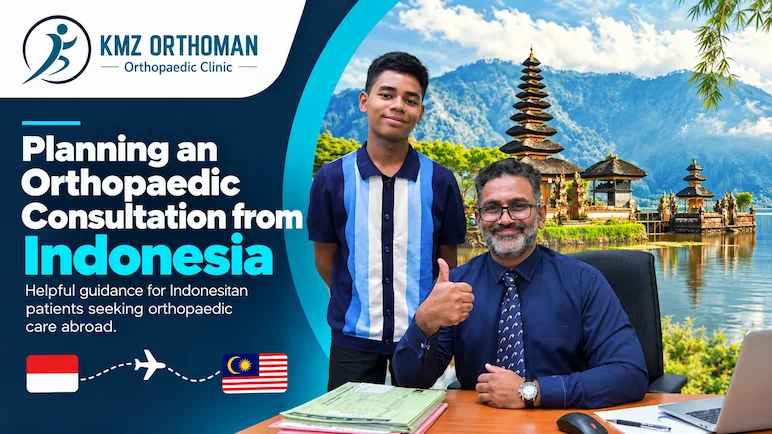
KMZ Orthoman also sees patients travelling from Indonesia for scheduled orthopaedic consultations in Kuala Lumpur. If you are considering a visit, confirm the appointment date and clinic location before booking travel.
Bring previous medical reports, scan images and their reports, details of earlier treatment, and a list of medicines and allergies. The American Academy of Orthopaedic Surgeons recommends preparing these records and writing down your concerns before a visit. [2]
Ask the clinic about consultation fees, any referral requirements, language support if needed, and whether additional visits may be necessary. Check what your insurance covers and allow flexibility for investigations if the doctor recommends them.
Before returning to Indonesia, ask how to obtain your consultation summary and test results, what follow-up is needed, and how any rehabilitation can be coordinated with a healthcare professional near home. If treatment is proposed, discuss recovery and fitness to travel before fixing your return plans.
Orthopaedic Care in Kuala Lumpur
For persistent joint pain or a sports injury that is limiting daily activities, a consultation can help clarify the diagnosis and available options. KMZ Orthoman provides orthopaedic consultations in Kuala Lumpur, including appointments for patients visiting from Indonesia.
The next step is to discuss your symptoms and appointment needs with the clinic. Treatment recommendations should follow an individual assessment, with time to ask about benefits, risks, alternatives and follow-up.
Medical References
[1] NIAMS: Sports Injuries — Diagnosis, Treatment, and Steps to Take
[2] AAOS OrthoInfo: Getting the Most Out of Your Visit With an Orthopaedic Surgeon